The Lithium Shortage Now Has an Expiration Date
Chile's state forecaster just dated the end of the lithium deficit: 2027. Albemarle, SQM, and the entire lithium equity complex closed at 52-week lows anyway. The gap between those two facts is where the next cycle is being set.

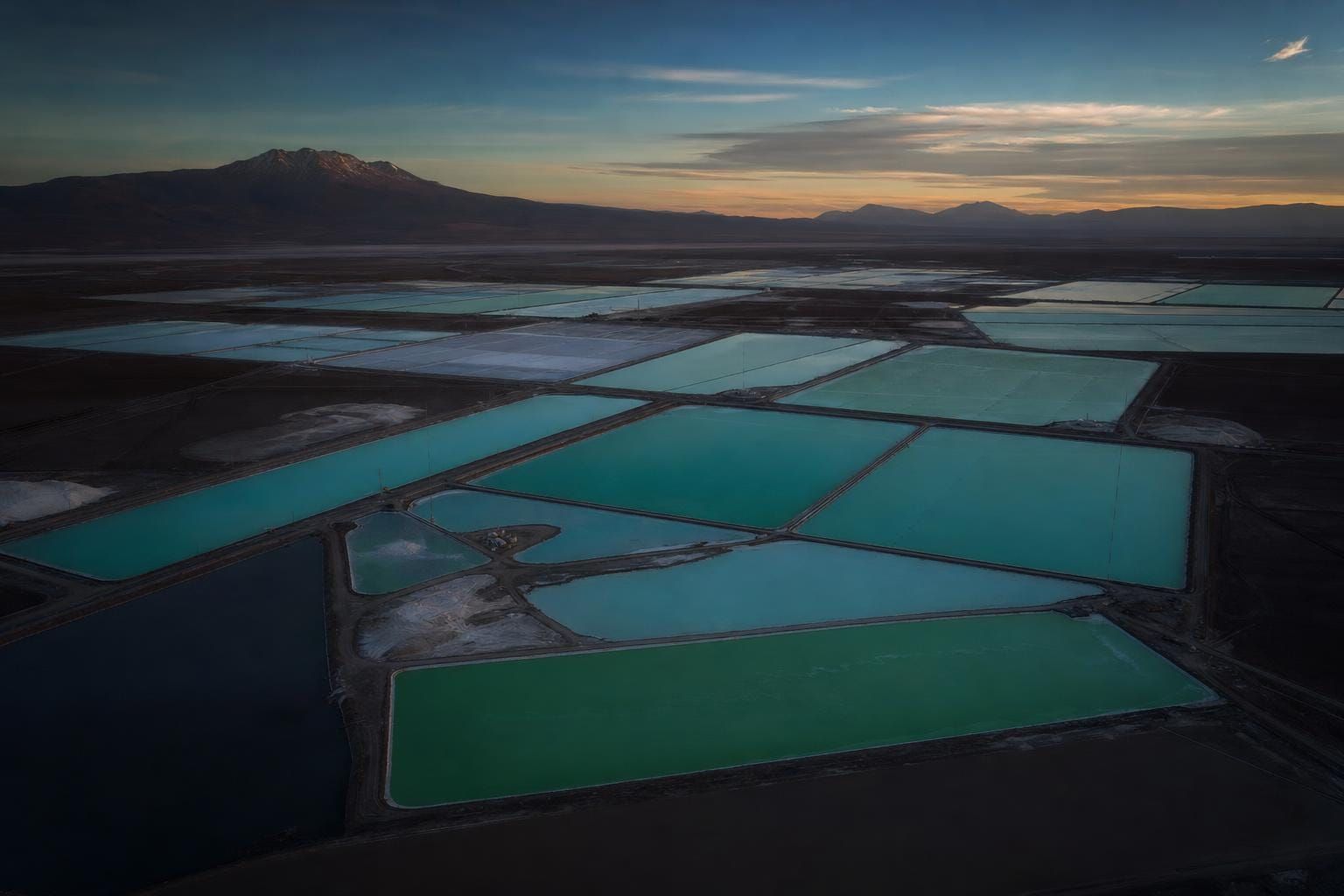
On November 12, Chile's state copper and lithium commission, Cochilco, presented its latest lithium market projections in Santiago. Buried in the tables was a date the entire battery supply chain has been arguing about for two years: the shortage ends in 2027. Cochilco expects this year's deficit of roughly 79,000 metric tons of lithium carbonate equivalent to flip into a surplus of roughly 42,000 tons next year.
Eight days later, the market delivered its own verdict. On Friday, Albemarle closed at $79.70 and SQM at $46.97 — both 52-week lows. The Global X Lithium & Battery Tech ETF closed at a 52-week low too. This happened in a week when the S&P 500 fell 8.6%, so some of it is simply the correction. But not all of it. Cochilco's dollar benchmark for lithium carbonate stood 43% higher on the year at its late-September reading — roughly double its January 2025 level. The commodity staged a genuine comeback; the companies that mine it round-tripped to their lows anyway.
That divergence — a recovering commodity, a capitulating equity complex, and a state forecaster putting an expiration date on the shortage — is one of the most interesting setups in commodities right now.
The comeback nobody fully trusted
Lithium spent 2024 and 2025 in one of the ugliest busts in modern commodity history, the hangover from the 2022 mania that took Chinese spot prices near 600,000 yuan per ton. The 2026 recovery, when it came, did not start with demand. It started with mines going quiet.
In February, Zimbabwe — the world's fourth-largest mine producer in 2025, according to USGS data — suspended exports of lithium ore and concentrate, resuming shipments in April only under quotas. In September, China revoked the environmental permit for CATL's Jianxiawo lepidolite mine in Jiangxi, an operation Cochilco says would have supplied about 3% of world mine output in 2027 — and which, at its 2024 peak, accounted for nearly 5% of global output, per the Oxford Institute for Energy Studies.
Prices responded the way supply shocks always make them respond. Cochilco's benchmark — lithium carbonate, FOB South America — reached $18,950 per ton on September 24, up 43% from the start of the year and up 102.7% from early January 2025.
Then August happened
The rally cracked before Cochilco's report was even printed. In August, the most-traded lithium carbonate contract on the Guangzhou Futures Exchange traded near 150,000 yuan per ton. By November 17, it settled at 89,980 yuan, with battery-grade spot in China at 89,050 yuan, according to Shanghai Metals Market. SunSirs' spot benchmark fell 22% in the month to November 3 alone.
The reasons are not mysterious. A group of Australian mines that closed during the slump restarted in June and July. Chinese EV demand cooled after purchase subsidies ended. And the macro regime turned hostile: a resurgent dollar and rising rate expectations have been pressuring the entire commodity complex through November.
The demand handoff underneath
What makes this cycle different from 2022 is what is buying the lithium. Cochilco's breakdown of 2026 consumption: EV batteries take 57.5%, and their growth is slowing, especially in China. Grid-scale battery storage — the BESS buildout feeding data centers and renewables — takes 32%, and it is carrying the growth story.
That handoff is also why the deficit flips. Cochilco sees global demand growth decelerating from 25% this year to 8% in 2027, while supply grows 14.4% as new tonnage arrives from Africa, China, and Australia. Demand keeps rising — just not as fast as the mines commissioning to meet it. A surplus does not require weak demand. It only requires supply to move faster, and for the first time since 2023, it will.
Yet Cochilco's own price forecast tells you how it reads that surplus: a $19,000-per-ton average for Q4 2026, and $18,500 for 2027 — a $500 haircut, not a crash. A soft landing, officially forecast.
The harder questions are the ones the headline numbers don't answer. Not every forecaster agrees the surplus arrives at all — and the gap between the two most credible calls for 2027 is wider than the surplus itself.
A free membership gets you access to every free article at AlphaBriefing.com: Join AlphaBriefing
The rest of this briefing is free — it just requires a free AlphaBriefing account: the 86,000-ton disagreement between Chile and Benchmark Mineral Intelligence over 2027, the five-month cost lag about to hit Albemarle's fourth-quarter margins, the $2,500-per-ton cost moat that decides who survives a surplus, and the four signals that will tell you whether 2027 brings a glut or another squeeze.
Create your free account → — 30 seconds, no card.