You Paid the Tariff. The Bonus Pool Got the Refund.
The Supreme Court struck down the Liberation Day tariffs in February. Roughly $170 billion is flowing back — to importers of record, not the consumers who ate the price hikes. At least nine public companies are routing part of it into bonuses.

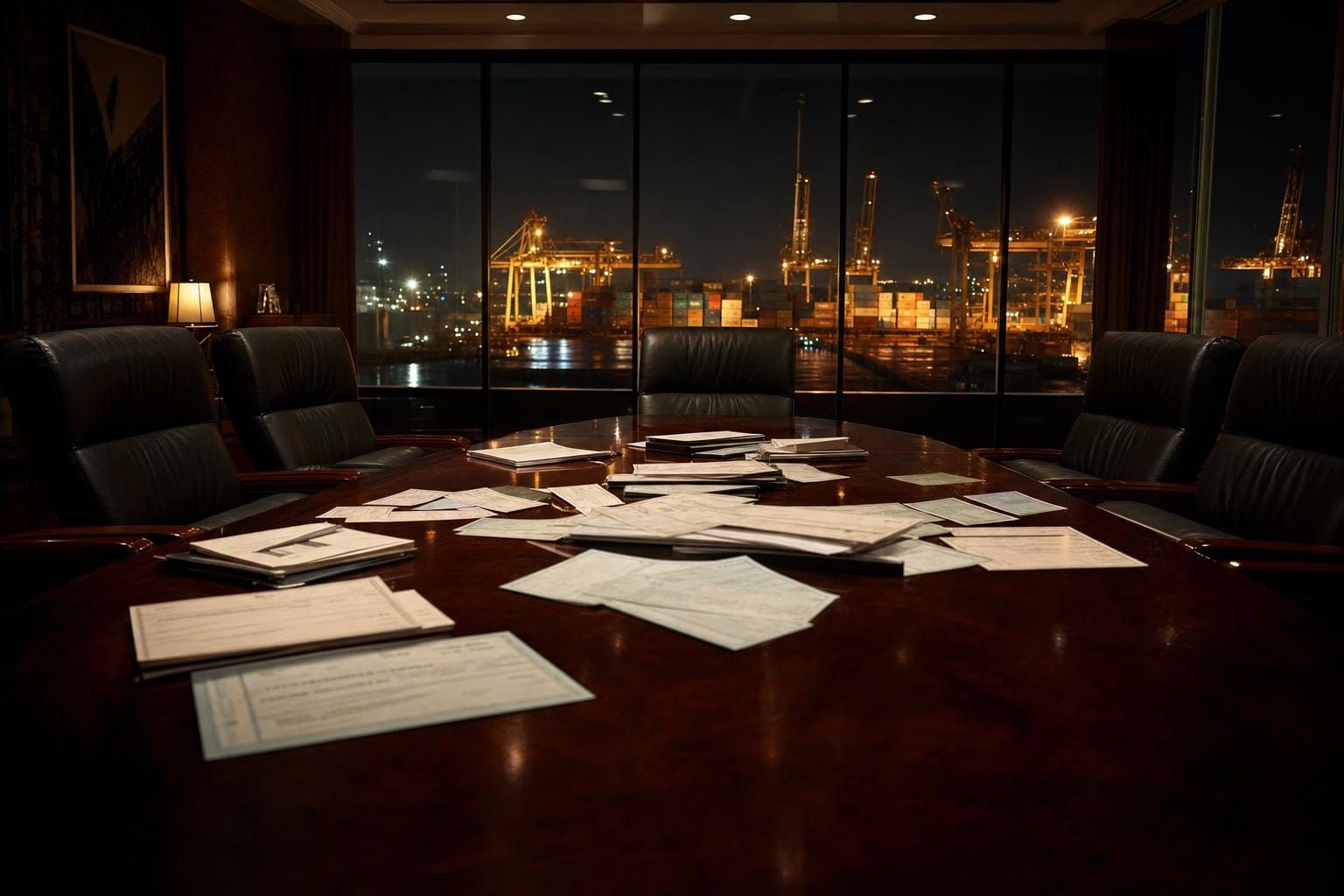
You paid more for the drill. The company that sold it to you is getting the tariff money back. The refund is going to the bonus pool.
That is the short version of a ProPublica investigation published this week, which combed through thousands of securities filings and earnings calls and found at least nine publicly traded companies openly routing their tariff refunds into executive and employee incentive compensation — after spending the last year telling customers that tariffs forced them to raise prices.
It is the final, clarifying chapter of the "Liberation Day" tariff experiment: the money is coming back, and almost none of it is coming back to you.
How $170 Billion Ended Up in Limbo
The chain of events is worth laying out plainly, because each link determines who gets paid.
In early 2025, the White House imposed sweeping tariffs on goods from more than 100 countries — first under a border emergency in February, then under the "Liberation Day" trade-deficit emergency in April. Importers paid the duties for roughly a year. Then, in February of this year, the Supreme Court struck the tariffs down, ruling the president needed congressional approval to impose them.
That ruling turned the federal government into a debtor. Customs and Border Protection had collected duties on more than 53 million shipments, and by early August customs officials told the Court of International Trade that about $100 billion — roughly 60% of the $165 billion collected under the struck-down tariffs — had already been returned, according to a Financial Times report. ProPublica puts the full refund bill at roughly $170 billion.
Here is the mechanical detail that decides everything: only the "importer of record" — the company that physically paid the duty at the border — is eligible to apply for a refund through CBP's portal. Not the wholesaler who absorbed a markup. Not the retailer downstream. And certainly not the consumer who paid more at the register.
Who Actually Paid the Tariffs
The companies were not shy about passing the costs along at the time. Stanley Black & Decker — maker of DeWalt drills, Craftsman tools, and tape measures — raised prices repeatedly through 2025, with executives explicitly citing import fees.
The research on who ultimately bore those costs is unambiguous that consumers took a real share. The New York Fed estimates 26% of tariff costs passed through to American customers; a Harvard Business School study puts the figure at 43%. The Tax Foundation estimated the tariffs cost a typical American household about $1,000 last year.
Those households have no refund application to file.
Briefings like this are free to read with a free AlphaBriefing membership. Join free →
Where the Money Is Actually Going
ProPublica's filing-by-filing reconstruction — confirmed in part by the companies themselves — found the refunds surfacing in a specific line item: incentive compensation.
- Stanley Black & Decker is receiving at least $298 million in refunds. Its disclosures say the windfall "was partially offset by directly attributable costs for variable incentive compensation" — filing language for: some of it funds bonuses.
- TJX, parent of TJ Maxx and Marshalls, confirmed it received an aggregate $331 million in refunds and, as a result, "accrued incremental expenses of $112 million for year-end incentive compensation and discretionary bonuses for eligible Associates globally." Asked what happens to the remaining $219 million, the company said it "will be used to support our future growth." Asked how much of the bonus pool goes to top managers, it declined to say.
- Acushnet, the parent of Titleist, disclosed roughly $12 million in incentive compensation expense out of its refund.
Securities lawyers who reviewed the disclosures for ProPublica point to an unglamorous mechanism: the refunds boost reported profits, reported profits feed the formulas that set executive pay, and nobody adjusted the formulas for a windfall that required no executive skill to obtain. "It wasn't the executive that triggered that extra profit, so why should their compensation go up?" asked Gregory Germain, a corporate law professor at Syracuse University, who called bonuses "probably the least just way to use this money."
The counterexamples make the choice look like exactly that — a choice. Burlington Stores received $55 million and told investors it would skip the one-time earnings boost and instead "deliver even sharper values to our shoppers," with a spokesperson confirming none of its refund funds bonuses. UPS and FedEx, which imported goods on behalf of paying customers, built online portals to itemize and return their customers' tariff costs. And nearly every company ProPublica found promising to pass refunds along serves other businesses — customers with contracts that itemized the tariff markups. Consumers had no such receipts.
Washington Knows, and Has Decided Not to Act
None of this is happening in secret. Treasury Secretary Scott Bessent said it out loud back in February: "I got a feeling the American people won't see it," he told an Economic Club of Dallas audience, speaking of the refund money. His framing since then has been that Democrats who challenged the tariffs in court — not the administration that imposed them — are responsible for the refunds flowing to importers.
Senators Elizabeth Warren, Cory Booker, and Peter Welch demanded a plan to route refunds to consumers and small businesses, calling the current arrangement "a giveaway to giant corporations that amounts to theft from the middle class." No constraint on refund usage has been enacted. The private bar has moved into the vacuum: dozens of consumer-facing companies, including Walmart and Target, now face lawsuits attempting to force them to share refunds with customers — including a Wisconsin resident's suit against Stanley Black & Decker.
The political cost is already booked. Pew found in April that 63% of Americans had little or no confidence in the president's handling of tariffs, and the November midterms — in which Republicans were punished in large part over cost-of-living issues — delivered the verdict at the ballot box.
The Market Is Not Confused About What This Is
The equity market has treated the refunds as exactly what they are: real cash, questionable earnings quality.
Stanley Black & Decker trades at $112.92, up roughly 77% over the past twelve months — a run that owes plenty to the refund windfall hitting a beaten-down stock. TJX, by contrast, trades at $131.09, down about 10% over the past year: a $331 million one-time check does not move the thesis on a retailer of TJX's scale, and the bonus accrual clawed back a third of it anyway. (Prices as of Monday's close, via Yahoo Finance.)
The sharper investment point is about what comes next. The administration replaced the struck-down tariffs in July with a new round — 10% to 12.5% on more than 80 countries, imposed this time under Section 301 of the Trade Act. Twenty-five states have already sued, arguing the new levies are a pretext for the ones the Supreme Court voided. If they win, the government — now running a deficit that hit $1.37 trillion in the first nine months of the fiscal year — gets to run this entire refund machine again, with the same rules about who is eligible to collect.
The bottom line: the tariff experiment has now completed a full round trip, and the incidence landed exactly where the fine print said it would. Consumers paid on the way in through prices; importers of record collected on the way out through CBP's portal; and the difference is settling into bonus accruals. For investors, tariff refunds are a one-time earnings-quality item to be stripped out of any multiple you pay. For everyone else, the lesson is structural: in a trade war, the receipts matter more than the rhetoric — and the consumer never gets one.
If this analysis was useful, this is what AlphaBriefing does every day — policy and markets, connected to what it means for your money. A free membership gets you access to every free article on AlphaBriefing.com; paid members get the investment frameworks, scenario pricing, and catalyst calendars behind the paywall.
Sign up free → — upgrade whenever it earns it.
Get this level of intelligence every day. Subscribe to AlphaBriefing — free, member, and paid tiers available. A free membership gets you access to every free article at AlphaBriefing.com: Join AlphaBriefing
Sources & Further Reading
- ProPublica — Corporations Are Using Trump's Tariff Refunds on Bonuses Rather Than Reimbursing Consumers
- The Guardian — Several companies are using Trump tariff refunds for corporate bonuses
- The Guardian — US refunds $100bn of Donald Trump's 'liberation day' tariffs
- New York Fed — Staff Report: Tariff Pass-Through to Consumer Prices
- Harvard Business School — Tariffs Leave Consumers and Companies Splitting the Tab
- Tax Foundation — Trump Tariffs: The Economic Impact of the Trump Trade War
- Sen. Welch — Welch, Warren, Booker Demand Plan for Refunds Directly to Consumers
- Pew Research Center — How Americans View Trump's Handling of Trade and Tariffs
Disclaimer
AlphaBriefing is an independent intelligence publication. The content in this article is produced for informational and educational purposes only. Nothing published by AlphaBriefing constitutes financial, investment, legal, tax, or regulatory advice, nor should it be construed as a solicitation or recommendation to buy, sell, or hold any security, asset, or financial instrument.
All views expressed are those of the author at the time of writing and are subject to change without notice. Markets are volatile and unpredictable; past performance is not indicative of future results. Any investment involves risk, including the possible loss of principal.
AlphaBriefing and its principals, employees, or contributors may hold positions in securities or assets mentioned in this article. This should be considered a potential conflict of interest. No material relationship with any company referenced exists unless explicitly disclosed. Readers should conduct their own due diligence and consult qualified financial, legal, and tax advisors before making any investment decisions.
Information in this article is drawn from public sources believed to be reliable at the time of publication. AlphaBriefing makes no warranty, express or implied, as to the accuracy, completeness, or timeliness of any information herein. AlphaBriefing accepts no liability for any loss or damage arising from reliance on this content.
© AlphaBriefing. All rights reserved. Unauthorised reproduction or distribution is prohibited.