$SMCI Just Printed a $19.9 Billion Quarter and the Market Shrugged: The 44% Customer, the 12% Margin, and What Six Times Earnings Is Pricing
Supermicro grew revenue 298% and raised its full-year guide, yet trades at six times forward earnings. One customer was 44% of the quarter, gross margin fell to 12.7%, and operations burned cash. The concentration math, the balance sheet, and scenario zones from $31.

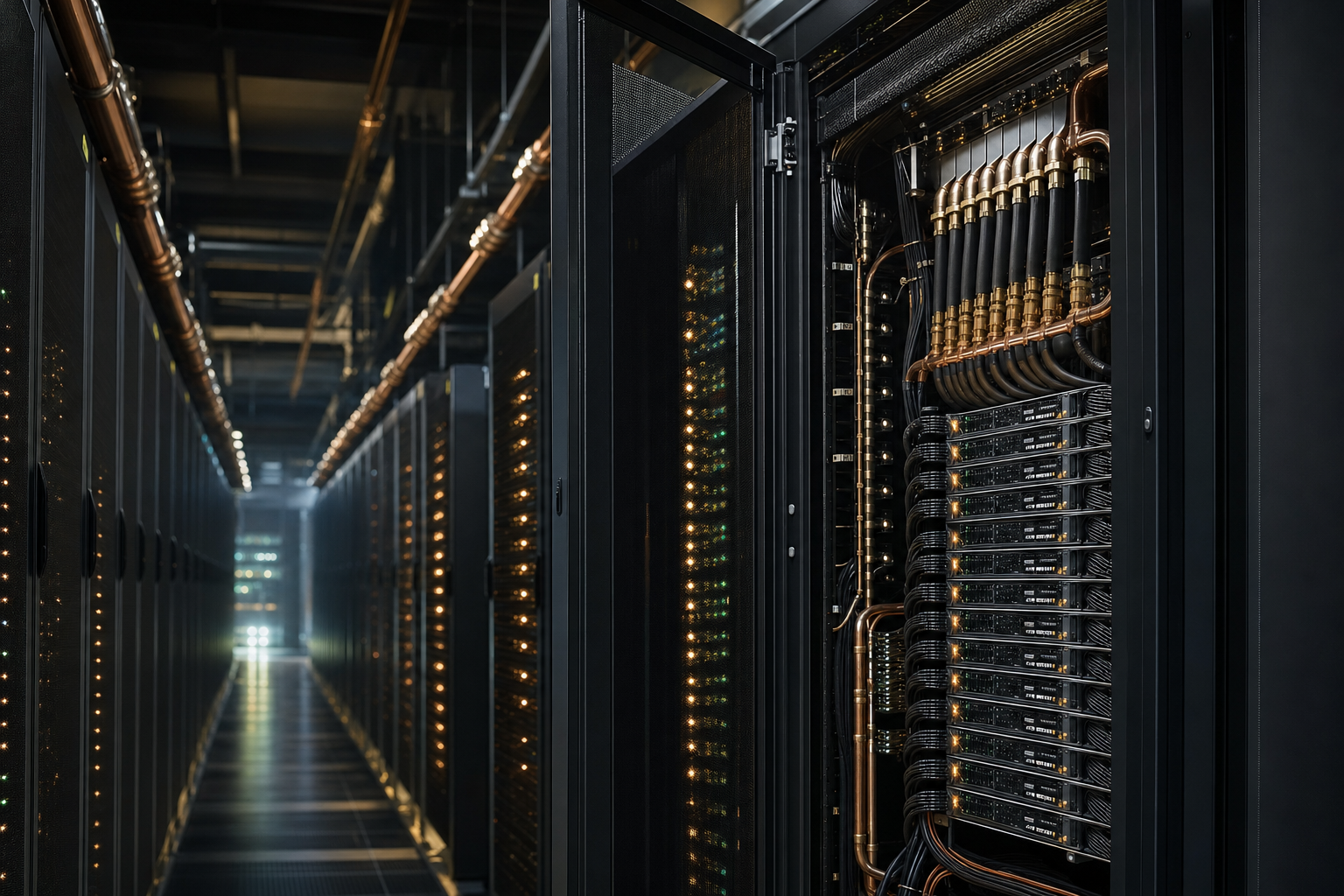
Super Micro Computer just reported the largest quarter in its history, and by a margin that would be a misprint at most companies. Net sales for the September quarter came in at $19.9 billion, up 298% from $5.0 billion a year earlier and nearly double the $11.1 billion it posted just one quarter ago. GAAP earnings were $1.75 per diluted share. Management raised its full fiscal-year 2027 revenue guidance to $72 billion to $82 billion, up from its prior range of $65 billion to $72 billion. For context, Supermicro booked about $22 billion of revenue in all of fiscal 2025.
The market's response was a shrug. The stock closed Tuesday at $31.39 before the release, traded up roughly 7% after hours, and by Wednesday's premarket most of that pop had already faded, with shares changing hands around $32. That leaves Supermicro worth about $20.6 billion, down nearly 40% from its 52-week high of $51.40, trading at roughly six times forward earnings while growing revenue at triple digits. Six times, for a company other corners of the AI build-out would price far richer.
This is not the market being asleep. The same release that carried the $19.9 billion headline carried three numbers that explain the discount: a gross margin of 12.7%, down from 17.5% in the prior quarter; $434 million of cash consumed by operations in a quarter that produced $1.6 billion of paper net income; and, disclosed on the earnings call, a single customer that accounted for 44% of all revenue.
The quarter the market already knew about
Part of the muted reaction is timing. Supermicro pre-announced this quarter on October 20, telling investors to expect $18.5 billion to $19.5 billion of revenue against original guidance of $14.5 billion to $15.5 billion, with gross margins of 12.0% to 12.5% versus a guided 10.4% to 10.8%. The final print beat even the pre-announcement: $19.9 billion of revenue and a 12.8% non-GAAP gross margin, above the top of both preliminary ranges.
And yet the tape treated the three weeks between pre-announcement and print as a selling opportunity. The stock went from $35.81 on October 28 to $30.44 by Monday's close, a 15% slide in three sessions, before the modest earnings-night recovery. A company that doubled revenue sequentially, beat its own raised numbers, and lifted the full-year guide by $8.5 billion at the midpoint is being priced like a business in trouble.
Some of that is Supermicro-specific history. The company spent late 2024 under a short-seller attack, lost EY as its auditor, and flirted with a Nasdaq delisting before a special committee review found no evidence requiring restatement and BDO signed off on the catch-up filings. The accounting saga is resolved, but the credibility discount has never fully closed, and it resurfaces every time the numbers look too good.
Mostly, though, the discount is about the shape of the business Supermicro is becoming. The sell-side can look at the same quarter and land anywhere from $36 with a Neutral rating, which is where Mizuho sits after trimming its target, to $57 at Rosenblatt, which reiterated a Buy on the guidance. Bank of America acknowledged "several positives" in the quarter and still kept an Underperform rating while nudging its target to $39. When a stock is growing 298% and the analyst spread is that wide, the disagreement is not about the demand. It is about what one quarter of hyperscale AI revenue is actually worth.
A free membership gets you every free article we publish at AlphaBriefing.com: Join AlphaBriefing.
Which brings us to the real questions this print raised. Who is the customer behind 44% of the quarter, and what does that concentration do to the margin structure? Why did a company that just earned $1.6 billion burn cash? And what does the distribution of outcomes look like from $31 when the full-year guide itself says margins get worse from here? That is what the rest of this briefing works through.
The rest of this briefing is for paid members: the 44% customer and what the concentration math does to pricing power, the margin bridge from 17.5% to the 11.8% to 12.2% full-year guide, the $15 billion inventory and $8.6 billion debt stack behind the cash burn, and scenario-by-scenario price zones for the stock from $31.
AlphaBriefing Paid gets you every investment thesis, scenario framework, and catalyst brief we publish, the analysis private intel clients pay four figures for, at a fraction of that.