Seven Flips and a Veto Pen: What the Midterm Wipeout Means for Markets
Democrats flipped seven Senate seats and took the House. Markets sold the shock overnight, then bought the gridlock. What actually changes for policy and positioning — and what doesn't.

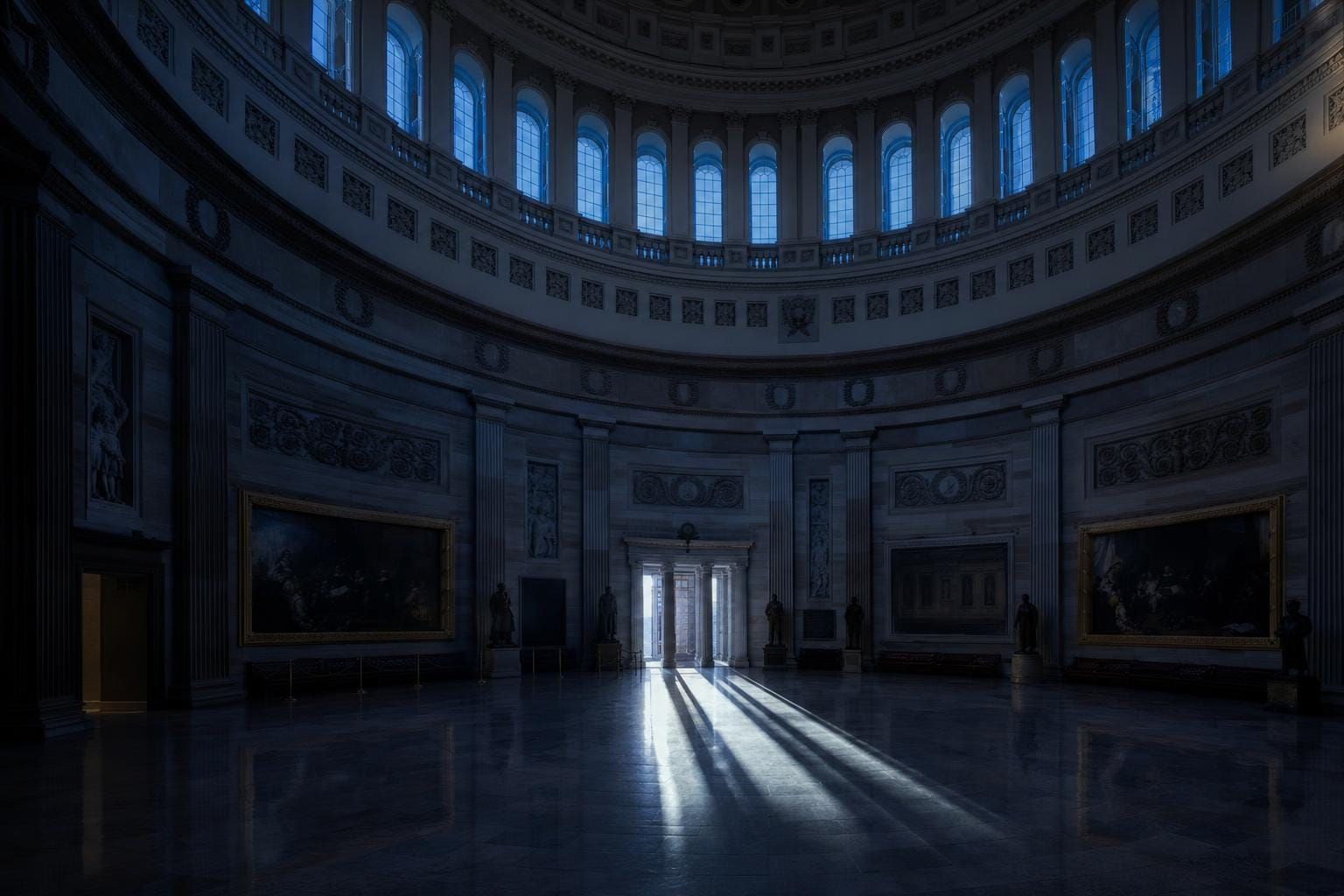
Washington woke up this morning to a different balance of power. Democrats flipped seven Republican Senate seats on Tuesday night — Texas, Ohio, North Carolina, Iowa, Kansas, Maine, and South Carolina — and took control of the House of Representatives, handing the party full control of Congress and turning the final two years of Donald Trump's term into a siege.
The scale surprised everyone, including the pollsters. The Associated Press called the Senate before midnight and the House less than two hours later. By morning, Wikipedia's running tally had Democrats at a minimum of 54 Senate seats with Alaska still outstanding, and the Washington Post was summarizing the night with the phrase Republicans feared most: "a Republican wipeout."
Markets had a less dramatic night than Washington did. Equity futures dipped as the first upsets rolled in, then pared the losses and turned green. As of roughly 7:30 a.m. ET, S&P 500 futures were up about 1.0% at 7,670, Nasdaq 100 futures up 0.4%, and the VIX had collapsed 12% to 18.3. The 10-year Treasury yield eased three basis points to 4.92%, the dollar index slipped 0.5% to 101.3 — and gold ripped 3.0% higher to $4,058 an ounce, the clearest tell that someone is hedging the politics even as equities shrug. WTI crude fell 1.6% to $94.55.
That combination — stocks up, yields down, gold bid — is the market's first-draft verdict on divided government. Here is what actually happened, and what it does and doesn't change.
The night in five results
Texas elected a Democratic senator for the first time since 1988. James Talarico, a Presbyterian seminarian who ran on economic justice, beat Attorney General Ken Paxton — Trump's handpicked candidate, who had knocked out incumbent John Cornyn in the primary. Texas voters also fired Governor Greg Abbott, electing Gina Hinojosa as the state's first Democratic governor in 36 years.
Kansas elected its first Democratic senator since 1932. Adam Hamilton, a megachurch pastor, unseated Roger Marshall — whose campaign never recovered from reporting that, as a practicing physician, he had sued roughly 700 of his own patients over unpaid medical bills.
South Carolina fell for the first time since 1998. Pediatrician Annie Andrews defeated Darline Graham, the sister of the late Senator Lindsey Graham, whom Trump had personally recruited for the seat.
Susan Collins lost Maine. After nearly 30 years and a career of surviving unwinnable races, Collins conceded to Democrat Troy Jackson shortly before 1 a.m.
The rest of the map followed. Sherrod Brown took back an Ohio seat from Jon Husted. Roy Cooper won the open North Carolina seat. Josh Turek beat Ashley Hinson in Iowa. Abdul El-Sayed won Michigan, becoming the country's first Muslim senator, per the Guardian's tally of the night's firsts. Hakeem Jeffries is now positioned to become the first Black Speaker of the House in American history, and Georgia's Keisha Lance Bottoms will be the first Black woman to govern any U.S. state.
Why did it happen? The AP Voter Poll is blunt: about three-quarters of voters called the economy "not so good" or "poor," roughly 8 in 10 said inflation has caused their household severe or moderate hardship, and about half ranked the cost of living and government corruption as crucial to their vote — ahead of immigration, the Iran war, and AI data centers. With oil still at $94 and the 10-year near 5%, the macro backdrop did the campaigning.
Briefings like this are free to read with a free AlphaBriefing membership. Join free →
What a Democratic Congress can actually do
The reflex is to call this an earthquake. For policy, it is closer to a dam: very little new will get built, and a lot of pressure will back up behind it.
Oversight is immediate and real. Subpoena power changes hands in January. Democratic leaders have already signaled investigations into administration self-dealing, Defense Secretary Pete Hegseth, and Elon Musk's government entanglements. The AP reports impeachment of Trump or cabinet officials "is not off the table." Expect two years of hearings as ambient noise under every headline.
The Iran war gets a congressional antagonist. Democrats are preparing war powers resolutions to force votes on the conflict. Those resolutions can pass with simple majorities — and get vetoed. But they put every escalation on the record, and they make supplemental war funding a negotiation instead of a formality. Defense budgets don't shrink in divided government; they do get slower and more conditional.
Confirmations stop. With the Senate gone, every judicial vacancy and cabinet reshuffle now needs Democratic consent. The judicial pipeline that ran for two years closes in January.
Tariffs move to the courts and the floor. Democratic leaders have said they will challenge the tariff regime. Repealing it over a veto is unrealistic — but votes, hearings, and litigation support create a steady drip of headline risk for trade-sensitive names in both directions.
Legislation mostly dies. The 60-vote filibuster caps what Democrats can pass, and Trump spent election night posting a red hat with "VETO" printed on it. Take him at his word. Taxes, healthcare subsidies, Medicaid restorations, crypto market-structure bills — everything big needs either a presidential signature or 67 Senate votes, and neither exists.
What the market is pricing
The overnight pattern — sell the shock, buy the gridlock — is the textbook response, and the textbook has a decent track record: equities have historically been comfortable with divided government, because legislative paralysis means no new taxes, no new spending shocks, and no surprise regulation making it to a signature.
But three things in this morning's tape are worth more attention than the relief rally:
-
Gold up 3% on a risk-on morning is not noise. Equities rallying while gold adds $118 an ounce says investors want insurance against a specific kind of tail: constitutional friction. The administration has already sued to block certification of a potentially losing Senate race in Alaska, per the AP. Two years of veto standoffs, funding fights, and investigation brinkmanship is an environment gold historically likes.
-
The bond market got the best news. A Congress that can't pass anything is a Congress that can't pass new deficits. With the 10-year near 5%, fiscal paralysis reads as mild disinflation — yields eased within hours of the House call.
-
The dollar is quietly repricing the policy mix. A softer dollar alongside lower yields suggests the market sees less fiscal impulse and more institutional friction ahead — a mix that tends to favor international earners and hard assets over domestic cyclicals.
Sector-level, the watchlist writes itself: hospital and insurer names exposed to any bipartisan deal on healthcare subsidies; defense primes if war funding becomes conditional; trade-sensitive industrials as the tariff fight escalates; AI infrastructure, which just learned that data centers polled as a voter concern; and crypto, whose stalled market-structure bill now needs a Democratic Congress to resurrect it on Democratic terms.
Bottom line
Nothing changes until January 3 — the current Congress holds through the lame-duck session, and the administration's executive authority over tariffs, enforcement, and the war is untouched for now. What changed last night is the ceiling and the floor: the ceiling on new policy (lower), and the floor under institutional conflict (much higher). The market's first read — modest equity relief, lower yields, expensive insurance — is a reasonable one. The two-year grind between a veto pen and a subpoena machine starts in 60 days.
If this analysis was useful, this is what AlphaBriefing does every day — geopolitics and markets, connected to what it means for your money. A free membership gets you access to every free article on AlphaBriefing.com; paid members get the investment frameworks, scenario pricing, and catalyst calendars behind the paywall.
Get this level of intelligence every day. Subscribe to AlphaBriefing — free, member, and paid tiers available.
Sources & Further Reading
- The Guardian — Democrats' blue wave and a bad night for Trump: key US midterms takeaways
- The Guardian — US voters rebuke Trump as Democrats win control of Congress in 'blue wave'
- AP via PBS NewsHour — Democrats win control of the U.S. House
- PBS NewsHour — Democrat Troy Jackson wins election to U.S. Senate from Maine
- PBS NewsHour — Democrat Abdul El-Sayed wins election to U.S. Senate from Michigan
- NBC News — Election results live blog: House, Senate, Trump
- Wikipedia — 2026 United States Senate elections
Disclaimer
AlphaBriefing is an independent intelligence publication. The content in this article is produced for informational and educational purposes only. Nothing published by AlphaBriefing constitutes financial, investment, legal, tax, or regulatory advice, nor should it be construed as a solicitation or recommendation to buy, sell, or hold any security, asset, or financial instrument.
All views expressed are those of the author at the time of writing and are subject to change without notice. Markets are volatile and unpredictable; past performance is not indicative of future results. Any investment involves risk, including the possible loss of principal.
AlphaBriefing and its principals, employees, or contributors may hold positions in securities or assets mentioned in this article. This should be considered a potential conflict of interest. No material relationship with any company referenced exists unless explicitly disclosed. Readers should conduct their own due diligence and consult qualified financial, legal, and tax advisors before making any investment decisions.
Information in this article is drawn from public sources believed to be reliable at the time of publication. AlphaBriefing makes no warranty, express or implied, as to the accuracy, completeness, or timeliness of any information herein. AlphaBriefing accepts no liability for any loss or damage arising from reliance on this content.
© AlphaBriefing. All rights reserved. Unauthorised reproduction or distribution is prohibited.