Private Credit's Slow-Motion Meltdown Is Already Underway

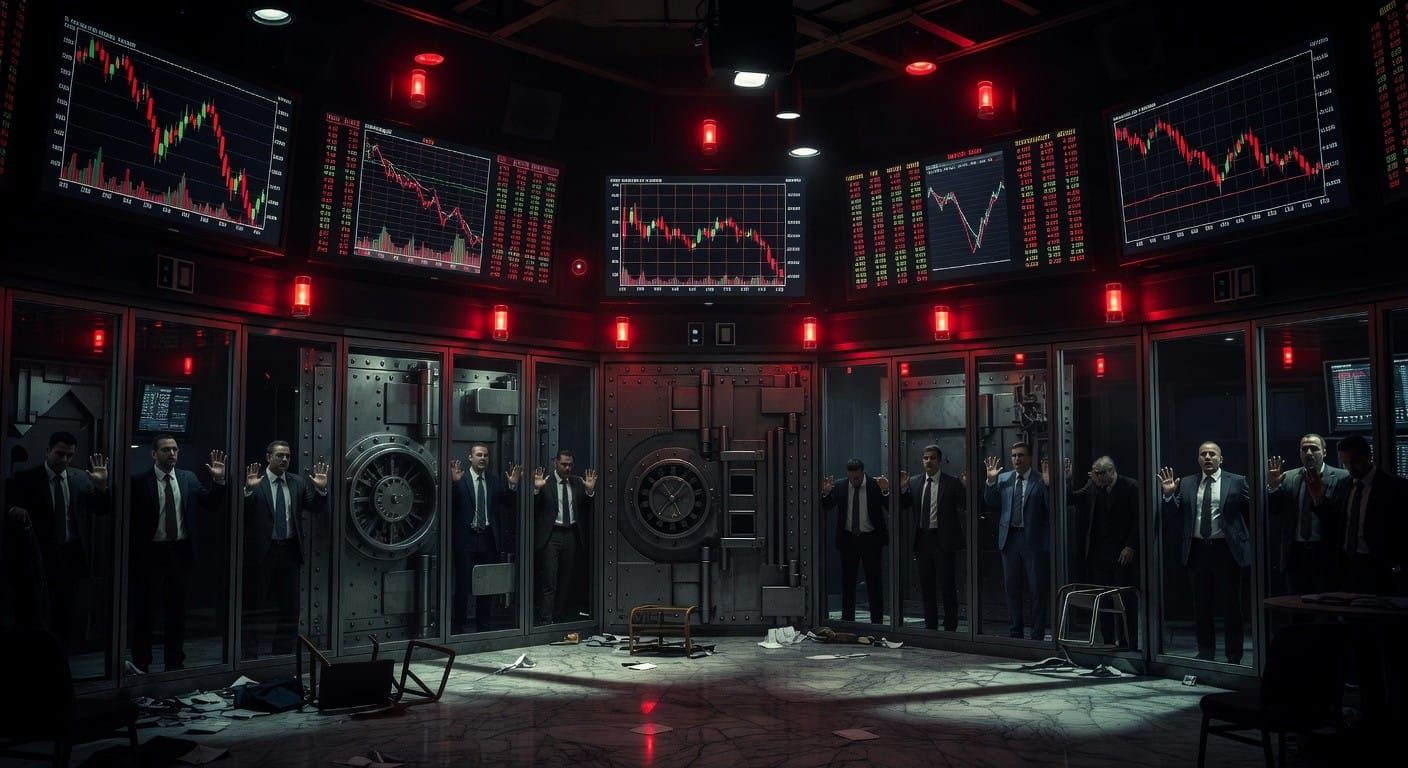
Private credit was supposed to be the golden age of alternative finance — a $3 trillion market promising institutional-grade returns to anyone with a brokerage account and a taste for yield. Wall Street's biggest names — BlackRock, Apollo, KKR, Blue Owl — spent years building the machine, packaging illiquid corporate loans into "semi-liquid" retail products and marketing them as the safe, high-yield alternative to volatile public markets.
Then investors wanted their money back.
The Gates Come Down
In February 2026, Blue Owl Capital permanently shuttered redemptions on its $1.6 billion OBDC II fund after withdrawal requests surged over 200%. By the end of Q1, the firm was staring at $5.4 billion in total redemption requests across two major retail-oriented funds — with its flagship Blue Owl Credit Income Corp ($36 billion AUM) seeing requests hit 22% of net asset value in a single quarter.
Blue Owl wasn't alone. BlackRock capped redemptions at 5% on its $26 billion HPS Corporate Lending Fund after requests hit 9.3% of NAV. KKR imposed similar limits on its FS Income Trust. Apollo's private credit fund reported an outright quarterly loss. Across the industry, Q1 2026 saw an estimated $14–20 billion in total redemption requests — with up to $5 billion "trapped" behind gates that fund managers had quietly inserted into offering documents years earlier.
The mechanism is elegant in its cruelty: investors can request withdrawals, but funds cap actual redemptions at 5% per quarter. If 22% of a fund's investors want out, roughly four out of five are told to wait. And wait. And wait.
The Defaults Nobody Saw Coming
The redemption wave didn't materialize from nowhere. It followed a steady deterioration in the underlying loan books that private credit firms had been aggressively building.
Fitch Ratings pegged the U.S. private credit default rate at 5.8% through January 2026, easing slightly to 5.4% in February. Those are headline figures. The "true" default rate — including distressed exchanges, payment-in-kind (PIK) toggles, and what the industry euphemistically calls "liability management exercises" — runs between 5% and 9%, according to multiple analysts.
Morgan Stanley projects peaks of 8% in direct lending, concentrated heavily in software and technology borrowers — the exact sector most vulnerable to AI disruption. The irony is sharp: the AI boom that's driving equity valuations to record highs is simultaneously hollowing out the loan books of the funds that were supposed to be the conservative alternative.
High-profile casualties have already emerged. First Brands Group, carrying $10 billion in debt, entered distress. Infinite Commerce was written to zero. Moody's downgraded KKR's $14 billion credit fund to junk.
How Wall Street Sold Illiquidity as a Feature
The private credit boom was, at its core, a distribution story. For decades, direct lending was the province of institutions — pension funds, endowments, sovereign wealth funds — with 7-to-10-year lockup horizons and the sophistication to evaluate illiquid credit risk.
Then came the "democratization" pitch. Starting around 2020, the alternative asset giants began repackaging these same strategies into business development companies (BDCs) and interval funds marketed to high-net-worth retail investors. The selling point was simple: 8–12% yields in a world of 5% Treasuries, with quarterly liquidity windows that made the products feel accessible.
What the marketing materials didn't emphasize — but the offering documents did, in fine print — was that those liquidity windows came with gates. A 5% quarterly cap means that in a stress scenario, an investor wanting to exit a $1 million position might receive $50,000 per quarter, stretching a full exit to nearly five years.
The fee structures were equally revealing. Management fees of 1.25–1.75% plus incentive fees of 15–20% above a hurdle rate meant that a significant portion of the yield advantage over public credit was consumed by the managers themselves.
This is where the analysis gets actionable. AlphaBriefing members get the full investment framework — scenarios, positioning, and the bottom line.
Subscribe to AlphaBriefing — Free, Member, and Paid tiers available.