The World's First Global Carbon Tax Is 52 Days From Its Last Vote
On December 4, the IMO votes again on the Net-Zero Framework — a $380-per-tonne carbon price covering 85% of global shipping emissions. Washington killed it once. The fleet-by-fleet winners and losers if it survives.

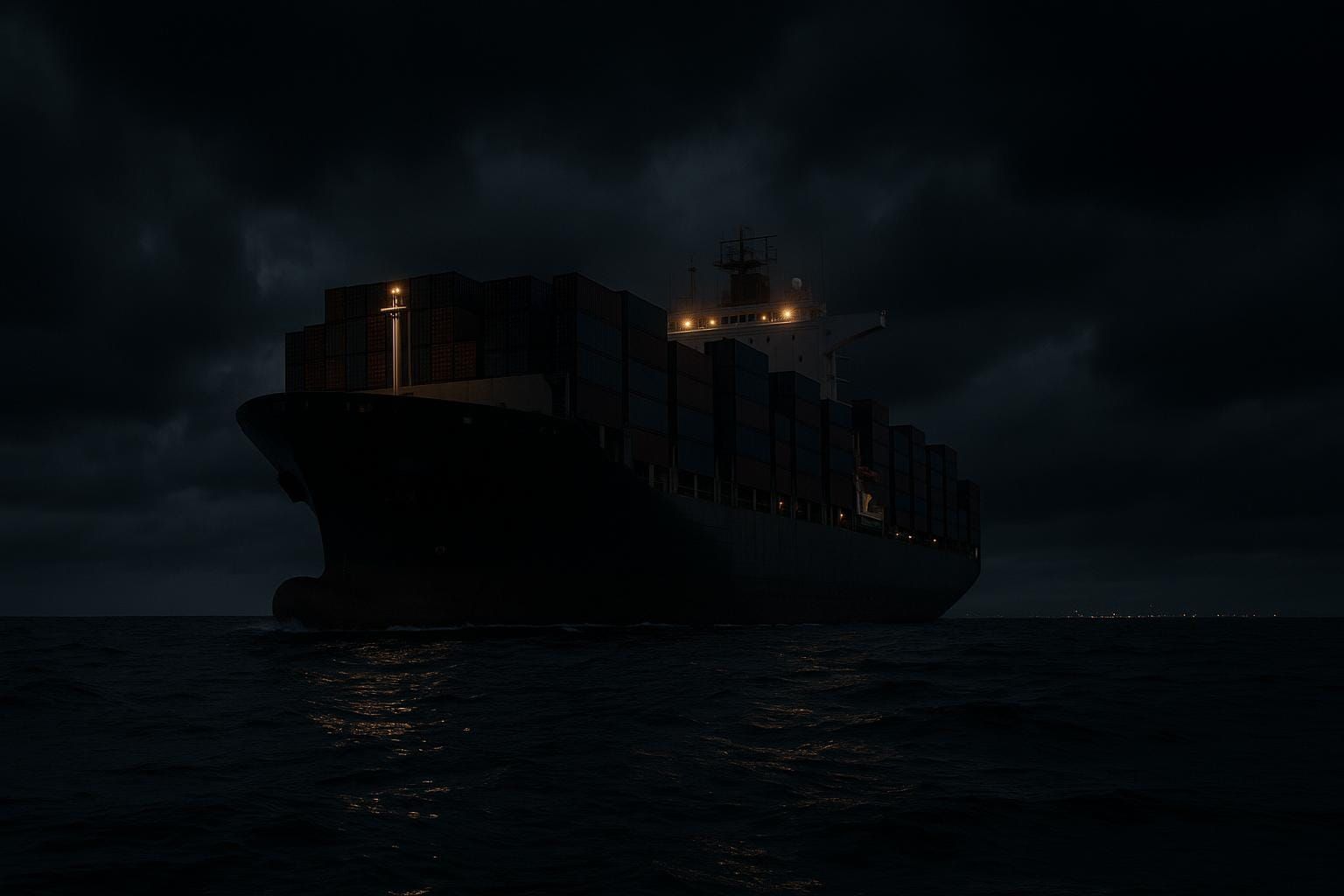
On October 17, 2025, diplomats at the International Maritime Organization's London headquarters were supposed to adopt the most consequential climate regulation ever written: a legally binding carbon price covering nearly every large ship on Earth. Instead, after what observers described as an extraordinary pressure campaign from Washington — the State Department had publicly threatened retaliatory tariffs and sanctions against countries supporting the measure — member states voted 57–49 to adjourn for a year.
That year is almost up. According to the IMO's official meeting schedule, the resumed extraordinary session of the Marine Environment Protection Committee (MEPC.ES/2) convenes on December 4, 2026 — 52 days from today, immediately after MEPC 85 and a final technical working group meeting in late November. One way or another, the world's first industry-wide carbon price gets its answer this year.
For investors in shipping, marine fuels, and the broader energy transition, this is the most underpriced regulatory catalyst on the 2026 calendar. Here is what is actually on the table, who is fighting over it, and why the outcome moves capital either way.
The only global carbon price ever drafted
The IMO Net-Zero Framework, approved in draft at MEPC 83 in April 2025, is the first mechanism in the world to combine mandatory emissions limits with greenhouse gas pricing across an entire industry. It would be written into a new chapter of MARPOL Annex VI — the pollution convention that already covers 108 states and 97% of the world's merchant fleet by tonnage.
The design, per the IMO's own summary and Carbon Brief's analysis of the final text:
- Who pays: ocean-going ships above 5,000 gross tonnage — the vessels responsible for roughly 85% of international shipping's CO2 emissions. Shipping as a whole produces about 3% of global greenhouse gas emissions and sits outside the national pledges made under the Paris Agreement.
- Two compliance tiers: a "base" greenhouse gas fuel-intensity target starting at a 4% reduction in 2028 and tightening to 30% by 2035, and a stricter "direct compliance" target starting at 17% and rising to 43%.
- Two prices: ships that miss the easier base target buy "remedial units" at $380 per tonne of CO2-equivalent. Ships that clear the base target but miss the stricter one pay $100 per tonne. For context, Carbon Brief notes $380 is roughly 20 times prevailing carbon prices at the time the deal was struck.
- A trading layer: over-compliant ships earn surplus units they can bank or sell to laggards — a built-in compliance market.
- The money: an IMO Net-Zero Fund expected to collect roughly $10–15 billion a year from 2030, recycled into rewards for zero and near-zero emission fuels (defined as under 19g CO2e per megajoule — think green ammonia and methanol), plus transition support for developing countries.
Entry into force comes 16 months after adoption under MARPOL rules, with the first compliance year set for 2028. Adoption in December keeps that timeline roughly intact.
The politics: 38 for, 17 against, one superpower opposed
The September round of IMO technical talks (ISWG-GHG 22) settled one question: efforts to gut the framework have failed to build a majority. Per gCaptain's reporting from the meeting, 38 countries that spoke explicitly backed keeping carbon pricing at the center of the framework; 17 — largely oil producers — opposed it. Liberia's proposal to replace the fund with a pure credit-trading scheme, Brazil's push to ease initial targets, and China's demand for more technology flexibility all failed to displace the agreed text. The European Union, the United Kingdom, Pacific island states, Canada, Australia, and South Africa back the existing structure.
The United States remains the framework's most aggressive opponent. Washington withdrew its delegation midway through the April 2025 negotiations, calling carbon pricing "blatantly unfair," then spent the run-up to the October 2025 adoption vote threatening supporters with tariffs and sanctions — tactics the Financial Times reported the US stood accused of as "bully-boy" diplomacy, and which ultimately bought a 12-month delay rather than a kill. Saudi Arabia, the UAE, and Liberia have pushed back alongside the US on cost grounds.
The industry itself, notably, wants the rules. Shipping's main trade bodies and the Getting to Zero Coalition — which counts major shipowners, cargo owners, and fuel producers — have spent 2026 publicly urging member states to adopt a strong framework, warning that thousands of vessel orders are waiting on regulatory certainty. Ports have warned that failure would be a "disaster." When the regulated industry is lobbying for its own carbon tax, the real fight is about something else: who controls the $10–15 billion a year, and whether global rules or a regional patchwork govern the world's trade arteries.
That is exactly what December 4 decides — and each outcome has a distinct set of winners.
Get the next briefing free in your inbox: Join AlphaBriefing
The rest of this briefing is free — it just requires a free AlphaBriefing account: the three scenarios for December 4 and what each does to freight economics, the fleet-by-fleet winners and losers at $380 a tonne (LNG, methanol, ammonia, and the engine makers), and the fragmentation trade if Washington wins again.
Create your free account → — 30 seconds, no card.