The 1.5°C Era Is Over. The Fight Over Who Pays for What Comes Next Starts Monday.
COP31 opens Monday in Antalya as the first climate summit of the overshoot era: the 1.5°C target is gone, the U.S. is out of Paris, and a $7.5 trillion finance gap is the only agenda item that matters for markets.

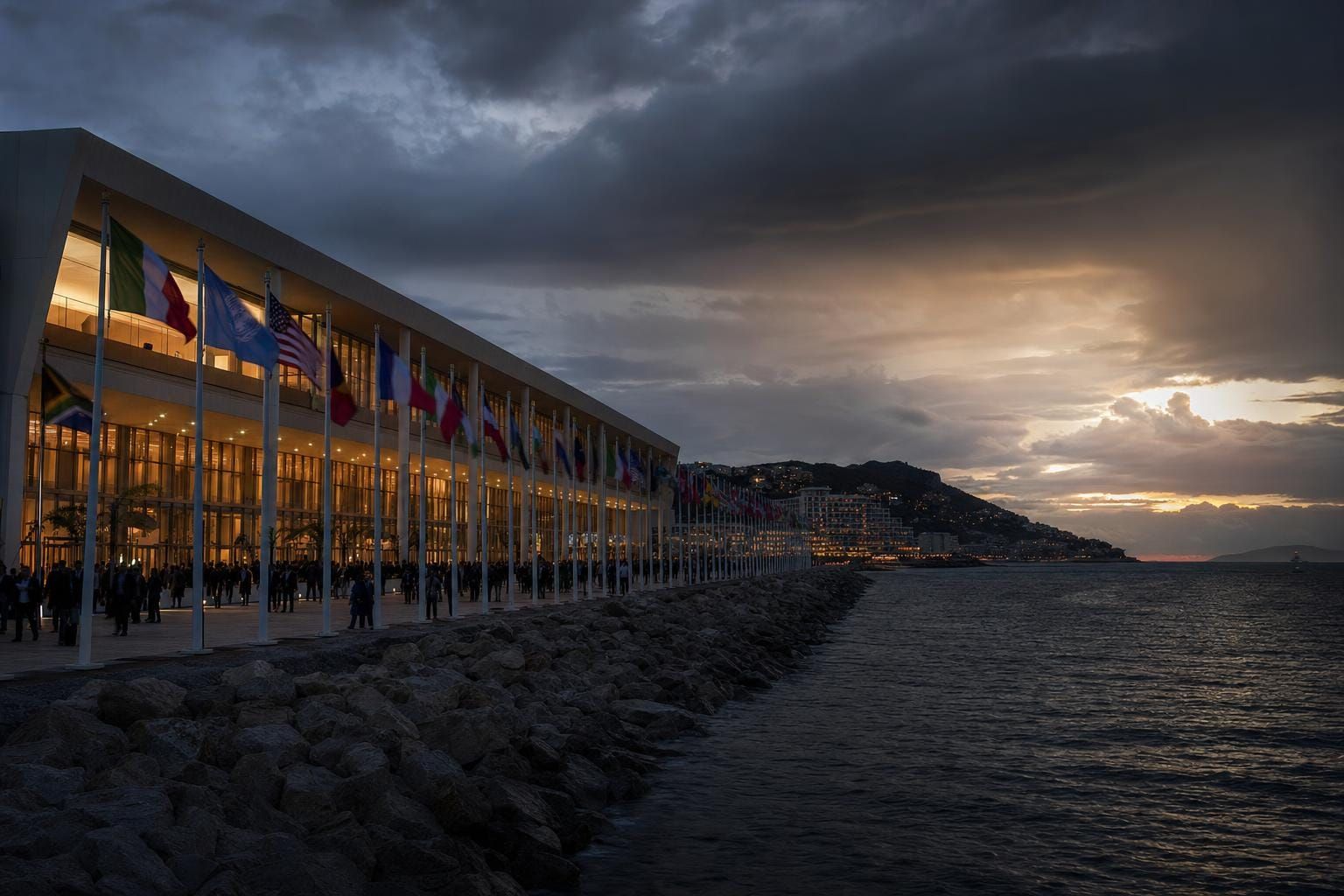
On October 5, the two men running this year's UN climate summit put something in writing that these conferences have spent a decade avoiding. In their joint letter to governments, Türkiye's Murat Kurum and Australia's Chris Bowen acknowledged that the world is now likely to pass 1.5°C of warming within a few years — and that even the most optimistic pathway peaks at around 1.8°C before any decline.
On Monday, November 9, the 31st Conference of the Parties opens in Antalya, a Turkish resort city better known for package holidays than plenary sessions. It runs through November 20. And it is, by any honest reading, the first climate summit of the overshoot era: the first to convene after the UN's own Emissions Gap Report concluded that the Paris Agreement's stretch goal has slipped out of reach. Current policies point to roughly 2.8°C of warming by 2100; full implementation of every national pledge gets that to around 2.6°C, per the UN Environment Program's 2026 assessment.
That number deserves context before the obituaries get written. When Paris was negotiated in 2015, the trajectory was 3.7°C to 4.8°C. A decade of policy and a tenfold increase in global solar capacity bent the curve by more than a full degree. The system works — slowly, expensively, and not fast enough for the target it set itself.
Three firsts in Antalya
COP31 is unusual in three ways that matter for anyone pricing climate policy.
First, the presidency is split — a first in 31 years of COPs. After a years-long standoff over hosting rights, Türkiye and Australia cut a deal endorsed at Belém last November: Türkiye hosts, holds the COP presidency under Kurum, and runs the Action Agenda; Australia's climate minister Chris Bowen serves as President of Negotiations, with the Pacific's interests formally attached to his mandate. Fiji and Tuvalu hosted the Pre-COP in early October — more than 4,000 participants from over 100 countries — which produced the Taku Pakasoa Declaration restating the COP28 goals on renewables and transitioning away from fossil fuels. That restatement matters, because the words "fossil fuels" never made it into the final COP30 text.
Second, the United States is formally gone. Washington's withdrawal from the Paris Agreement took effect at the start of this year, and the Council on Foreign Relations notes the U.S. — the world's second-largest emitter — will send no official delegation to Antalya, though members of Congress and American businesses will attend. The world's largest economy is now shaping climate policy by its absence.
Third, the fight is no longer about degrees. It's about money. At the Istanbul Climate Finance Summit in September, Kurum put the annual climate finance requirement at $7.5–9 trillion, against roughly $1.9 trillion actually mobilized. His framing was blunt: "without finance, there is no implementation." The formal negotiating agenda inherits the COP29 commitment to mobilize at least $300 billion per year for developing countries by 2035 — against the $136.7 billion the OECD says developed countries delivered in 2024 — plus the COP30 call to at least triple adaptation finance over the same period.
The gap between those numbers is the real agenda in Antalya. Everything else — the Mitigation Work Programme review, the second Global Stocktake that formally opens at this COP, the stalled IPCC reporting timeline — orbits the question of who pays, in what form, and through which plumbing.
And for investors, that plumbing is where COP31 stops being diplomacy and starts being a positioning question.
A free AlphaBriefing membership gets you access to every free briefing on AlphaBriefing.com — join free in 30 seconds.
The rest of this briefing is free — it just requires a free AlphaBriefing account: the electrification benchmark that quietly reprices grid equipment demand, the broken $10.7 million funding line holding back a functioning global carbon market, and the adaptation-finance decision that would hand insurers and water infrastructure a multilateral yardstick for the first time.
Create your free account → — 30 seconds, no card.