California's Fire Insurer of Last Resort Just Raised Rates 29%. In 17 Days, Voters Decide Whether to Replace It.
The FAIR Plan carries $768 billion of wildfire exposure on a few hundred million in cash, and the November 3 race to regulate it offers two opposite fixes. What each outcome means for Mercury, Allstate, Travelers, Chubb, and the reinsurers.

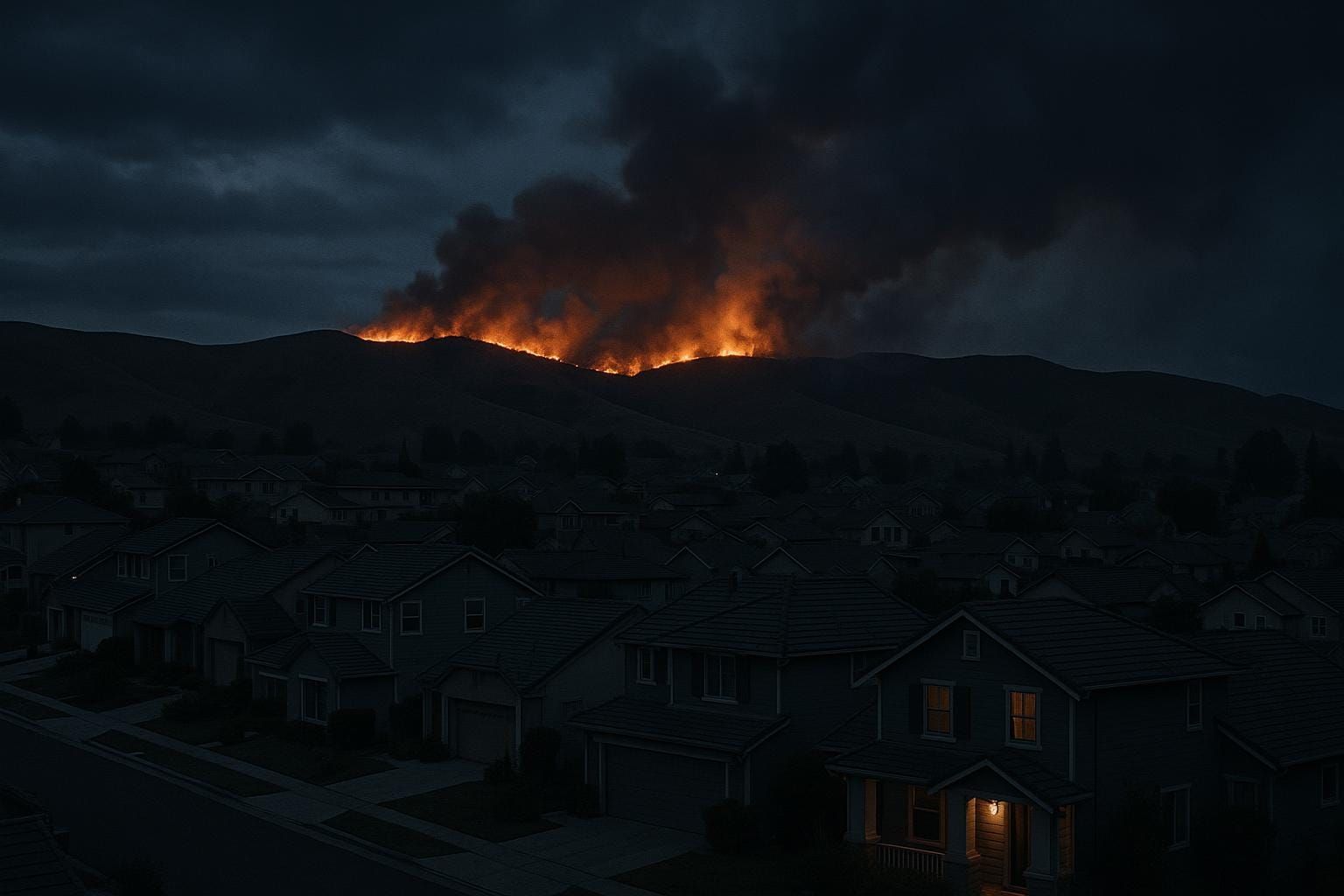
On Thursday, the largest rate increase in the recent history of California's FAIR Plan took effect: an average of 29.1% across the roughly 697,000 policies on the books of the state's insurer of last resort. The plan had asked for 35.8%. Homeowners in the highest-risk zip codes will see considerably more than the average — some wildfire premiums are expected to double — while a few urban policyholders may actually see decreases.
Seventeen days from now, on November 3, Californians elect the person who regulates that insurer, approves (or blocks) every rate request in the state's property market, and decides how hard to squeeze the companies that fled it. For the first time, the runoff is between two Democrats — and they are offering close to opposite answers to the same crisis. One wants to rebuild the private market. The other wants the state to take over disaster coverage and replace the FAIR Plan outright.
For a down-ballot regulatory office, the stakes for one of the world's largest insurance markets are unusually concrete.
The balance sheet on the ballot
Start with the math of the FAIR Plan, because it frames everything else. According to the plan's own key statistics, total exposure reached $768 billion as of June 2026 — up 11% from September 2025 and up 250% since September 2022. Policies in force hit 696,562, a 157% increase over the same four years. Against that exposure, the plan collects about $2.04 billion in annual written premium and holds a direct cash balance of just $200–400 million. That is an exposure-to-cash ratio of at least 1,900 to 1.
The plan isn't supposed to hold capital against the full tail — it layers reinsurance and, crucially, the right to assess every licensed property insurer in California, pro rata by market share. January 2025 showed exactly how that works. After the Palisades and Eaton fires, with estimated FAIR Plan claims around $4 billion, then-Commissioner Ricardo Lara approved a $1 billion emergency assessment on member insurers, with companies permitted to recoup half of it from their own policyholders statewide, subject to regulatory approval.
That is the quiet mechanism investors should understand: when the insurer of last resort runs out of money, the bill goes to every carrier still writing in California — including the ones that stopped writing new homeowners business precisely to avoid this risk. Retreating from the state reduces the assessment share; it does not eliminate it.
Two Democrats, opposite fixes
Ricardo Lara is term-limited. The June primary sent two Democrats to the runoff:
Ben Allen, a state senator since 2014 whose district includes the Palisades, is running as the continuity-plus candidate. He backs the broad direction of the department's current reforms — faster rate reviews, letting insurers price reinsurance costs and forward-looking catastrophe models into premiums — layered with his own legislation: a new law expanding the commissioner's power to force insurers to fix claims-handling violations, a state-backed loan program for home hardening, and a requirement that insurers warn homeowners before dropping them and give them time to fix the problem. He is endorsed by the California Democratic Party, both of the state's U.S. senators, and the San Francisco Chronicle.
Jane Kim, a former San Francisco supervisor and the former California political director of Bernie Sanders' 2020 campaign, is proposing what she freely admits is a structural break: a state-run public disaster insurance program that would split fire (and flood) coverage out of private policies, replace the FAIR Plan, be funded by premiums policyholders already pay, and invest part of that revenue in wildfire mitigation. She points to New Zealand's public natural-disaster scheme as a template and has said coverage would run up to the median price of a home. Sanders, Rep. Ro Khanna, and the California Labor Federation back her.
The two spent an October 8 debate sharpening the contrast. Kim accused Allen of offering to "tinker" with a failing status quo; Allen called her plan "totally unprecedented and unmoored." Kim's rally line distills her pitch: "They will tell us our ideas are too expensive or magical thinking, but the status quo is not the safest path. It is the most expensive one."
Is the current fix working?
The evidence cuts both ways, which is why this race is genuinely contested. The Department of Insurance reported in August that FAIR Plan growth slowed to under 2% in the second quarter of 2026, with roughly 24,000 policies moving back to the private market in April and May — the depopulation regulators have been promising. Several carriers have pledged to resume writing in the state.
But the cost side is brutal. Stanford researchers found in June that California homeowners premiums are up 84% since 2020, and that FAIR Plan enrollment has roughly tripled from under 2% to about 5% of homes — with seven of the state's twelve largest home insurers having reduced or halted new underwriting in recent years. In towns like Truckee, Nevada City, Malibu, and Lake Arrowhead, KQED reports that roughly half of all homes now sit on the FAIR Plan. Thursday's 29.1% increase lands on exactly those households.
Whoever wins inherits the same $768 billion balance sheet. The question that matters for markets isn't really who wins — it's who holds the fire risk the morning after, which carriers are on the hook for the next $1 billion assessment, and which outcome the sector's year-long rally has already priced.
Get the next briefing free in your inbox: Join AlphaBriefing
The rest of this briefing is free — it just requires a free AlphaBriefing account: the carrier-by-carrier read on who actually pays a FAIR Plan assessment, what each election outcome means for Mercury, Allstate, Travelers, and the reinsurers after their 12-month run, and the three signals that will tell you which way California property risk is repricing before the market does.
Create your free account → — 30 seconds, no card.