Big Tech Is Hoarding Uranium — and the Market Can't Keep Up
Microsoft, Amazon, Google, and Meta have signed nuclear deals totaling 10+ gigawatts. The uranium supply can't keep up — and the investment implications are enormous.

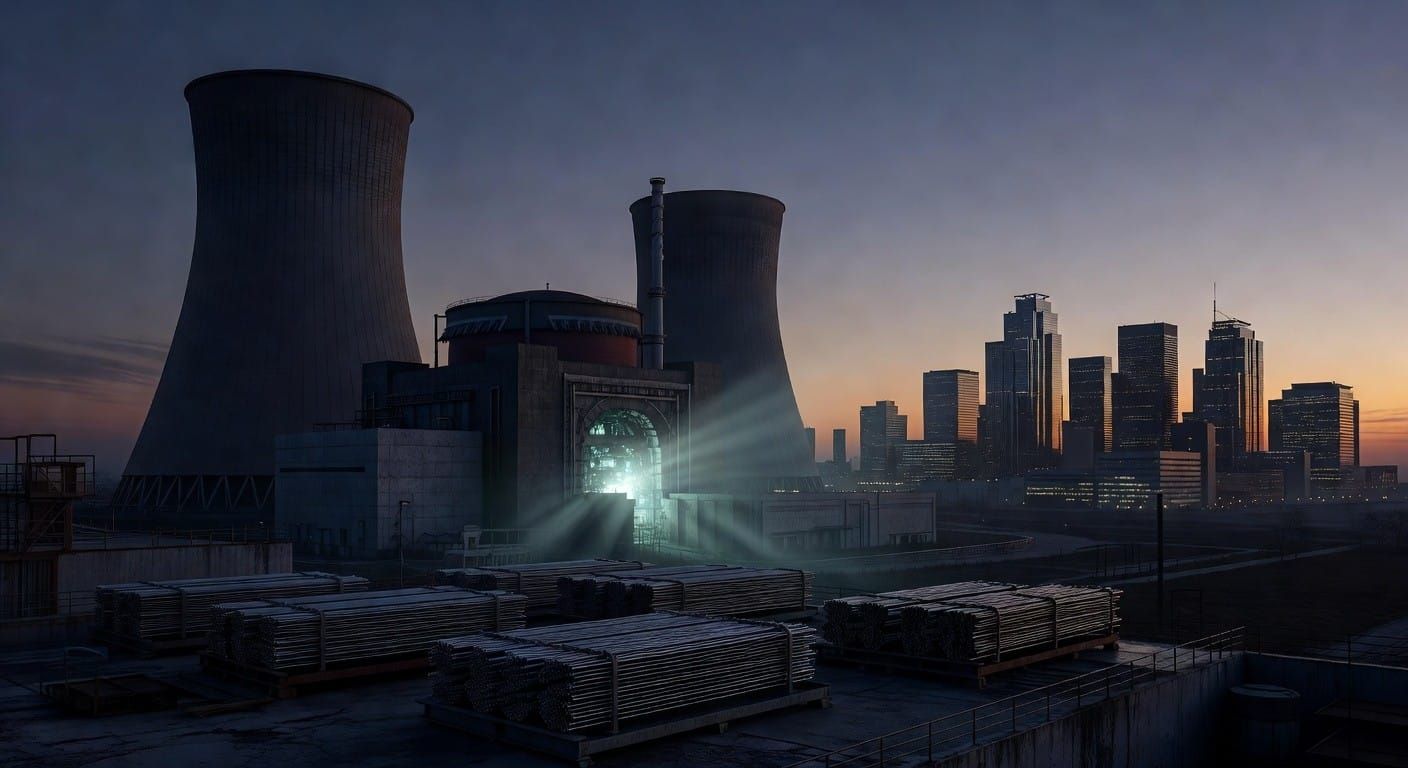
The last time uranium mattered to anyone outside a utility boardroom, it was 2007. Spot prices had spiked to $136 a pound, driven by a flood at Cameco's Cigar Lake mine and a wave of speculative buying. Then the financial crisis killed the party, Fukushima buried the corpse, and uranium spent the better part of fifteen years as a forgotten commodity — stuck below $30, starved of investment, and dismissed by markets as a relic of the Cold War.
That era is over.
Uranium spot prices are hovering around $85 a pound. Long-term contract prices have hit $90 — the highest since 2008. And the buyers aren't just utilities preparing for the next refueling cycle. They're Microsoft, Amazon, Google, and Meta — companies that have spent the last two years quietly assembling the most aggressive corporate nuclear energy strategy in history.
The investment thesis is straightforward: the world needs dramatically more nuclear power, the fuel supply can't keep up, and the companies with the deepest pockets on Earth are competing for a commodity most investors stopped watching a decade ago.
The Demand Shock Nobody Priced In
The traditional demand story for uranium is well understood. Around 440 reactors operate globally, consuming roughly 180 million pounds of U₃O₈ per year. The World Nuclear Association projects that figure will rise 28% by 2030 — to approximately 225 million pounds annually — as countries restart shuttered plants, extend operating licenses, and build new capacity.
China alone has 38 reactors under construction, adding an estimated 44 gigawatts of capacity. Fifteen new reactors are expected to come online globally in 2026, contributing roughly 12 GW. The Palisades plant in Michigan — the first U.S. reactor to restart after entering decommissioning — is in its final preparation stages, backed by a $1.52 billion DOE loan guarantee.
But the traditional demand story isn't what's changed. What's changed is Big Tech.
Silicon Valley's Nuclear Buying Spree
Over the past 18 months, America's largest technology companies have signed nuclear power purchase agreements totaling more than 10 gigawatts of capacity. The scale is unprecedented in the history of corporate energy procurement.
Microsoft signed a 20-year power purchase agreement with Constellation Energy to restart Unit 1 at Three Mile Island — now rebranded as the Crane Clean Energy Center. The 835-MW reactor is expected to come online by 2028, with Microsoft helping finance the roughly $1.6 billion restart.
Amazon acquired the Cumulus data center campus adjacent to the Susquehanna Nuclear Plant for $650 million, securing "behind-the-meter" access to nuclear power. It also signed a 1.9 GW PPA with Talen Energy through 2042 and is partnering with X-energy on a fleet of small modular reactors — up to 12 units totaling 5 GW by the 2030s.
Google signed what was described as the largest corporate SMR deal to date — up to 500 MW from Kairos Power's Hermes reactors, with first deployments targeted for the early 2030s.
Meta has committed to approximately 6.6 GW of nuclear projects, including deals with TerraPower (690 MW) and Oklo (1.2 GW for an Ohio campus).
The logic is identical across all four: AI training and inference require massive, uninterrupted, carbon-free power. Renewables alone can't deliver the 24/7 baseload these facilities demand. Nuclear can. And these companies are willing to pay — and wait — to lock in supply for the next two decades.
This is where the analysis gets actionable. AlphaBriefing members get the full investment framework — scenarios, positioning, and the bottom line.
Subscribe to AlphaBriefing — Free, Member, and Paid tiers available.