Big Tech Cornered the Uranium Market. Wall Street Is Late.
Meta locked up 6.6 gigawatts of nuclear power. Kazatomprom cut 2026 production by 10%. The fuel cycle behind the AI buildout is breaking — and Wall Street is still pricing it as a momentum trade that already happened.

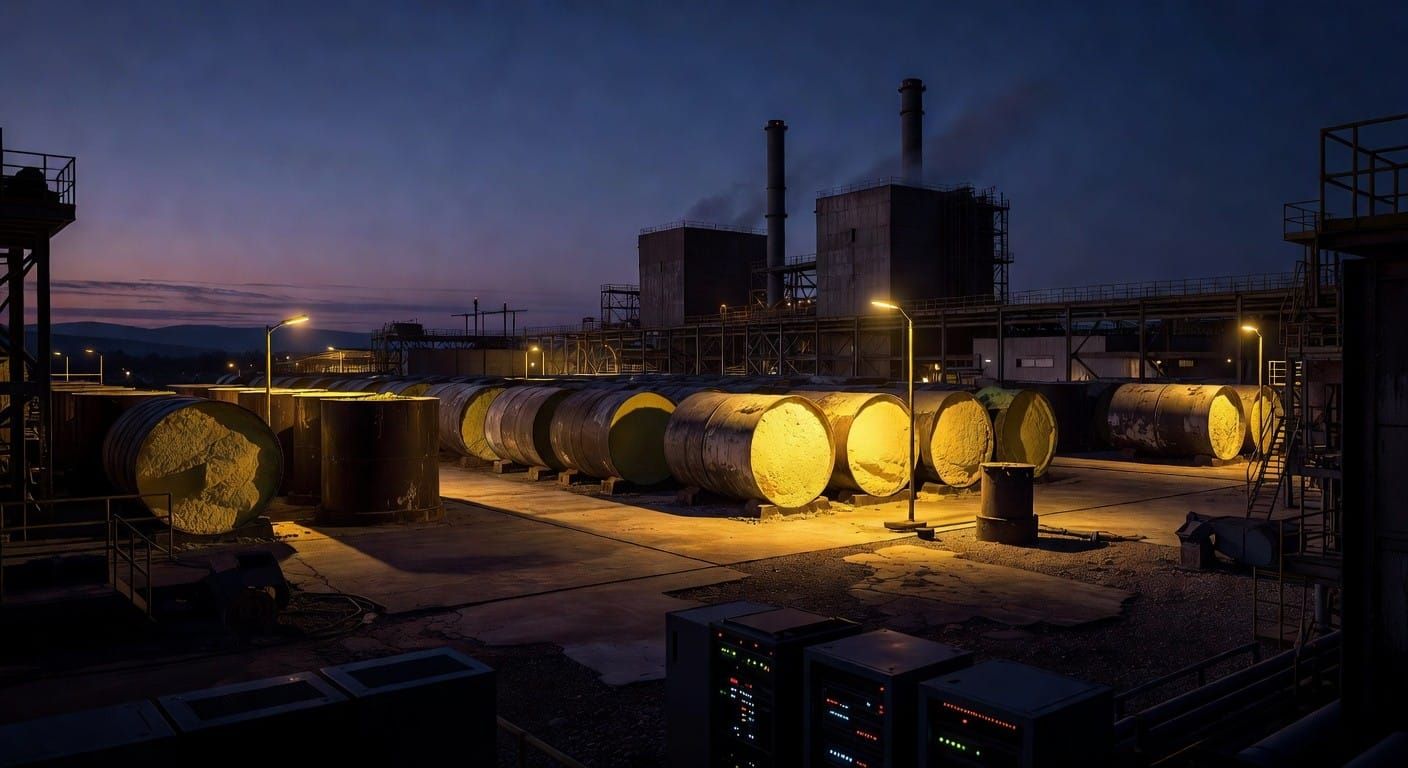
Meta inked deals for 6.6 gigawatts of nuclear power in January. The US and Japan committed $40 billion to small modular reactors in March. Kazatomprom just cut 2026 production by 10%. The uranium fuel cycle is being rebuilt around AI demand — and the equity market has barely started pricing it in.
When Meta announced in January 2026 that it had signed deals for up to 6.6 gigawatts of nuclear power in the PJM market — a 20-year power purchase agreement with Vistra covering more than 2.1 GW of existing capacity, partnerships with TerraPower for at least two 345 MW Natrium reactors, and a direct prepayment to Oklo for a 1.2 GW Aurora powerhouse — the headline read like a corporate sustainability press release.
It was not. It was a procurement strategy aimed at locking up scarce baseload power for a decade before Microsoft, Amazon, and Google could do the same. Two months later the US and Japan jointly committed $40 billion to deploy GE Vernova Hitachi BWRX-300 small modular reactors in Tennessee and Alabama, targeting roughly 3 GW of new capacity. Westinghouse, Brookfield, and Cameco then announced a separate strategic partnership with the US government aiming for at least $80 billion in new AP1000 and AP300 reactor builds.
This is the supply-side answer to the AI grid crisis we covered earlier this week. Hyperscalers cannot wait fifteen years for a gas turbine queue that stretches to 2032. They are not interested in solar plus storage at scale they can route through PJM by 2028. They want firm, dispatchable, carbon-free baseload — and they are willing to pay almost any price to secure it.
The problem: the fuel does not exist in the quantities the buildout requires.
The supply gap nobody priced in
Uranium spot prices are sitting around $86 per pound U3O8 in early June, down from a January spike above $100 but still up roughly 20% year-over-year. Long-term contract prices have reached approximately $90 per pound — the highest level since 2008. That floor matters more than the spot print. Utilities and hyperscalers do not buy uranium on the spot market. They sign multi-year contracts at prices that reflect what producers need to bring new mines into service.
The world's largest producer just told the market it will not deliver more.
Kazatomprom — Kazakhstan's state-owned national atomic company and the source of roughly 40% of global mined uranium — announced a 2026 production reduction of approximately 3,077 tonnes of uranium (around 8 million pounds U3O8), or about 5% of global primary supply. Kazakh management framed it as a "value over volume" decision. The underlying truth is harder: development timelines for new in-situ recovery wellfields have slipped, sulphuric acid shortages persist, and the company is unwilling to deplete its highest-grade deposits at prices that no longer reflect replacement cost.
Cameco, the western world's largest publicly traded producer, has restored full production at McArthur River and increased its stake in the Cigar Lake mine. That is the entirety of the meaningful western supply response. It is not enough.
Meanwhile, the enrichment problem is arriving on a separate timeline. The Prohibiting Russian Uranium Imports Act, signed in May 2024, banned imports of Russian-enriched low-enriched uranium with annual quota waivers that tighten each year and disappear entirely on January 1, 2028. Russia controls roughly 44% of global enrichment capacity. The US currently has one operational commercial enrichment facility — URENCO USA in New Mexico — and the next domestic capacity additions are years from commissioning. Centrus Energy is building HALEU production in Ohio. The American Centrifuge Plant is years from full operation. Every advanced reactor design currently in development — Natrium, Aurora, BWRX-300, the higher-enriched variants — requires HALEU that the US cannot yet produce at scale.
The fuel cycle is breaking simultaneously at the mining, conversion, and enrichment stages. Demand is accelerating because every hyperscaler has decided nuclear is the answer. This is the textbook setup for a structural commodity bull market, and it is happening at the exact moment Wall Street's attention is captured by AI semiconductor capex.
This is where the analysis gets actionable. AlphaBriefing members get the full investment framework — scenarios, positioning, and the bottom line.
Subscribe to AlphaBriefing — Free, Member, and Paid tiers available.