Big Tech Bought Nuclear Power. Now It Needs Fuel.
The hyperscalers signed contracts for gigawatts of nuclear electricity. The uranium supply chain that has to feed those reactors was already short before the AI buildout started — and the West still depends on Russia for the last critical step.

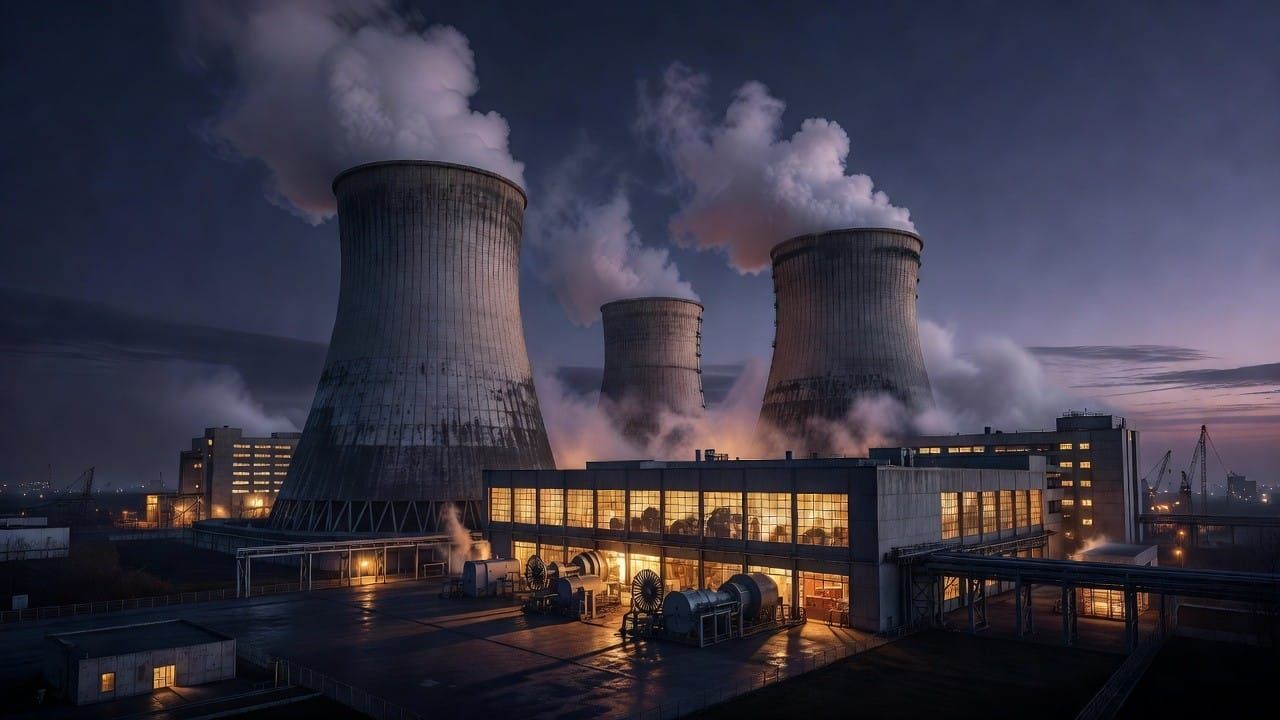
When Amazon agreed to buy 1.92 gigawatts of nuclear capacity from Talen Energy's Susquehanna plant in March 2024, it kicked off a chain reaction that is still spreading through the energy market. Microsoft signed to restart Three Mile Island Unit 1 with Constellation. Meta locked RWE into a twenty-year supply deal at Clinton. Google contracted with Kairos Power for small modular reactors. Oracle is openly talking about powering data centers from on-site reactors.
By mid-2026, every major hyperscaler has a nuclear page in its energy strategy, and the announcements keep coming. The market has been quick to price the equity story — utilities with nuclear exposure, Cameco, the SMR developers — but it has been slower to price what those reactors actually run on.
Uranium does not move at hyperscaler speed. Mines take a decade. Conversion and enrichment capacity outside Russia and China is thin. And the long-term fuel contracts utilities are now scrambling to sign were not designed for a world where data center demand can move grid load by tens of gigawatts inside three years.
The result is a structural mismatch that is starting to show up in spot uranium, term contract prices, and the equity valuations of the small number of Western fuel cycle players that can actually deliver pounds, conversion units, and SWU (separative work units) in the next decade.
The demand picture is no longer hypothetical
Through most of the 2010s, uranium demand was a slow grind. Post-Fukushima Japan shut its fleet. Germany unwound. Cheap US shale gas made new nuclear uneconomic. The narrative was managed decline.
That story is now over.
Three demand vectors are running in parallel:
1. Reactor life extension and restarts. US utilities have moved from talking about 60-year licenses to actively pursuing 80-year operation. Constellation, Vistra, Duke, and Southern have all telegraphed a longer fleet life than the spot market priced in. Three Mile Island Unit 1, Palisades, and Duane Arnold are in various stages of restart planning. Each restart is essentially a new reactor's worth of fuel demand that did not exist on prior supply curves.
2. New build acceleration. Vogtle 3 and 4 in Georgia are running. China is adding reactors at a pace not matched anywhere since 1980s France. India, the UAE, Turkey, and Egypt have active programs. The UK greenlit Sizewell C. France committed to six EPR2 reactors with options for eight more. Even Italy is openly studying a return.
3. SMRs and hyperscaler offtake. This is the new variable. NuScale, GE-Hitachi BWRX-300, X-energy Xe-100, Kairos KP-FHR, Holtec SMR-300, TerraPower's Natrium, and Westinghouse AP300 are all in various stages of regulatory review or first-of-a-kind construction. The hyperscalers have signed billions in offtake and equity. Even if half the announced SMR projects slip, the surviving half adds material uranium demand by the early 2030s.
The World Nuclear Association's 2025 reference scenario already put global reactor requirements roughly 28 percent higher by 2030 versus 2023. The high case runs materially above that. None of those scenarios fully internalize the post-2024 wave of hyperscaler power purchase agreements.
The supply picture has not caught up
On the production side, the math is uglier than the equity market has admitted.
Kazatomprom, the world's largest producer, has been guiding down: sulfuric acid shortages, lower-grade ore bodies, and ISR (in-situ recovery) wellfield issues have repeatedly trimmed production targets. Cameco is bringing McArthur River back to full capacity but has been explicit that it will not flood the market — it is selling into contracts, not chasing spot. Olympic Dam (BHP) is a co-product, not a swing producer. Niger's coup pushed Orano effectively offline at SOMAIR and Cominak by 2024-25, with no near-term restart of meaningful volume.
New mine builds — NexGen's Rook I in the Athabasca Basin, Denison's Phoenix, Paladin's Langer Heinrich back to full rate, Boss Energy's Honeymoon and Alta Mesa — are all on the table. But construction timelines, licensing, and CAPEX inflation are slipping these into the late 2020s at best. Each pound that comes online in 2028 instead of 2025 widens the near-term deficit.
Even if you get the pounds, you still have to convert to UF6, enrich to LEU (and increasingly to HALEU for advanced reactors), fabricate, and deliver. This is where the geopolitics gets uncomfortable.
This is where the analysis gets actionable. AlphaBriefing members get the full investment framework — scenarios, positioning, and the bottom line.
Subscribe to AlphaBriefing — Free, Member, and Paid tiers available.