America Is Running Out of Cattle
Ground beef just hit a record near $7 a pound. The herd is the smallest since 1951, a flesh-eating parasite has sealed the southern border, and Washington's fixes are making it worse. Why beef stays expensive — and who pays.

America Is Running Out of Cattle
Ground beef just hit a record near $7 a pound. The herd is the smallest since 1951, a flesh-eating parasite has sealed the southern border, and Washington's fixes are making it worse. Here's why beef stays expensive — and who pays for it.
There is a number buried in the USDA's cattle inventory that explains your grocery bill better than any inflation print. The American cattle herd now stands at roughly 86.2 million head — the smallest it has been since 1951. Harry Truman was president the last time the country raised this few cattle. The population has nearly doubled since then. The herd has shrunk.
That single fact is why ground beef now averages close to $7 a pound, a record, up more than 70% since 2020. It is why the USDA expects retail beef prices to climb another 10% to 18% in 2026. And it is why none of this is a temporary spike that will pass when the news cycle moves on. America didn't run out of beef by accident. It ran out of cattle — and you cannot conjure a cow overnight.
Eight Years of Drought Did the Damage
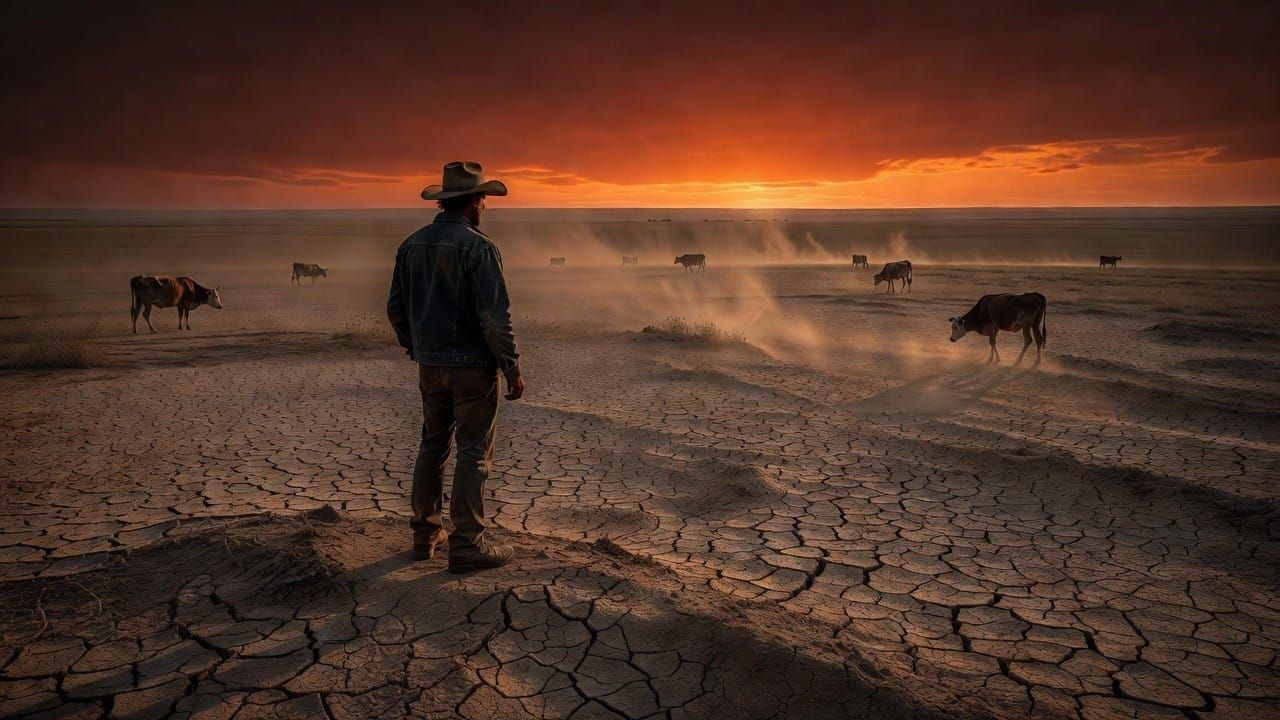
Cattle ranching is a slow business colliding with a fast crisis. It takes roughly two to three years to turn a breeding decision into beef on a shelf, which means the supply you're paying for today was set in motion years ago — in the middle of the worst sustained drought the Great Plains and Southwest have seen in a generation.
For eight consecutive years, dry conditions scorched the grazing land that feeds the American herd. Ranchers faced a brutal choice: pay to truck in feed for animals standing on dirt that could no longer support them, or sell off their breeding stock and take the cash. Most sold. Then interest rates climbed through 2024 and 2025, and the math got worse — holding cattle through a drought means borrowing money, and that money suddenly cost a fortune.
The result is a structural hole. Every breeding cow sold for slaughter during the drought is a calf that was never born, and a herd that cannot be rebuilt until ranchers start keeping heifers again instead of selling them. That rebuild hasn't started in earnest. Even when it does, the biology is unforgiving: meaningful herd growth is unlikely before 2027, and economists don't expect anything resembling "normal" beef prices before 2028 at the earliest.
Then Came the Screwworm
Into that tight supply walked a parasite straight out of a horror film. The New World screwworm — a fly whose larvae burrow into the living flesh of cattle, wildlife, and occasionally humans — has been marching north through Mexico. Mexico has logged more than 28,200 cases since November 2024, and the infestation has now been detected within roughly 60 miles of the Texas border.
The U.S. response was to slam the gate. Washington suspended live-cattle imports through southern ports of entry, choking off a flow of roughly 1,500 head per day that American feedlots and packers depend on. Mexican cattle have long been a release valve for a tight U.S. supply; with that valve shut, the squeeze tightened further. The border won't reopen while the worm keeps turning up in northern Mexico — and there is no quick fix for an insect that the U.S. spent decades and hundreds of millions of dollars eradicating the first time, back in the 1960s.
Washington's Fixes Are Backfiring
This is where policy meets the price of a hamburger, and the collision has been ugly. Facing political heat over grocery inflation, the administration has tried two interventions — and both have misfired.
First, it floated opening the door to Argentine beef imports to ease prices. The announcement infuriated American ranchers, who saw it as Washington undercutting them at the exact moment they finally had pricing power after years of losses. Feeder-cattle futures fell more than 10% on the news. The irony: Argentina ships mostly lower-grade lean beef and accounts for only about 2% of U.S. imports — nowhere near enough to move the needle on supermarket prices, but plenty to spook the people who actually raise cattle.
Second, the administration's 50% tariff on Brazilian products, beef included, did the opposite of help. Brazil is one of the largest sources of the lean trimmings that get blended into American ground beef. Tax those imports, and you raise the price of the cheapest beef in the case — the ground chuck that working families actually buy. The tariff meant to project strength quietly made the burger more expensive.
The Packers Are Bleeding Too
Here's the counterintuitive part for anyone assuming Big Meat is feasting on these prices: the companies that turn cattle into steak are getting crushed.
The "Big Four" — Tyson, JBS, Cargill, and National Beef — process roughly 85% of the grain-fattened cattle in the country. Their business model runs on a spread: the gap between what they pay for a live animal and what they get for the boxed beef. When cattle are scarce, ranchers and feedlots hold the leverage, and that spread collapses. Tyson's beef segment recently posted a $94 million operating loss, with volumes down 8.4% even as its prices rose 17%. The company has begun closing plants, including a Nebraska facility that employed more than 3,000 people.
That's the cruel symmetry of this crisis. Consumers pay record prices at the register. Ranchers finally get paid for their cattle. And the middlemen who dominate the industry are losing money and laying off workers — because there simply aren't enough animals moving through the system to keep their plants full.
What It Means for Your Money
Strip away the politics and the parasite, and the investment takeaway is straightforward: the beef squeeze is structural, not cyclical. It will not resolve on a quarterly timeline. Position accordingly.
- Grocery inflation has a sticky floor. Beef is one of the most visible prices in the American economy, and it is locked higher through at least 2027. Anyone modeling food-CPI normalization in 2026 is fighting biology.
- The packers are a value trap until the herd turns. Tyson, JBS, and their peers don't recover on rising beef prices — they recover when cattle supply loosens and the processing spread reopens. That's a 2027–2028 story, not a 2026 one. Cheap-looking packer stocks can stay cheap.
- Watch the heifer-retention data, not the headlines. The single most important signal for when this ends is ranchers holding back female calves to rebuild herds instead of selling them. Until USDA inventory data shows that shift, every "beef prices to fall" call is premature.
- Substitution is the quiet winner. As beef pushes past psychological price thresholds, demand migrates — to chicken and pork (where Tyson, ironically, has a booming poultry business), to private-label and value cuts, and to the grinders blending cheaper imported lean. The protein dollar doesn't disappear; it moves.
- Screwworm is the wildcard that could make it worse. If the parasite crosses into Texas — the heart of American cattle country — the supply shock goes from severe to historic. It's a low-probability, high-impact risk worth tracking.
The Bottom Line
America built the most productive beef machine on earth and then spent eight years of drought, a cycle of high rates, a flesh-eating parasite, and a round of self-defeating trade policy dismantling it from the supply side. The cattle aren't there. They can't be willed into existence by a press conference or a tariff. And until the herd rebuilds — a process that runs on the patience of biology, not the urgency of politics — the most American food on the table stays a luxury.
The next time someone tells you inflation is beaten, ask them what they paid for ground beef.
Get this level of intelligence every day. Subscribe to AlphaBriefing — free, member, and paid tiers available.
Sources & Further Reading
- Bloomberg — Why Beef Prices Won't Drop Anytime Soon
- CBS News — Beef, that all-American food, is getting harder for Americans to afford
- USDA Economic Research Service — Cattle & Beef Market Outlook
- Marketplace — Why beef prices keep climbing
- USDA APHIS — Importing Live Cattle and Bison From Mexico to the United States
- Drovers — When Could the U.S. Reopen the Southern Border to Cattle Imports?
- Al Jazeera — US ranchers whiplashed by Trump's beef policies
Disclaimer
AlphaBriefing is an independent intelligence publication. The content in this article is produced for informational and educational purposes only. Nothing published by AlphaBriefing constitutes financial, investment, legal, tax, or regulatory advice, nor should it be construed as a solicitation or recommendation to buy, sell, or hold any security, asset, or financial instrument.
All views expressed are those of the author at the time of writing and are subject to change without notice. Markets are volatile and unpredictable; past performance is not indicative of future results. Any investment involves risk, including the possible loss of principal.
AlphaBriefing and its principals, employees, or contributors may hold positions in securities or assets mentioned in this article. This should be considered a potential conflict of interest. No material relationship with any company referenced exists unless explicitly disclosed. Readers should conduct their own due diligence and consult qualified financial, legal, and tax advisors before making any investment decisions.
Information in this article is drawn from public sources believed to be reliable at the time of publication. AlphaBriefing makes no warranty, express or implied, as to the accuracy, completeness, or timeliness of any information herein. AlphaBriefing accepts no liability for any loss or damage arising from reliance on this content.
© AlphaBriefing. All rights reserved. Unauthorised reproduction or distribution is prohibited.