Hospitals Buy the Drugs Cheap. Medicare Pays Full Price. January 1 Could End the Trade.
The 340B drug program hit $100 billion last year, and almost nobody outside health care can explain it. CMS just proposed paying hospitals 40 points less for drugs they buy at a discount — and this time it ran the survey the Supreme Court demanded.

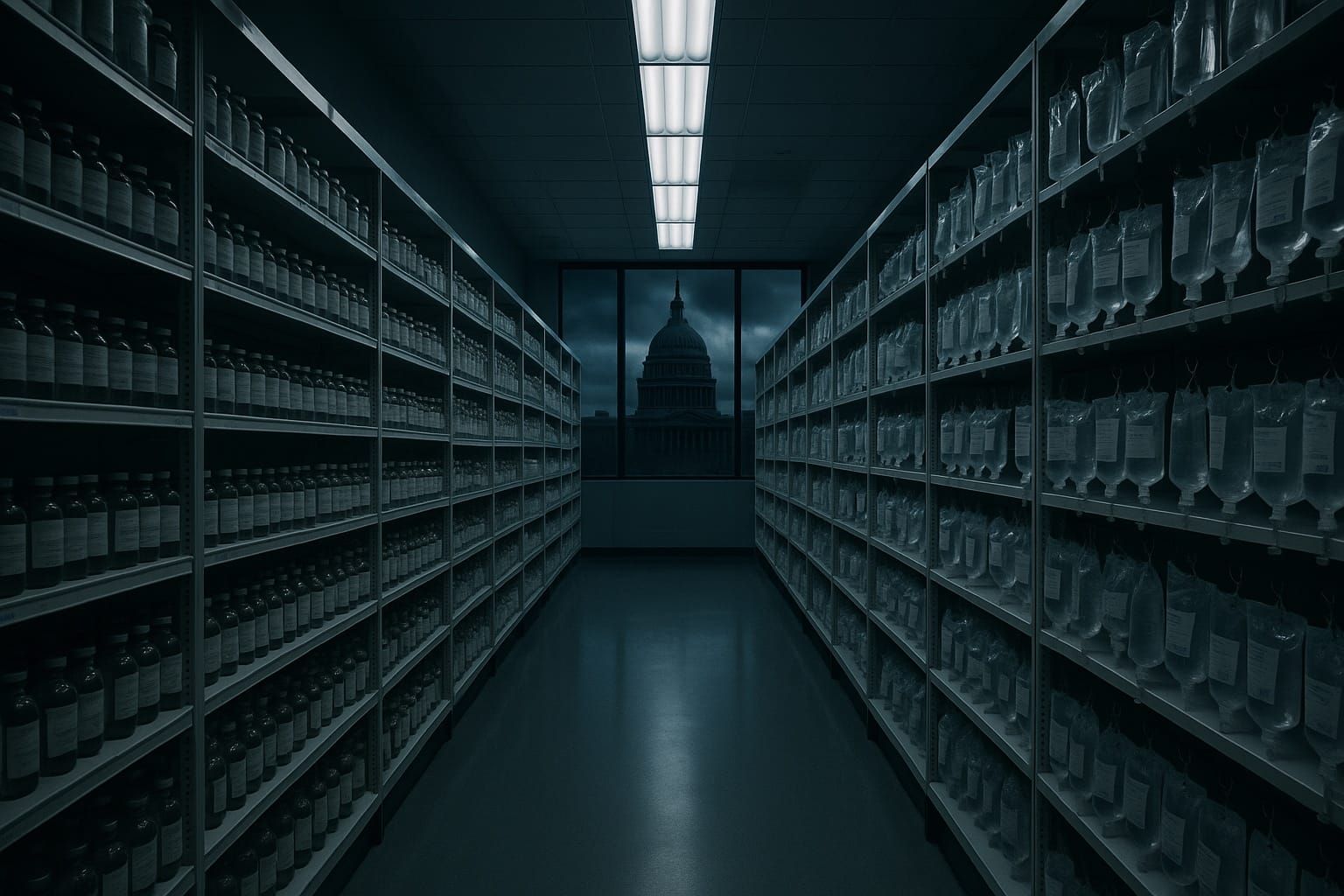
America runs a drug discount program that moved $100 billion last year, spans roughly 12,500 hospitals and clinics, and sits underneath the economics of infused drugs across American health care. Most Americans have never heard of it. It's called 340B, and the federal government just proposed the deepest Medicare payment cut in its 34-year history — effective January 1, 2027.
Here is the trade at the center of it: eligible hospitals buy outpatient drugs from manufacturers at steep, federally mandated discounts — HRSA, the agency that runs the program, estimates 25% to 50% off. Then they bill Medicare and private insurers at full reimbursement rates and keep the difference. The spread between what a hospital pays for a drug and what it collects for administering it has become one of the most reliable profit engines in American health care.
The Centers for Medicare & Medicaid Services now wants to close that spread for Medicare patients. And unlike the last time Washington tried this — a fight that went all the way to a unanimous Supreme Court loss and a $9 billion government payout — this time CMS did the one thing the justices said it had failed to do.
What 340B Actually Is
Congress created the 340B program in 1992 with a straightforward bargain: if drugmakers wanted access to Medicaid and Medicare Part B, they had to sell outpatient drugs at a discount to "covered entities" — safety-net hospitals and clinics serving low-income and uninsured patients. The discounts were meant to let those providers "stretch scarce federal resources," in the statute's words. Nothing in the law requires the savings to be passed on to patients.
That last part is the quiet engine of everything that followed. A hospital that buys a drug at 40% off and bills an insurer at full price keeps the margin, legally, with no obligation to report where the money goes.
For its first two decades, 340B was a modest sideshow. Then it wasn't. Discounted purchases grew from $66.3 billion in 2023 to $81.4 billion in 2024, and hit $100 billion in 2025 — up 22.8% in a single year, according to the Drug Channels Institute, which tracks the program. At list prices, those same drugs were worth $179.5 billion, implying roughly $79.5 billion in discounts changing hands. By Drug Channels' count, 340B purchases now exceed Medicaid's entire net prescription drug spending by more than 70%.
A Congressional Budget Office review published in September 2025 found that only about a third of the program's growth came from rising drug spending itself. The rest came from expansion: hospitals acquiring independent physician practices (whose prescriptions then qualify for 340B pricing), and an explosion of "contract pharmacy" arrangements that let covered entities capture discounts on prescriptions filled at retail chains. Drug Channels counts more than 31,000 contract pharmacy locations and nearly 240,000 contractual relationships across roughly 12,500 covered entities as of mid-2026. Hospitals account for 87% of all 340B purchases.
Briefings like this land in members' inboxes before the market prices them in. Join free →
The Proposal: Pay What Hospitals Actually Pay
Today, Medicare reimburses hospitals for 340B-acquired drugs at the drug's average sales price plus 6% — the same rate paid to providers who bought the drug at full price. On July 7, 2026, CMS published a proposed rule that would cut that rate to average sales price minus 33.4%, starting January 1, 2027.
The number isn't arbitrary. Between January and April of this year, CMS surveyed every hospital paid under Medicare's outpatient system about what they actually paid to acquire 340B drugs. The survey found average acquisition costs roughly 33.4% below average sales price — and, in some cases, found Medicare patients' 20% coinsurance payments exceeding what the hospital had paid for the entire drug.
CMS estimates the change would cut Medicare drug payments by $4.55 billion in the first year and reduce what beneficiaries pay out of pocket by $1.15 billion. The arithmetic is direct: Medicare patients owe 20% coinsurance on the billed amount, so a drug with a $1,000 average sales price costs a patient $212 today and would cost $133.20 under the proposal. Casey Mulligan, HHS's chief economist, made the administration's public case for the rule in STAT on October 8 — a signal, weeks before the final rule is due, that the White House intends to hold the line.
Two design features matter for anyone handicapping the fallout. First, the rule is budget-neutral: the $4.55 billion doesn't leave the hospital sector, it gets redistributed as higher Medicare payments for non-drug outpatient services across all hospitals — shifting money from drug-heavy 340B systems toward everyone else. Second, rural sole community hospitals are exempt, which blunts the most politically potent objection — that the cut would shutter rural safety-net providers.
Why This Time Is Different
Washington has tried this before, and lost spectacularly.
In 2018, the first Trump administration cut 340B reimbursement to average sales price minus 22.5%. Hospital groups led by the American Hospital Association sued, and in June 2022 the Supreme Court ruled unanimously in American Hospital Association v. Becerra that HHS couldn't vary payment rates between hospital groups without first surveying hospitals' actual acquisition costs. The government's tab for losing: a one-time remedy of roughly $9 billion, paid out as lump sums to affected 340B hospitals in early 2024 — money CMS is still clawing back from the broader hospital sector through payment offsets. (The new rule proposes accelerating that clawback from 0.5% to 3% annually, recovering the remaining $7.8 billion by 2029.)
The 2026 proposal is built to survive the exact test the 2018 cut failed. The Supreme Court didn't say HHS couldn't pay 340B hospitals less — it said HHS couldn't do it without a cost survey. CMS has now run that survey, on every outpatient hospital, and set the rate directly from the results. Hospital groups will almost certainly litigate again. But this time they'll be arguing against the methodology the Supreme Court itself prescribed.
And the Medicare cut is only one front. On the same day it would take effect — January 1, 2027 — a revised HRSA pilot program begins allowing ten manufacturers, including Pfizer, AbbVie, Merck, and AstraZeneca, to convert 340B's upfront discounts on 21 drugs into after-the-fact rebates, forcing hospitals to buy at full price and claim the discount back with documentation. An earlier version of that pilot was vacated in February after hospital litigation; the revived version is broader. Drugmakers want visibility into where 340B drugs actually go. Hospitals call it a cash-flow weapon. Both are right.
Who Wins, Who Loses
Large 340B hospital systems are the clear losers. The spread on Medicare patients compresses by roughly 40 percentage points, and the CBO's growth drivers — buying up oncology practices, stacking contract pharmacies — become less lucrative at the margin. Systems that financed physician-practice acquisitions against 340B economics will feel it in the business case, not just the income statement.
Medicare patients on infused drugs — oncology, rheumatology, ophthalmology — are the most direct winners: $1.15 billion less in coinsurance in year one, concentrated among the sickest beneficiaries.
Non-340B hospitals quietly benefit from budget neutrality, collecting higher rates on everything else they do.
Drugmakers win twice: the rebate pilot gives them the audit trail they've spent a decade demanding, and a smaller 340B arbitrage reduces pressure on their commercial pricing. The program's growth — 22% a year, compounding — was becoming a structural tax on the industry; 2027 is the year the curve is designed to bend.
The thing to watch is the final rule, expected in November when CMS typically finalizes its outpatient payment rules. If the 33.4% figure survives — or deepens — the 340B economy that grew 22% a year for 15 years gets repriced on January 1. If hospital litigation wins another injunction, the $100 billion machine keeps compounding. Either way, a program designed in 1992 as a modest concession to safety-net clinics is now a nine-figure-a-day battleground between hospitals, drugmakers, and the federal government — and almost nobody outside the industry knows it exists.
If this analysis was useful, this is what AlphaBriefing does every day — policy and markets, connected to what it means for your money. Free members get the daily brief in their inbox; paid members get the investment frameworks, scenario pricing, and catalyst calendars behind the paywall.
Get the next briefing free in your inbox: Join AlphaBriefing — free, member, and paid tiers available.
Sources & Further Reading
- CMS — Calendar Year 2027 Hospital Outpatient Prospective Payment System Proposed Rule Fact Sheet
- Federal Register — CY 2027 OPPS Proposed Rule (July 7, 2026)
- STAT — How CMS plans to fix a major flaw in the 340B drug discount program (Oct 8, 2026)
- Drug Channels Institute — The 340B Program Hit $100 Billion in 2025
- Congressional Budget Office — Growth in the 340B Drug Pricing Program
- Supreme Court — American Hospital Association v. Becerra (2022)
- HFMA — 340B rebate model takes shape for 2027 with 10 manufacturers, 21 drugs
- Fierce Healthcare — HRSA names 10 drugmakers for revised 340B rebate pilot ahead of 2027 launch
Disclaimer
AlphaBriefing is an independent intelligence publication. The content in this article is produced for informational and educational purposes only. Nothing published by AlphaBriefing constitutes financial, investment, legal, tax, or regulatory advice, nor should it be construed as a solicitation or recommendation to buy, sell, or hold any security, asset, or financial instrument.
All views expressed are those of the author at the time of writing and are subject to change without notice. Markets are volatile and unpredictable; past performance is not indicative of future results. Any investment involves risk, including the possible loss of principal.
AlphaBriefing and its principals, employees, or contributors may hold positions in securities or assets mentioned in this article. This should be considered a potential conflict of interest. No material relationship with any company referenced exists unless explicitly disclosed. Readers should conduct their own due diligence and consult qualified financial, legal, and tax advisors before making any investment decisions.
Information in this article is drawn from public sources believed to be reliable at the time of publication. AlphaBriefing makes no warranty, express or implied, as to the accuracy, completeness, or timeliness of any information herein. AlphaBriefing accepts no liability for any loss or damage arising from reliance on this content.
© AlphaBriefing. All rights reserved. Unauthorised reproduction or distribution is prohibited.