Why the Cocoa Crash Is a Trap
Cocoa collapsed more than 50% from its record high, and the market is calling it relief. It is the opposite: the crash is dismantling the farmer economics that would rebuild supply — and the EU's deforestation rules land at year-end. Here is how to position.

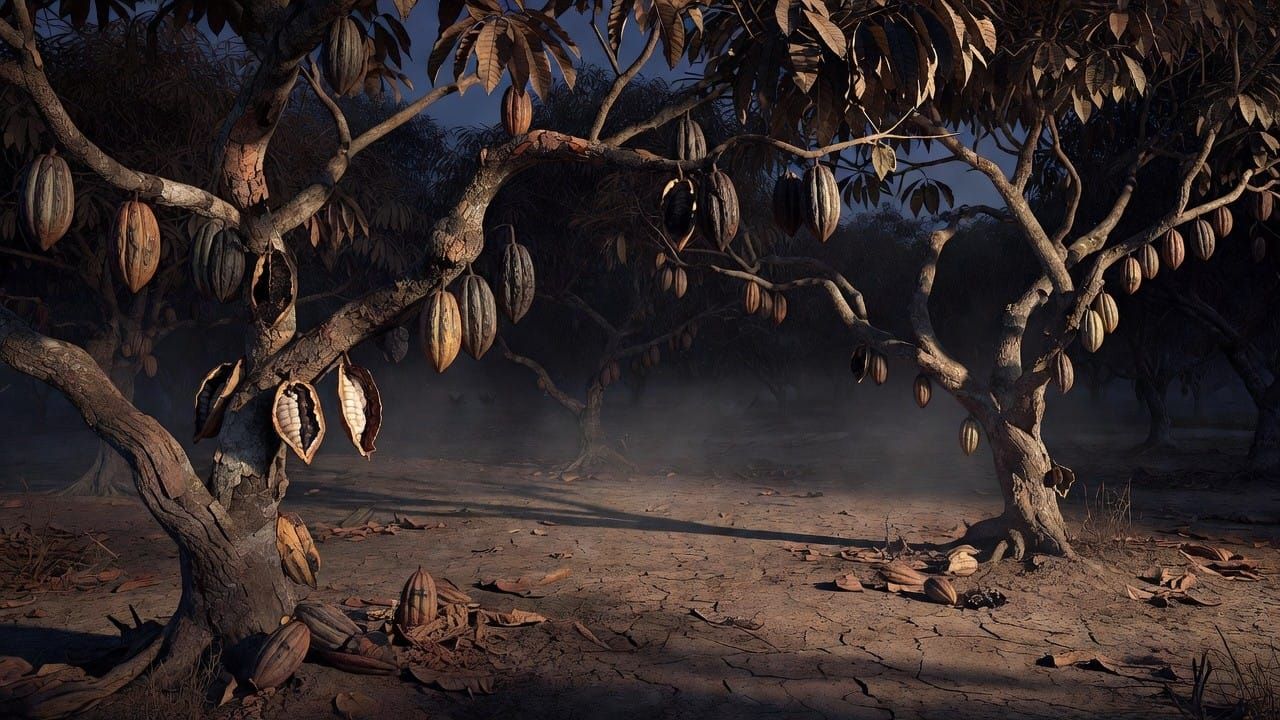
Eighteen months ago, cocoa was the most explosive commodity on the planet. A historic supply failure in West Africa sent futures vertical, peaking near $12,650 per ton in December 2024 — a 177% surge in a single year that made cocoa, briefly, more expensive than copper by weight. Confectioners panicked. Bars shrank. "Shrinkflation" entered the household vocabulary by way of the candy aisle.
Then it broke the other way. By early 2026 cocoa had collapsed to roughly $3,000–$3,400 per ton — down well over half from the peak and off more than 40% in the first months of the year alone. The headlines wrote themselves: the crisis is over, relief is coming, cheaper chocolate is on the way.
That reading is wrong, and dangerously so. The crash isn't the end of the cocoa crisis. It's the mechanism that builds the next one.
What Actually Collapsed
Prices fell. Production did not recover.
Cocoa is overwhelmingly a West African crop — Côte d'Ivoire and Ghana together account for roughly 60% of the world's beans. Both are still in structural decline. Ivorian output has slid from over 2 million tons a few years ago to around 1.6 million in the last season. Ghana's harvest fell to under 500,000 tons, hammered by erratic weather, aging trees, and disease. Overall West African output for 2025/26 is still projected to run about 10% below normal.
So what crashed the price? Two things, neither of which is "more cocoa."
First, demand destruction. Twelve-plus dollars a kilo of beans is a number the chocolate industry cannot pass through indefinitely. Grindings — the industry's real-time measure of how much cocoa is being processed into product — fell as manufacturers reformulated, downsized, and watched price-fatigued consumers walk. The market didn't rebalance because supply healed; it rebalanced because demand buckled.
Second, a violent unwind of speculative positioning. The 2024 spike pulled in enormous financial length. When demand visibly softened and a less-catastrophic crop came into view, that length stampeded for the exit. Markets that go up on a panic come down on a panic too.
The Damage Is Being Done Right Now
Here is the part the relief narrative misses entirely: low prices in a crop like cocoa don't fix supply. They sabotage it.
Cocoa trees take three to five years to bear meaningful fruit. The supply you'll have in 2029 depends on what gets planted, replanted, and nurtured in 2026. And the signals being sent to farmers right now are catastrophic for future output:
- Côte d'Ivoire slashed its guaranteed farmgate price by more than half for the 2026 season, to about 1,200 CFA francs (roughly $2.13) per kilogram. Ghana cut its fixed price by 28%. The two governments that set the economics for the majority of the world's cocoa just told their farmers the crop is worth far less.
- Farmers are responding rationally — by walking away. Reports from the cocoa belt describe beans left to rot and growers switching to rubber, gold mining, and other crops that actually pay.
- The structural rot continues underneath: aging, low-yielding trees that nobody can afford to replace, the spread of cacao swollen shoot virus and black pod disease, and illegal gold mining literally consuming farmland.
A crop that needs massive reinvestment to recover is instead being starved of it — at the exact moment the price signal should be pulling capital in. That is how a price crash today becomes a supply deficit tomorrow.
This is where the analysis gets actionable. AlphaBriefing members get the full investment framework — scenarios, positioning, and the bottom line.
Subscribe to AlphaBriefing — Free, Member, and Paid tiers available.