Why NATO Went to Ankara
NATO's first summit on Turkish soil in 22 years opens this week. The venue is the message: Turkey has become the alliance's low-cost arsenal — and the investable exposure isn't where most investors are looking.

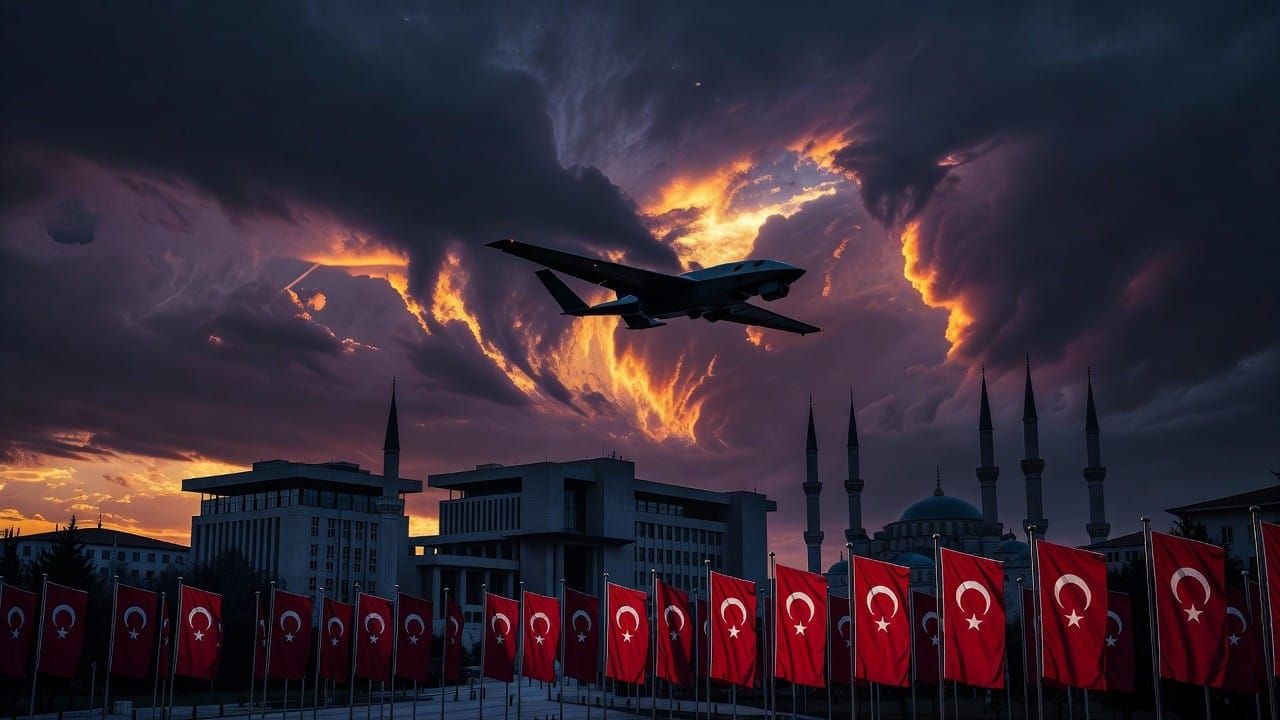
NATO's 36th summit opens July 7 at the Presidential Complex in Ankara — only the second the alliance has ever held on Turkish soil, and the first in 22 years. When leaders last met in Turkey, in Istanbul in 2004, the host's defense industry was a licensed assembly shop for American primes and Ankara was queuing politely for European Union membership.
This week, Turkey hosts the alliance as its fastest-growing arms exporter, holder of NATO's second-largest army, and the one member state that has figured out how to build the weapons this decade's wars actually consume.
Summit venues are never logistics decisions. They are messages. The Hague, last year, was about extracting the 5%-of-GDP spending pledge. Ankara is about something more uncomfortable for Brussels and more interesting for investors: where that money is physically able to go.
The Arsenal Nobody Planned
While Europe spent the 2010s debating whether 2% of GDP was an aspiration or a target, Turkey built a defense industrial base out of necessity — embargoed, sanctioned, and repeatedly cut off from Western systems, it substituted its way to more than 80% domestic content.
The output curve has gone vertical:
- Defense and aerospace exports topped $10 billion in 2025, up roughly 48% year-over-year. The rolling 12-month figure through mid-2026 has already cleared $11 billion.
- Baykar controls roughly 65% of the global armed-drone export market. About 90% of its revenue comes from abroad — it is arguably the most export-dependent major defense company on earth.
- Aselsan, the electronics champion, carries a record $20.4 billion order backlog — multiple years of booked revenue — and in May became the most valuable listed company in Turkey.
- Industry-wide, Turkish firms signed nearly $18 billion in new contracts in 2025 across more than 58 countries, including NATO members: Poland alone took a $410 million electronic-warfare package riding on Bayraktar TB2s.
The product thesis is simple: cost. A Bayraktar TB2 runs a fraction of the price of a Reaper-class Western equivalent. In a war where interceptors are fired faster than any factory can replace them and drones are procured like ammunition, the cost-per-effect curve is the entire game — and Turkey is the only NATO member that industrialized cheap precision mass at export scale before the alliance knew it needed it.
The Summit Tell
Look at what is actually scheduled in Ankara. Secretary General Mark Rutte has framed three priorities: implementing The Hague's 5% investment pledge, expanding transatlantic defense industrial production, and Ukraine. The NATO Summit Defence Industry Forum (NSDIF26) runs July 7 inside the summit perimeter — the alliance's industrial marketplace, convened in the capital of its lowest-cost producer. President Erdoğan chairs the North Atlantic Council session on July 8, hosts a dinner with President Zelenskyy, and enjoys a personal rapport with President Trump that most European leaders would trade a carrier group for.
Now hold that against the other fact on the table. The European Union built a €150 billion rearmament loan fund — SAFE, the largest pool of defense financing in European history — and Turkey has been procedurally frozen out of it. Greece and Cyprus objected, the Commission let Ankara's application sit "under evaluation" past the November 2025 deadline, and the fund's rules cap non-European content in funded procurement at 35%.
So this is the setup, and it is genuinely strange: NATO's political center of gravity is meeting in Ankara because the alliance needs what Turkey builds — while Europe's rearmament money is legally walled off from the factories that build it.
That contradiction is not stable. Capital that needs weapons and weapons that need capital do not stay separated for long; they find a structure. The structures already exist, they are listed, and most investors have not connected them to this summit at all.
The rest of this briefing is for paid members: the three listed access points to Turkey's defense boom (only one of them trades in Istanbul), the joint-venture structure that legally turns Turkish drones into "European content," the catalyst dates through year-end, and the lira framework that decides how big this position should be.
AlphaBriefing Paid gets you every investment thesis, scenario framework, and catalyst brief we publish — the analysis private intel clients pay four figures for, at a fraction of that.