Who Defends Saudi Arabia Now?
An attack on one is now an attack on all: Saudi Arabia, Turkey, and Pakistan just built the first formal alternative to the American security umbrella in the Gulf. The repricing runs through arms flows, tanker rates, and the dollar.

On Friday, in Mecca, three men signed a piece of paper that ends an eighty-year monopoly.
Saudi Crown Prince Mohammed bin Salman, Turkish President Recep Tayyip Erdogan, and Pakistani Prime Minister Shehbaz Sharif signed the Mecca Joint Defense Agreement — a pact declaring that an armed attack on any one of the three "would be regarded as an attack on all." Turkey brings NATO's second-largest army and the fastest-growing defense-industrial complex in the world. Pakistan brings the only nuclear arsenal in the Muslim world. Saudi Arabia brings the world's largest oil exports and the checkbook.
Since Franklin Roosevelt met King Abdulaziz aboard the USS Quincy in 1945, Gulf security has run through exactly one capital: Washington. Riyadh's defense was something you bought from America, or didn't have. What was signed in Mecca on Friday is the first formal alternative ever put on paper.
The market barely blinked. Brent crude fell on the week, closing near $82. That calm is a position — and it's worth examining whether it's the right one.
Why now: the umbrella kept failing its tests
This pact wasn't born in Mecca. It was built over roughly a year of negotiations, and every stage of its construction maps to a moment when the American security umbrella failed a live test.
The first test was September 2019, when drones and cruise missiles hit Abqaiq — the beating heart of Saudi oil processing — and knocked half the Kingdom's output offline. The American response was, in effect, nothing. Riyadh noticed.
The second was September 9, 2025, when Israel struck Doha — the capital of a US major non-NATO ally, hosting the largest American base in the Middle East. Eight days later, Saudi Arabia signed a bilateral mutual-defense agreement with Pakistan. That agreement was the seed. Friday's pact is the tree: negotiators added Turkey, and foreign ministers formalized the framework at a March meeting in Riyadh before the leaders signed in Mecca.
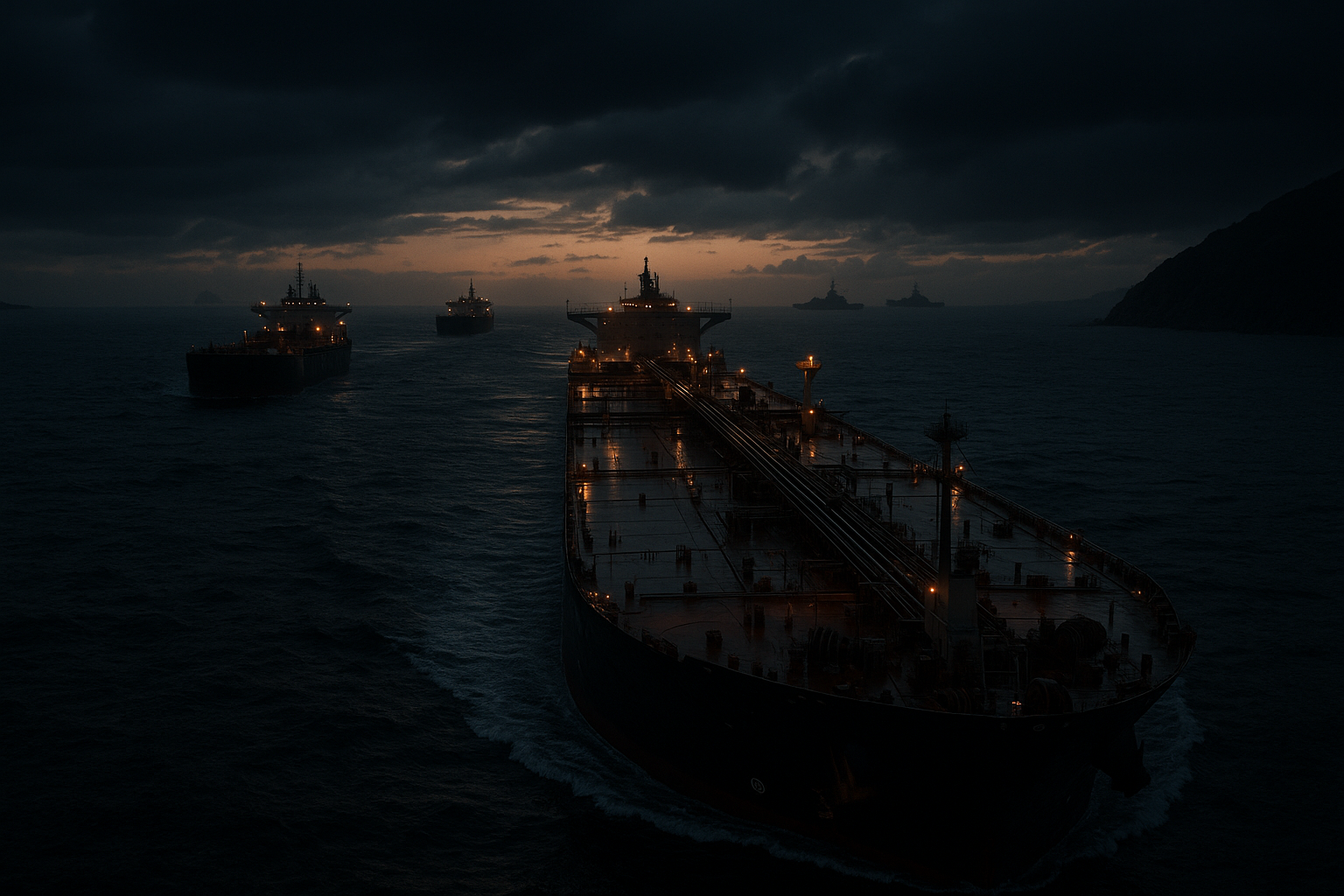
The third test is happening right now. The US-Iran war that began in February has done what wars do — escaped its fence. The Saudi-Houthi truce is dead. In the past week alone, Houthi missile and drone strikes hit camps in Marib and Hadramout, killing at least 30 Yemeni government soldiers; strikes on Najran wounded more than ten Saudi civilians; and the Houthis declared a formal maritime blockade of Saudi ports and Saudi-linked shipping at the Bab al-Mandeb strait — then made it real by targeting two Saudi tankers, the Encelia and the Layla, for "violating the blockade."
Consider the geography that leaves. Saudi Arabia exports oil through two doors: the Strait of Hormuz in the east, still running at a fraction of pre-war transit volumes with war-risk premiums attached, and the Red Sea in the west, whose southern exit is now under declared blockade by a militia that has spent a decade proving it can hit what it aims at. Roughly 7.4 million barrels per day of petroleum — about 7% of global supply — moved through Bab al-Mandeb in June. Transits through the strait dropped 30% in a single day after the blockade announcement. War-risk insurance for a single supertanker voyage has reached roughly $21 million.
Both doors are now contested at once. That is the situation in which Riyadh stopped waiting for Washington.
What the pact is — and isn't
Precision matters here, because the shorthand ("Sunni NATO," "nuclear umbrella") gets ahead of the text. The disclosed agreement is a framework: collective deterrence language, intelligence sharing, capacity building, defense-industrial cooperation, and — notably — energy-sector coordination. There is no published joint command, no tripwire deployment, and no nuclear clause. An Iranian MP dismissed it as "a paper agreement" that "will not bring them security."
But deterrence has never lived in published text. It lives in what an adversary must now consider. And any planner in Tehran — or Tel Aviv, as former Israeli PM Naftali Bennett's warning about a "hostile Sunni axis" suggests some already are — must now weigh that the only nuclear-armed Muslim state has formally declared Saudi Arabia's defense to be its own.
The communiqué talks about deterrence. The money moves through four channels: arms, oil, shipping, and the dollar. Who captures the spending, what happens to the largest arms backlog America has ever booked in the region, and why the physical oil market and the paper oil market are telling two different stories — that's the actionable part.
The rest of this briefing is for paid members: the procurement rerouting — which Turkish defense names capture Saudi demand and the one US-listed vehicle that holds them; what the pact means for the $142 billion American arms backlog and which primes carry the exposure; the tanker math behind an $82 Brent handle that assumes deterrence works; and the four dated triggers between now and year-end that tell you whether this pact is paper or architecture.
AlphaBriefing Paid gets you every investment thesis, scenario framework, and catalyst brief we publish — the analysis private intel clients pay four figures for, at a fraction of that.