The World Just Lost 20% of Its LNG Supply. Here's What Comes Next.
Iran's missile strikes on Ras Laffan — the planet's largest LNG complex — have knocked ~17% of Qatar's capacity offline for 3–5 years. This is not a price spike. It's a structural rewiring of global energy markets.

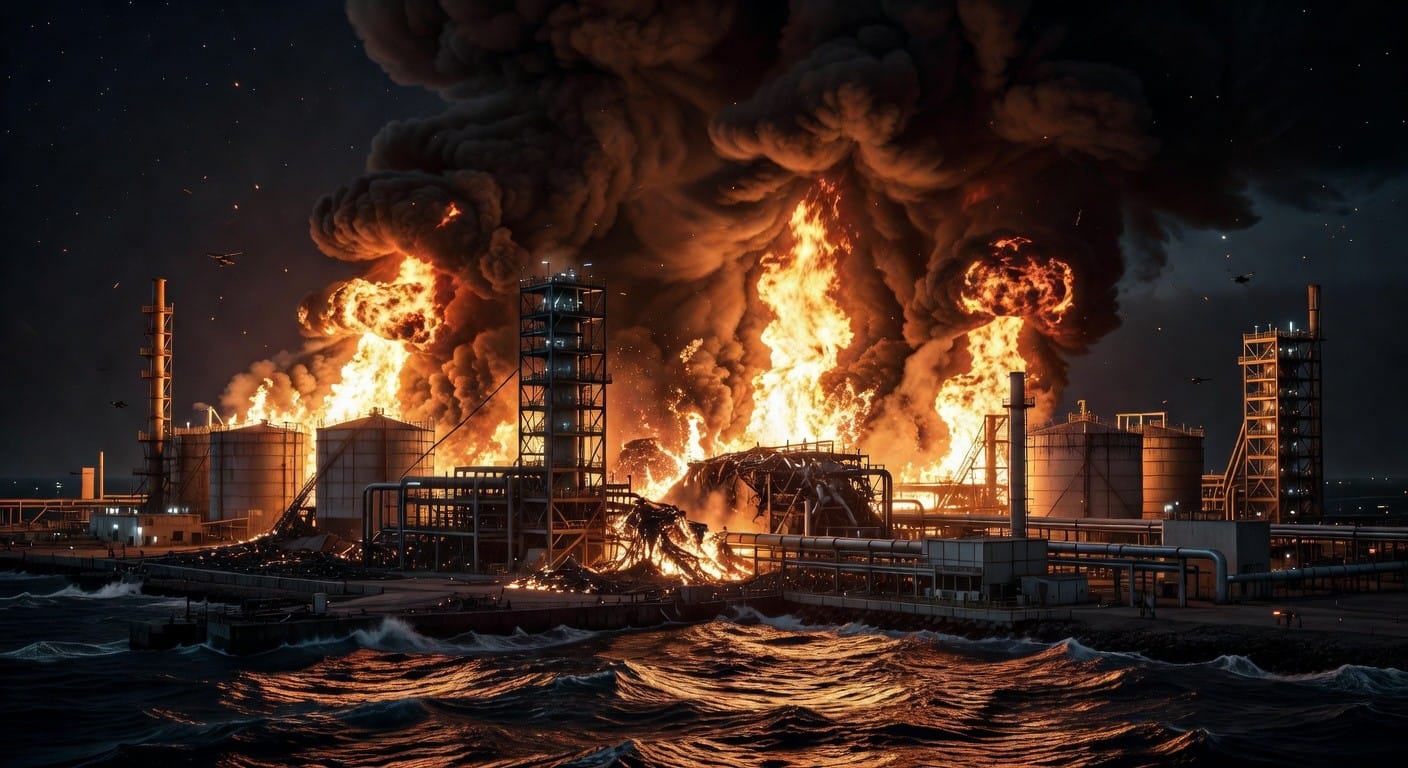
Iran didn't just strike a gas facility on March 18–19. It struck the spinal cord of global natural gas supply.
The Ras Laffan Industrial City in Qatar — which single-handedly accounts for roughly 20% of the world's liquefied natural gas — has been hit by successive Iranian missile and drone barrages over the past two weeks. The Pearl GTL facility, a joint venture between QatarEnergy and Shell, sustained extensive structural damage. Multiple LNG processing trains were set ablaze. Fires have been contained. But the damage cannot be undone quickly.
QatarEnergy has declared force majeure on deliveries. The CEO confirmed that 17% of Qatar's total LNG capacity — approximately 13 million metric tons per year — is effectively offline, with a realistic repair timeline of three to five years. The phrase "ambitious" was used when someone suggested a mid-2026 restart.
That's not a supply disruption. That's a supply restructuring.
How We Got Here
The Iran-Israel-US conflict that erupted in early March has followed a logic of escalating reciprocity. Israel struck Iran's South Pars gas field — Iran's own energy crown jewel. Iran retaliated against Qatar's Ras Laffan, which hosts the downstream processing infrastructure that turns South Pars gas into the LNG cargoes that heat European homes and power Asian factories.
In a single stroke, Iran weaponised Qatar's position as the world's swing supplier in ways that will echo for years. It also — almost certainly deliberately — put Qatar in a position where it had no choice but to expel Iranian military and security attachés, fracturing what had been a carefully managed relationship between Doha and Tehran.
The Strait of Hormuz remains partially throttled, compounding the supply crisis. Brent crude briefly touched $119 before settling around $112–113. Asian LNG spot prices are expected to exceed $26/MMBtu. European natural gas futures have spiked. The S&P 500 is sitting at its lowest close of 2026.
The Fed Is Now Stuck
The macro overlay makes this worse. The Federal Reserve held rates at 3.50–3.75% this week (11-1 vote) with a single projected cut in 2026 — and that projection already looks optimistic. Core PCE is tracking toward 4.56%. Bond traders are now pricing zero cuts this year, with a 20% probability of a hike by December.
Incoming Fed Chair Kevin Warsh — who takes over in mid-May — is considered more hawkish than Powell. Reuters reported this week that his "first move could be a rate hike." That puts the Fed on a collision course with President Trump, who is publicly demanding easing.
The combination is uncomfortable: an oil shock driving inflation just as a new Fed chair is considering tightening, against a backdrop of a President who views low rates as a political imperative. Stagflation-lite, with political friction layered on top.
This is where the analysis gets actionable. AlphaBriefing members get the full investment framework — scenarios, positioning, and the bottom line.
Subscribe to AlphaBriefing — Free, Member, and Paid tiers available.