The Taiwan Reassessment: Why the New Intelligence Report Changes the Investment Map
Washington has quietly walked back the 2027 invasion warning — but the threat hasn't gone away. It's bypassed deterrence, shifted to gray-zone coercion, and created a risk profile that markets are poorly positioned to price.

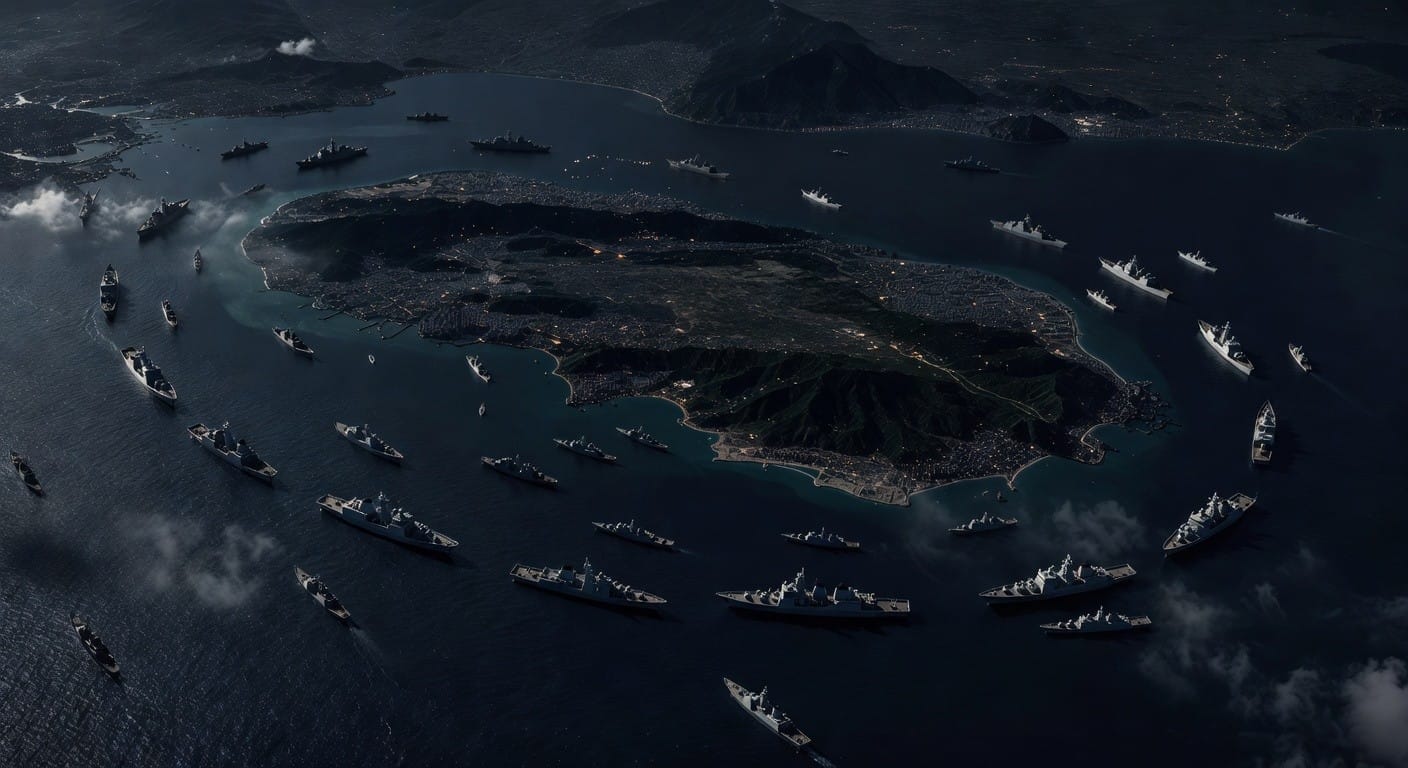
The intelligence community has quietly rewritten the most important geopolitical risk playbook of the past five years.
On March 14, the Office of the Director of National Intelligence released its 2026 Annual Threat Assessment with a conclusion that would have been unthinkable twelve months ago: Beijing does not currently plan to invade Taiwan in 2027, and has no fixed timeline for forced unification. The "Davidson Window" — the alarm that had set the entire US national security apparatus on a war footing — is being walked back.
For investors and strategists who have priced Taiwan tail risk into everything from semiconductor supply chains to defense positioning, this is a significant signal. But here's the complication: the threat hasn't disappeared. It's mutated.
The End of the 2027 Window — What It Actually Means
The 2027 warning originated with Admiral Philip Davidson's 2021 congressional testimony that China could move on Taiwan within six years. It became the organizing principle for US military spending, Taiwan arms sales, TSMC diversification, and a broad repricing of geopolitical risk across Asia.
The 2026 reassessment doesn't declare Taiwan safe. It says China's leaders weigh PLA readiness, Taiwan's political direction, and US intervention risk before committing — and right now, the calculus doesn't favor action. Economic headwinds are significant: China's GDP growth is slowing, the property crisis continues to drain confidence, and the costs of a conflict that could destroy 11% of its own GDP remain prohibitive.
What the IC has concluded is that Beijing prefers non-military paths to control — at least for now.
The New Threat: Deterrence Bypass
Here's what analysts at War on the Rocks have been warning about for weeks: deterrence won't fail in the Taiwan Strait through a dramatic D-Day-style amphibious assault. It will be bypassed.
The PLA's December 2025 exercises — the largest war games ever staged around Taiwan — were explicitly described by defense analysts as a "test run for a blockade." Not an invasion. A quarantine. A slow encirclement that stops short of triggering the mutual defense thresholds that would force US military response.
This is the strategic shift that hasn't fully registered in markets yet. An invasion scenario is catastrophic and binary — it happens or it doesn't. A quarantine or sustained gray-zone coercion campaign is something else entirely: a slow-motion stranglehold that applies pressure without providing a clear trip wire for intervention.
PLA aircraft returned to large-scale ADIZ incursions on March 15 after an unusual two-week absence. Monthly incursions under President Lai Ching-te have averaged over 300. The drills continue. The pressure doesn't stop — it just changes shape.
This is where the analysis gets actionable. AlphaBriefing members get the full investment framework — scenarios, positioning, and the bottom line.
Subscribe to AlphaBriefing — Free, Member, and Paid tiers available.