The Benchmark That Prices Oil at Sea Is on Trial
October was the worst month ever recorded for tanker attacks in the Strait of Hormuz — and a London court is now deciding whether eight months of the world's benchmark supertanker rate were invalid. What it means for the tanker trade, and the two November dates that matter.

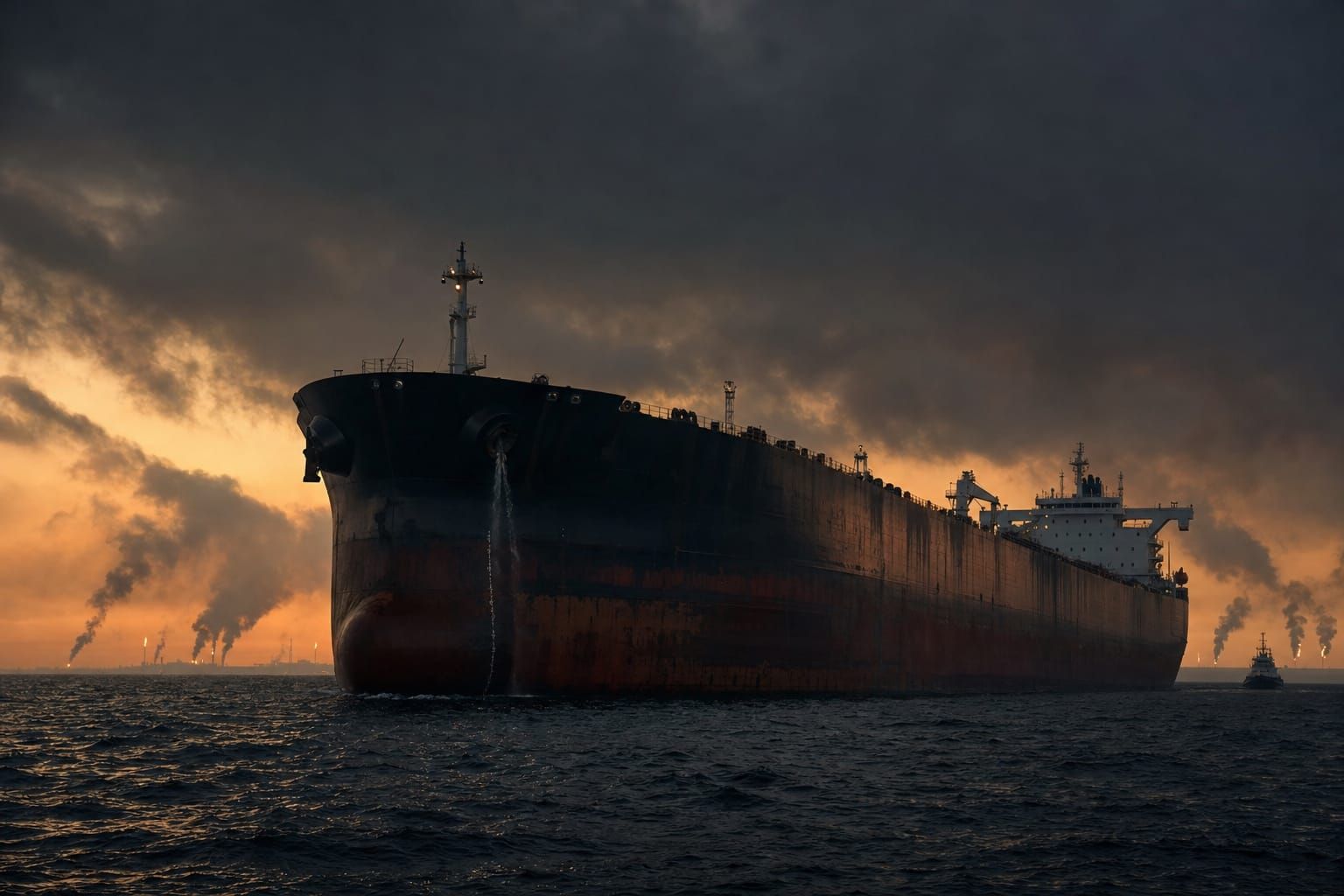
On Monday morning, in London's High Court, lawyers for one of the world's largest commodity traders asked a judge to do something the defense called "without precedent": declare that the number used to price oil shipping on the world's most important route has been invalid — not for a day, but for nearly eight months of a shooting war.
The trader is Mercuria Energy Group. The defendant is the Baltic Exchange, the 252-year-old London institution whose assessments underpin global freight. And the number in dispute is TD3C — the benchmark rate for hiring a supertanker to carry 270,000 tonnes of crude from the Middle East Gulf to China. TD3C is the reference point for the entire crude tanker market: physical contracts between owners and charterers settle against it, and so do billions of dollars in freight derivatives, according to Bloomberg. The Financial Times called it the "Dow Jones of shipping."
Mercuria's claim, in one sentence: when the US-Israel war with Iran strangled traffic through the Strait of Hormuz starting February 28, the route TD3C is supposed to price effectively ceased to exist in tradable form — and the Baltic kept publishing a number anyway.
The worst month in the history of the dataset
To understand why the benchmark is on trial, look at what October did to the waterway it prices.
Data from the Washington Institute for Near East Policy, reported by Reuters on October 23, recorded 28 confirmed and reported attacks on merchant ships in and around the Strait of Hormuz this month — the worst month since the institute began tracking maritime incidents in 2017 — and 113 since the war began on February 28. UKMTO, the UK's maritime trade monitoring operation, had logged 135 conflict-related incidents by October 16.
The damage is concentrated in exactly the ships TD3C prices. A Reuters review of IMO and MarineTraffic data found more than 30 very large crude carriers have been damaged since the war began — roughly 3.5% of the entire global VLCC fleet — including 11 in October alone. By September, the IMO counted at least 22 seafarers killed in 80 verified attacks around Hormuz. Oil from the Gem No.2, a 330-meter tanker struck in a suspected drone attack in early October, is now washing onto beaches in the UAE, which has closed stretches of coastline in three emirates.
And yet the oil keeps moving, because the economics are irresistible. Reuters reported daily freight rates above $1 million drawing tankers into the Gulf — multiples of anything a VLCC earns in peacetime. Bloomberg reports most trackers now see total shipments out of the Middle East back near pre-war levels. But the flow is lumpy and fragile: IMF PortWatch recorded just four transits of the Strait on October 18, against a pre-war average of around 85 a day, after the mid-month attack wave.
A fifth of the world's seaborne oil and LNG normally moves through Hormuz. Right now it moves in convoy-like bursts, at wartime prices, on ships that absorb drone hits at a rate of several per week.
One line before we go further: a free AlphaBriefing membership gets you access to every free article on AlphaBriefing.com — join here.
"Crazy that we have to"
Mercuria's case rests on the Benchmarks Regulation, which requires that a benchmark's input data "represent accurately and reliably the market or economic reality that the benchmark is intended to measure." When Hormuz traffic collapsed in early March, Mercuria argues, there was no longer a functioning market to measure — the Baltic should have suspended TD3C, as Mercuria says even some of the exchange's own contributors argued at the time.
The documents Mercuria put before the court are striking. According to Bloomberg, one of the brokers who contributes to the index said on April 2 that it was "utter nonsense" to keep assessing TD3C given the unprecedented disruption. A Baltic freight assessor, finally entering a value into the exchange's internal system, attached the comment: "doesn't make any sense to shed an opinion on this route — crazy that we have to!" And in an April 14 call, a senior assessor described the risk of TD3C being replaced by a rival index as "the overriding fear of what we do here." Mercuria alleges the Baltic kept publishing partly to avoid losing the benchmark to a competing provider — S&P Global Platts, via the Intercontinental Exchange. Notably, Mercuria is not alleging bad faith or dishonesty.
The Baltic's defense is equally blunt. The claim is "without merit," CEO Mark Jackson said. Suspending the benchmark would have been a "knee-jerk" reaction; its panelists remained willing and able to assess the route; and pricing freight risk — even extreme risk — is precisely what the exchange exists to do. Granting Mercuria's request, its lawyers argued, would "dissolve the prices that have been used in more than eight months of trading, affecting an indeterminate class of third parties," with "highly destabilising effects" on global shipping markets. As for motive, the Baltic says Mercuria built "huge index-linked exposures, which it has failed to risk manage," got caught on the wrong side of the war, and is now "reaching for any available argument" to unseat the number that burned it. Mercuria initially cited losses in the hundreds of millions of dollars before dropping the estimate from its claim; its opening submissions still offered an illustrative figure of about $13.8 million a month in hedging losses on a single vessel.
Here is what makes this more than a London legal curiosity: whichever way the ruling goes, it lands on a tanker market that has already minted one of the best trades of 2026 — and on a single company that now carries almost 40% of the oil leaving Hormuz, with an Iranian deadline hanging over it dated November 1.
The rest of this briefing is for paid members: the tanker equity scoreboard and what's actually priced in at these levels, the Sinokor concentration risk the market is ignoring, the three ways the ruling breaks and who gets hurt in each, and the one scenario that genuinely kills the trade.
AlphaBriefing Paid gets you every investment thesis, scenario framework, and catalyst brief we publish — the analysis private intel clients pay four figures for, at a fraction of that.