The $295 Billion Shadow Army: How the War-Outsourcing Industry Is Reshaping Global Power

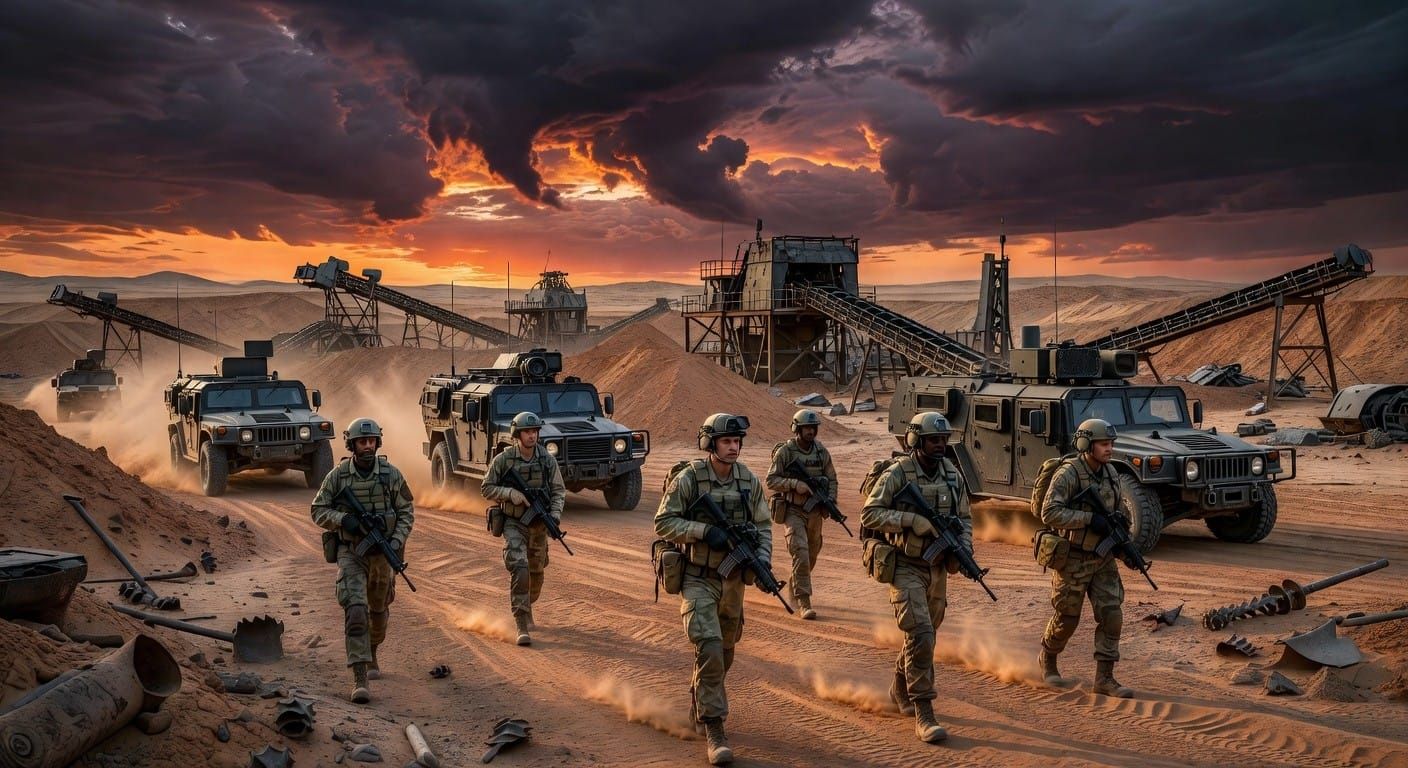
Governments have always outsourced violence. But the 21st century has industrialized the practice — turning private military contractors into a $295 billion global industry that is quietly reshaping the geopolitical order, stripping accountability from conflict, and minting returns for a select group of investors who know where to look.
The Business of War Has a Price Tag
The modern private military industry didn't start with Blackwater's 2007 Nisour Square massacre — that was simply the moment the world noticed it. The roots run deeper: through Cold War proxy conflicts, post-Soviet security vacuums, and the post-9/11 demand surge that saw the United States alone spend over $138 billion on private defense contractors in a single year.
Today, the global private military and security services market is valued at approximately $295 billion and is projected to reach $512 billion by 2034, growing at a compound annual rate of 6-8%. The drivers are structural: great power competition, proxy warfare, resource nationalism, and governments unwilling — or unable — to send their own soldiers into every theater that demands armed presence.
From the Sahel to the South China Sea, private contractors now fill the gap between what conventional militaries can do and what geopolitics requires. They train, advise, surveil, secure, and — in an increasing number of theaters — they fight.
Russia's Model: Guns for Minerals
Nowhere is the strategic logic of the modern PMC more visible than in Africa, where Russia's Africa Corps — the state-controlled successor to the Wagner Group — has perfected the barter economy of war. The model is elegant in its brutality: provide regime security to a fragile junta, receive exclusive mining concessions in return.
In the Central African Republic, Africa Corps controls the Ndassima gold mine — estimated to hold over $1 billion in reserves — as well as diamond trading operations through Wagner-linked shell companies. At its peak, this arrangement extracted an estimated $2.5 billion in gold annually, providing Moscow with a sanctions-evading revenue stream as the Ukraine war bled the Russian state budget.
Following Yevgeny Prigozhin's death in 2023, the Kremlin absorbed Wagner's African operations into a formal Ministry of Defense proxy — less deniable, but more accountable to Moscow's strategic priorities. Africa Corps now operates across Mali, Niger, Burkina Faso, Sudan, Libya, and the CAR, with exploratory moves into Madagascar and Equatorial Guinea reported in early 2026.
The model's weakness is equally visible: in Mali, Africa Corps suffered catastrophic losses in the 2024 Tinzaouaten ambush against Tuareg forces, prompting a full Wagner withdrawal in June 2025. The resource extraction logic only works if security can actually be delivered. When it can't, juntas are left exposed — and Moscow's investment evaporates.
The Western Counterweight: Contracts, Not Conquest
Western PMCs operate under a fundamentally different framework — publicly accountable, legally constrained, and deeply embedded in the DoD contracting ecosystem. But the scale is comparable, and the strategic function is the same: extending state power beyond what uniformed militaries can or will do.
Booz Allen Hamilton secured over $10 billion in government obligations in fiscal 2025 alone, including a $1.58 billion Defense Intelligence Agency contract for counter-WMD intelligence analysis. CACI International — generating approximately $5.3 billion in annual government contracts — won awards spanning Space Force network modernization, electronic warfare systems, and Pacific air base security. These are not fringe players. They are embedded infrastructure.
Meanwhile, Constellis — the corporate successor to Blackwater's Academi — continues to hold significant DoD contracts estimated at $1.4-5 billion annually across high-risk global operations. The rebranding obscures continuity: the same capability stack, different letterhead.
This is where the analysis gets actionable. AlphaBriefing members get the full investment framework — scenarios, positioning, and the bottom line.
Subscribe to AlphaBriefing — Free, Member, and Paid tiers available.