Congress Finally Has a Deal to Unclog the Grid. Data Centers Get the Bill.
Four senators from opposite ends of the spectrum just introduced the permitting overhaul Washington has chased for a decade — durable permits, federal transmission authority, and a rule making data centers pay for their own grid upgrades.

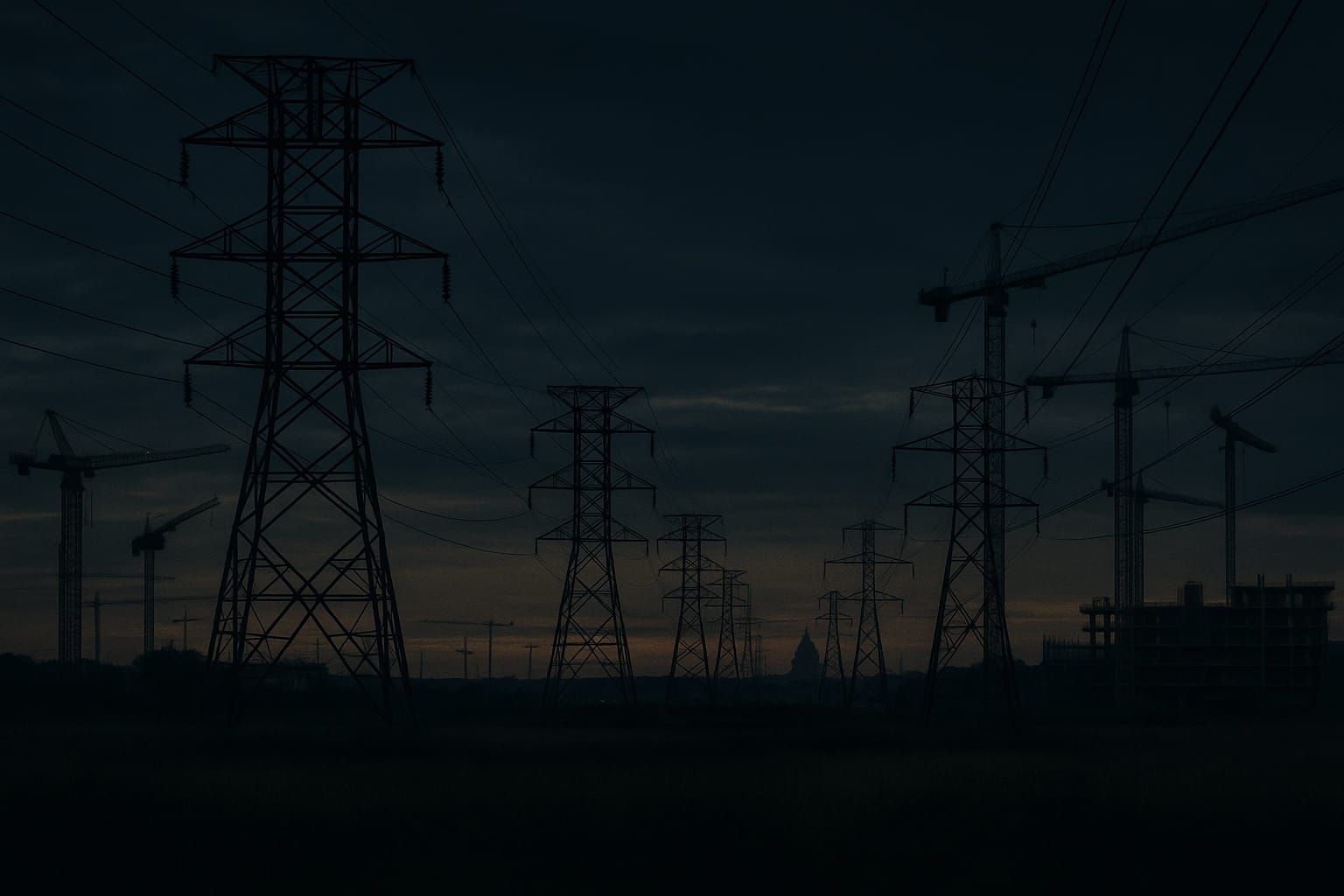
After a decade of false starts, the United States Senate finally has a bipartisan deal to overhaul how America permits energy infrastructure. On Wednesday, the four senators who lead the chamber's two energy committees — Martin Heinrich (D-N.M.) and Mike Lee (R-Utah) of Energy and Natural Resources, Shelley Moore Capito (R-W.Va.) and Sheldon Whitehouse (D-R.I.) of Environment and Public Works — introduced the Bipartisan American Affordability and Jobs Act of 2026. A floor vote is expected after the November midterm elections, according to Reuters.
The ideological spread of that sponsor list is the story. Lee is one of the chamber's most conservative members; Whitehouse is one of its most aggressive climate hawks. When those two co-sign the same energy bill, something structural has shifted. What shifted is demand: America needs more electricity, faster, than its permitting system can deliver, and both parties now have constituents paying the price for that gap on their utility bills.
What the bill actually does
Five provisions carry most of the weight.
Permits become durable. The bill provides that once a federal permit is issued, it cannot be revoked or suspended absent extraordinary circumstances, a violation of law, or a court order. That sounds technical. It is the core of the deal. Developers have watched fully permitted projects get stop-work orders after construction was already underway, and capital has priced that political risk into every megawatt since.
Project-type neutrality gets teeth. Federal agencies would be required to treat all permit applications "fairly and efficiently" regardless of what is being built, and developers gain a new right to sue the government over a pattern of disparate treatment based on project type. Translation: an administration that fast-tracks gas while slow-walking wind — or the reverse — can be taken to court for it.
FERC gets real transmission authority. The Federal Energy Regulatory Commission would gain the power to issue permits for new interstate transmission lines project-by-project where construction serves the public interest, replacing the current system of designated national corridors, which the bill eliminates. The bill also strips incumbent utilities of their federal right of first refusal on new regional lines, opening transmission construction to competition, and requires each planning region to consolidate its interconnection and planning processes.
Data centers pay their own way. Transmission costs driven by large computational loads — 20 megawatts and up — must be assigned to the data centers themselves, with mandated exit charges and an explicit bar on recovering those costs from other customers.
Gas pipelines get a clearer path. The bill narrows the authority states have used under Section 401 of the Clean Water Act to block interstate gas pipelines, a change with particular consequence for gas-constrained regions like the Northeast, according to analysts who reviewed the text.
Briefings like this land in members' inboxes before the market prices them in. Join free →
Why this took a decade
Permitting reform has been Washington's white whale since at least 2022. The Manchin-Barrasso Energy Permitting Reform Act of 2024 stalled in Congress. So did the SPEED Act of 2025. Talks collapsed entirely last December after President Trump issued stop-work orders against five fully permitted offshore wind projects — Senate Democrats declared reform "dead in the water" while developers' permits were being torn up mid-construction.
The courts changed the calculus. Federal judges ruled against the administration on all five offshore wind projects, and in April a federal judge in Massachusetts granted a preliminary injunction against the administration's added layers of review for wind and solar permits, according to Utility Dive's reporting. The administration was losing in court; Democrats had leverage. Reuters reported that the deal came together in recent weeks after Trump signaled to Democratic lawmakers that wind and solar projects would receive better treatment under the bill.
The result is a genuine trade. Republicans get durable permits for pipelines and a weakened state veto over gas infrastructure. Democrats get enforceable neutrality for renewables, federal transmission siting authority, and a data-center cost-allocation regime they can campaign on. "If we can pass this bill, we will flood the grid with clean, affordable energy and make data centers start paying their fair share," Whitehouse said. Lee framed the same bill differently: "We once built projects like the Hoover Dam, the Golden Gate Bridge, and the Empire State Building in years, not decades."
The affordability politics are the engine
Note what the sponsors named the bill. Not the Energy Permitting Reform Act — the Affordability and Jobs Act. Electricity prices have become a kitchen-table political issue in a way they haven't been in decades, and the data-center provision is the clearest signal of where that politics is heading. Congress is converging on a consensus that AI's power bill should land on AI companies, not on households. The House overwhelmingly passed its own bill in September to shield ratepayers from data-center cost shifts. This bill hardens the same principle into the transmission system itself.
For the hyperscalers, the message from both chambers is now unambiguous: the era of socializing grid-upgrade costs across ratepayers is closing. For utilities and developers, the bargain runs the other way — a faster, more certain path to building the wires and generation the demand boom requires.
What stands between here and law
Three things, honestly reported.
First, the vote itself: the Senate will take up amendments when it reconvenes in November, and a dozen procedural paths could still narrow the bill. Second, the House, where Politico reports the deal faces stiff resistance — the lower chamber's appetite for anything that reads as a renewables concession is limited. Third, the administration: Whitehouse himself called the question of normal treatment for wind and solar under the current administration "still outstanding," while describing the White House's opening proposal as a good-faith signal. A deal built on that much mutual suspicion can still come apart.
But the direction of travel matters for anyone pricing infrastructure, utilities, or power-hungry tech. "If Congress wanted to expand and de-congest the nation's transmission grid, these are the changes that can get that done," Grid Strategies president Rob Gramlich wrote of the legislation — the kind of change that determines whether the enormous backlog of generation projects waiting to connect to the grid actually clears. If this passes in anything close to its current form, the binding constraint on American energy shifts from permission to execution: labor, transformers, turbines, and capital. Companies positioned at that bottleneck — not the paperwork one — inherit the next decade of spending.
The bottom line: Washington has finally aligned the politics of energy abundance with the politics of affordability, and for the first time in years, the four senators who lead energy policy on both sides of the aisle are sponsoring the same bill. Watch the November amendment fight. That is where this either becomes the most important energy statute since the Inflation Reduction Act — or the third consecutive permitting bill to die within sight of the floor.
If this analysis was useful, this is what AlphaBriefing does every day — geopolitics and markets, connected to what it means for your money. Free members get the daily brief in their inbox; paid members get the investment frameworks, scenario pricing, and catalyst calendars behind the paywall.
Get this level of intelligence every day. Subscribe to AlphaBriefing — free, member, and paid tiers available.
Get the next briefing free in your inbox: Join AlphaBriefing
Sources & Further Reading
- U.S. Senate Committee on Energy and Natural Resources — Heinrich, Lee, Capito, and Whitehouse Introduce Bipartisan American Affordability and Jobs Act of 2026
- Full bill text — Bipartisan American Affordability and Jobs Act (PDF)
- Utility Dive — Senate permitting bill would expand federal role in transmission siting
- Reuters — US senators hit deal on energy project permitting bill, vote seen after November
- Utility Dive — Senate Democrats: permitting reform 'dead in the water' after offshore wind stop-work orders
- Senate EPW press conference on the permitting agreement (video)
Disclaimer
AlphaBriefing is an independent intelligence publication. The content in this article is produced for informational and educational purposes only. Nothing published by AlphaBriefing constitutes financial, investment, legal, tax, or regulatory advice, nor should it be construed as a solicitation or recommendation to buy, sell, or hold any security, asset, or financial instrument.
All views expressed are those of the author at the time of writing and are subject to change without notice. Markets are volatile and unpredictable; past performance is not indicative of future results. Any investment involves risk, including the possible loss of principal.
AlphaBriefing and its principals, employees, or contributors may hold positions in securities or assets mentioned in this article. This should be considered a potential conflict of interest. No material relationship with any company referenced exists unless explicitly disclosed. Readers should conduct their own due diligence and consult qualified financial, legal, and tax advisors before making any investment decisions.
Information in this article is drawn from public sources believed to be reliable at the time of publication. AlphaBriefing makes no warranty, express or implied, as to the accuracy, completeness, or timeliness of any information herein. AlphaBriefing accepts no liability for any loss or damage arising from reliance on this content.
© AlphaBriefing. All rights reserved. Unauthorised reproduction or distribution is prohibited.