The Atom's Second Act: How the Nuclear Renaissance Is Reshaping the AI-Era Energy Map
The AI revolution has created a power demand crisis that no grid was designed to handle. Nuclear energy — once written off — is now the preferred solution for the most sophisticated energy buyers on the planet. Here's the investment map.

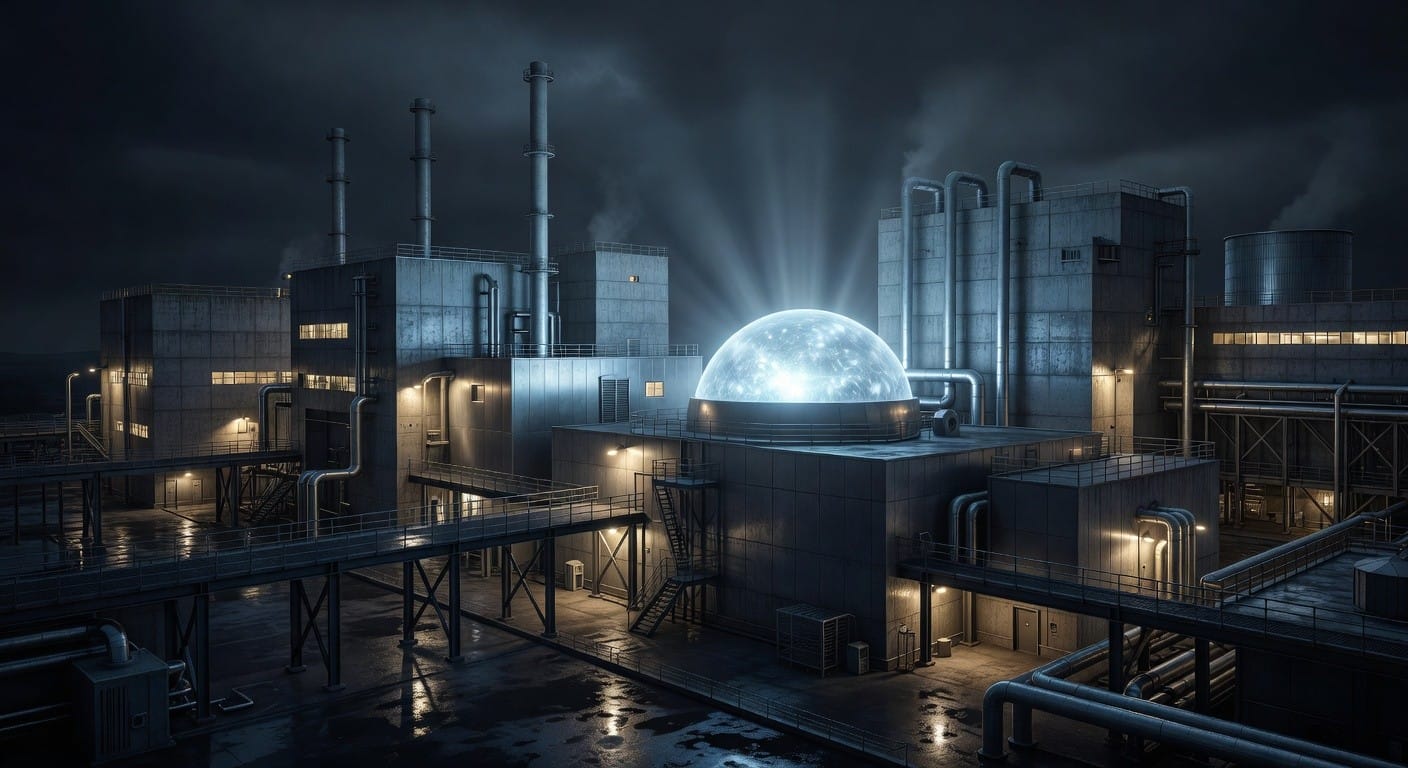
The Atom Awakens
For three decades, the nuclear industry was on life support — scarred by Chernobyl, crippled by Fukushima, and written off by a generation of policymakers who bet everything on cheap gas and the promise of renewables. That bet is now unraveling.
In 2026, nuclear energy is staging what may be the most consequential comeback in the history of global energy markets. The driver isn't nostalgia or ideology — it's math. The AI revolution has created a power demand crisis that no grid was designed to handle, and the only technology that can deliver dense, 24/7, carbon-free electricity at the scale required is splitting atoms.
The numbers are stark. Europe's data center power consumption is projected to hit 10.4 gigawatts this year, doubling to 20.9 GW by 2030. In the United States, AI hyperscalers are signing power purchase agreements at a pace not seen since the postwar industrial boom. Microsoft, Meta, Google, and Amazon have collectively committed to sourcing gigawatts of nuclear power — not because it's cheap, but because it's the only baseload option that checks every box: reliable, scalable, and emissions-free.
The Demand Shock Nobody Planned For
Until 2023, data centers were a rounding error on most national grid projections. Then generative AI changed the calculus overnight.
A single AI training run for a large language model can consume as much electricity as several thousand American homes use in a year. Inference — the continuous real-time computation powering every AI query — is potentially more energy-intensive at scale than training. Data center operators who once planned for modest, predictable load growth suddenly found themselves scrambling for power contracts measured in gigawatts.
The response from Big Tech has been extraordinary. In January 2026, Meta announced deals with three nuclear companies — TerraPower, Oklo, and Vistra — for a combined 6-plus gigawatts of nuclear-sourced power. That single announcement represented more nuclear capacity than many countries operate in total. Amazon had already locked up 80 MW from X-Energy's Xe-100 small modular reactor program. Microsoft's deal to restart Three Mile Island sent a message the industry hadn't heard in decades: nuclear is not just viable — it's the preferred option for the most sophisticated energy buyers on the planet.
The geopolitical dimension adds another layer of urgency. Europe, finally cutting its last threads of dependence on Russian gas by year-end 2026, is facing its own energy security reckoning. The European Commission unveiled its SMR strategy in March 2026, targeting first deployments by the early 2030s and projecting 17-53 GW of new nuclear capacity by 2050. France, already the most nuclear-dependent economy in the G7, is doubling down. Germany — which spent €500 billion on an Energiewende that left it more vulnerable to Russian energy leverage than ever — is quietly reconsidering its anti-nuclear orthodoxy.
The convergence of forces is unlike anything the sector has seen: AI-driven demand, post-Russia energy security imperatives, net-zero commitments, and a new generation of reactor technology that didn't exist when the last wave of nuclear plants was built.
This is where the analysis gets actionable. AlphaBriefing members get the full investment framework — scenarios, positioning, and the bottom line.
Subscribe to AlphaBriefing — Free, Member, and Paid tiers available.