The Factory Floor Moves South: How the Nearshoring Wave Is Reshaping North American Trade
Mexico is absorbing record FDI as the US-China tariff war reshuffles global supply chains. With $40.9B flowing in and the USMCA review looming in July 2026, the nearshoring trade is entering its most consequential phase — and the investment plays are becoming clear.

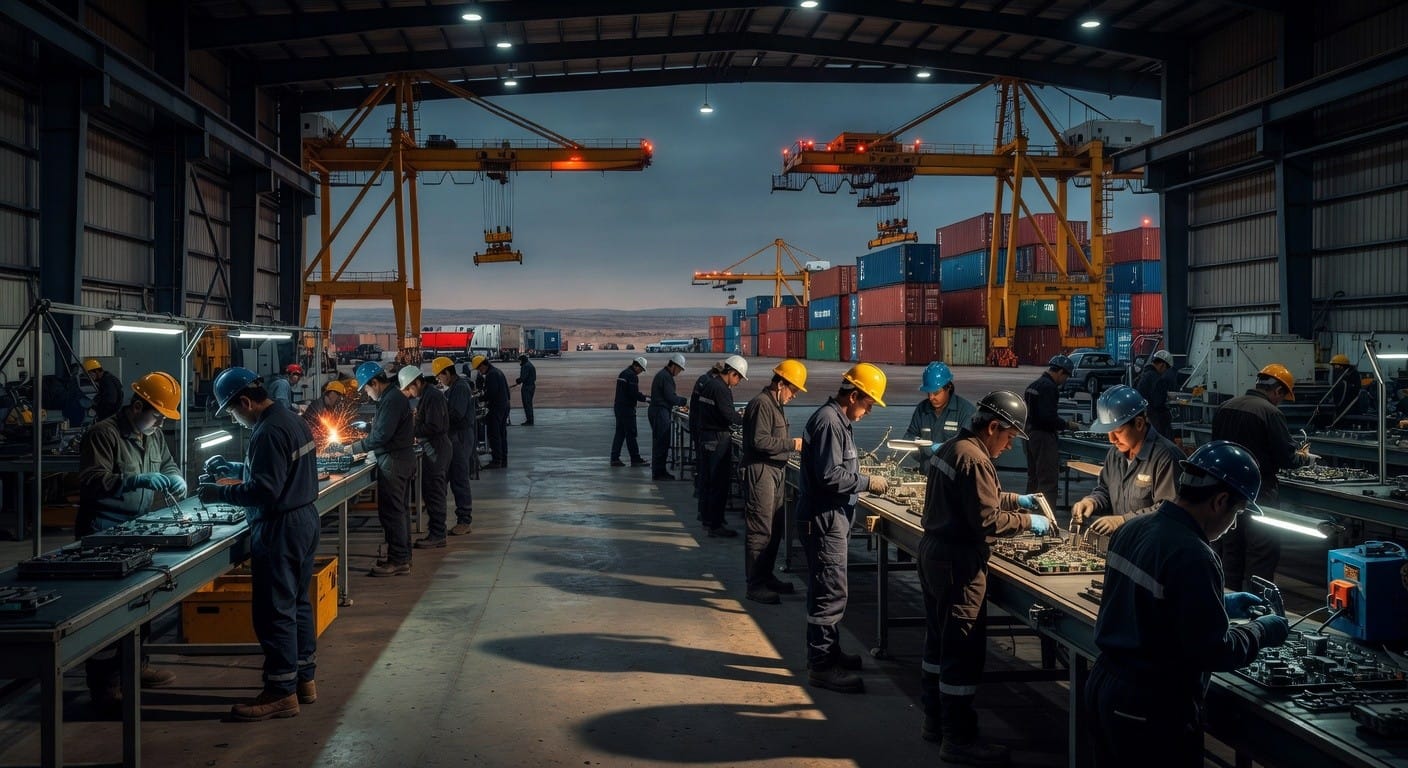
The trade war with China has scrambled global supply chains. But for one country sitting just south of the Rio Grande, the disruption is an opportunity — and the numbers are starting to show it.
Mexico's foreign direct investment hit a historic $40.9 billion in the first three quarters of 2025, up 14.5% year-over-year. Manufacturing captured 37% of those inflows. In January and February 2026 alone, another $5.8 billion in projects were announced or inaugurated — from a $3.4 billion industrial park in Nuevo León to Abbott's $200 million pharmaceutical plant in Querétaro.
The story isn't new. The scale is.
Why Now?
The architecture of American trade policy has fundamentally changed. Tariffs on Chinese imports now run at 33% or higher on many categories. USMCA-compliant goods from Mexico, by contrast, face rates as low as zero. That 30+ percentage-point differential is not noise — it is a structural reshuffling of where factories get built.
The math is stark. Mexico's manufacturing wages average $4.90 per hour, compared to $6.50 in China and rising. Shipping containers from Monterrey to a Texas distribution center arrive in days, not weeks. And under USMCA rules of origin — which require 70%+ regional content for autos — the incentive to localize production in North America isn't optional. It's code.
The result: Mexico is now the United States' largest trading partner, displacing China for the first time in decades.
The Sectors Leading the Charge
Automotive is the anchor. The Bajío region — Guanajuato, Querétaro, Aguascalientes — hosts BMW, GM, Stellantis, and dozens of Tier 1 and Tier 2 suppliers building out EV and ICE production lines in parallel. USMCA's 75% North American content rule for electric vehicles is forcing even reluctant OEMs to invest in the corridor.
Electronics comes next. Tijuana and Ciudad Juárez have become shadow Shenzhen for consumer electronics assembly, with Samsung and Foxconn running operations that feed directly into US retail. At 35% of Mexico's total exports, electronics is not a niche — it's a pillar.
Medical devices is the fastest-growing segment. Monterrey and Baja California have quietly become the world's 8th-largest medical device exporting region. With US health-sector supply chains still scarred from COVID-era shortages, companies are paying a premium for proximity and predictability.
Aerospace rounds out the picture — Bombardier, Honeywell, and dozens of Tier 2 suppliers have clustered in Querétaro, making Mexico a top-10 global aerospace exporter.
The infrastructure is following the capital: $722 billion in planned Mexican government infrastructure spend, port modernizations, the Interoceanic Corridor rail link between the Gulf and Pacific coasts, and industrial park development that can't keep up with demand.