The $36 Billion Pivot: Why Mexico Is Becoming America's Factory Floor
Mexico has displaced China as the top goods exporter to the US. Behind the headline lies a structural manufacturing shift worth billions — and multiple investable angles.

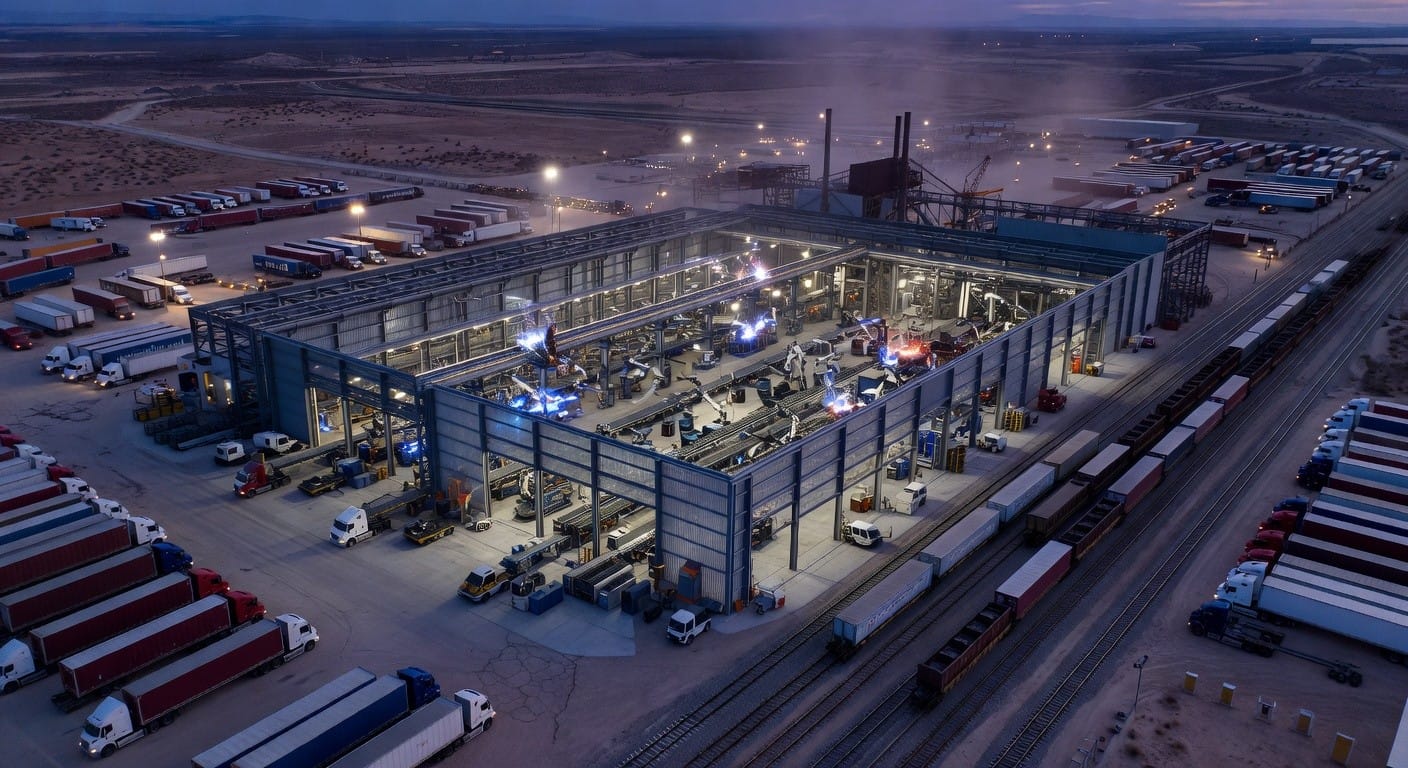
The global factory map is being redrawn — and the biggest winner might be right next door.
For decades, the default logic of global manufacturing was simple: go where labor is cheapest. That meant China. But a confluence of forces — US-China trade war escalation, COVID-era supply chain shock, reshoring legislation, and now a new wave of aggressive tariffs — has shattered that model. Companies that once optimized purely for cost are now optimizing for resilience, speed, and political safety.
Enter Mexico.
In 2025, Mexico displaced China as the largest goods exporter to the United States for the first time since 2002. That milestone wasn't an accident — it was the culmination of a decade-long structural shift that is now accelerating. Industrial parks in Monterrey, Saltillo, Ciudad Juárez, and the Bajío region are filling up faster than developers can build them. Waiting lists for industrial space now stretch to 12–18 months in key corridors. Tier-1 manufacturers in automotive, electronics, aerospace, and medical devices are all converging on the same geography.
This isn't just a Mexico story. It's a fundamental restructuring of the global supply chain — and it has direct, measurable implications for investors across multiple sectors.
The Tariff Catalyst: Why Now Is Different
The US-China trade relationship has been in structural decline since 2018, when the first round of tariffs hit. But 2025-2026 marks a genuine inflection point.
The Trump administration's escalation of tariff regimes — including sector-specific measures targeting semiconductors, EVs, and strategic manufacturing — has forced multinational CFOs to make binary decisions: move production or accept permanent cost disadvantages. For many, the calculus has shifted decisively toward relocation.
Mexico's structural advantages are compelling. Under USMCA (the successor to NAFTA), goods manufactured in Mexico with sufficient North American content enter the US duty-free. That gives Mexico-based manufacturers a massive built-in tariff arbitrage versus China-sourced competitors. The all-in manufacturing cost differential between Mexico and China, once heavily in China's favor, has narrowed to near-parity for many product categories — and Mexico wins on logistics, speed-to-market, and regulatory safety.
The numbers tell the story. Foreign direct investment into Mexico's manufacturing sector surged to a record $36.2 billion in 2024, up 27% year-over-year. Industrial real estate vacancy rates in key northern Mexico markets fell below 1% in multiple submarkets — a physical constraint that is itself an investment signal.
This is where the analysis gets actionable. AlphaBriefing members get the full investment framework — scenarios, positioning, and the bottom line.
Subscribe to AlphaBriefing — Free, Member, and Paid tiers available.