Liquid Gold: Why Water Is Becoming the Geopolitical Asset of the Century
The UN has declared a global water bankruptcy. Water conflicts hit record highs in 2024. Munich Security Conference just added water scarcity to the top-tier threat list. Here's the investment thesis most of the market hasn't priced yet.

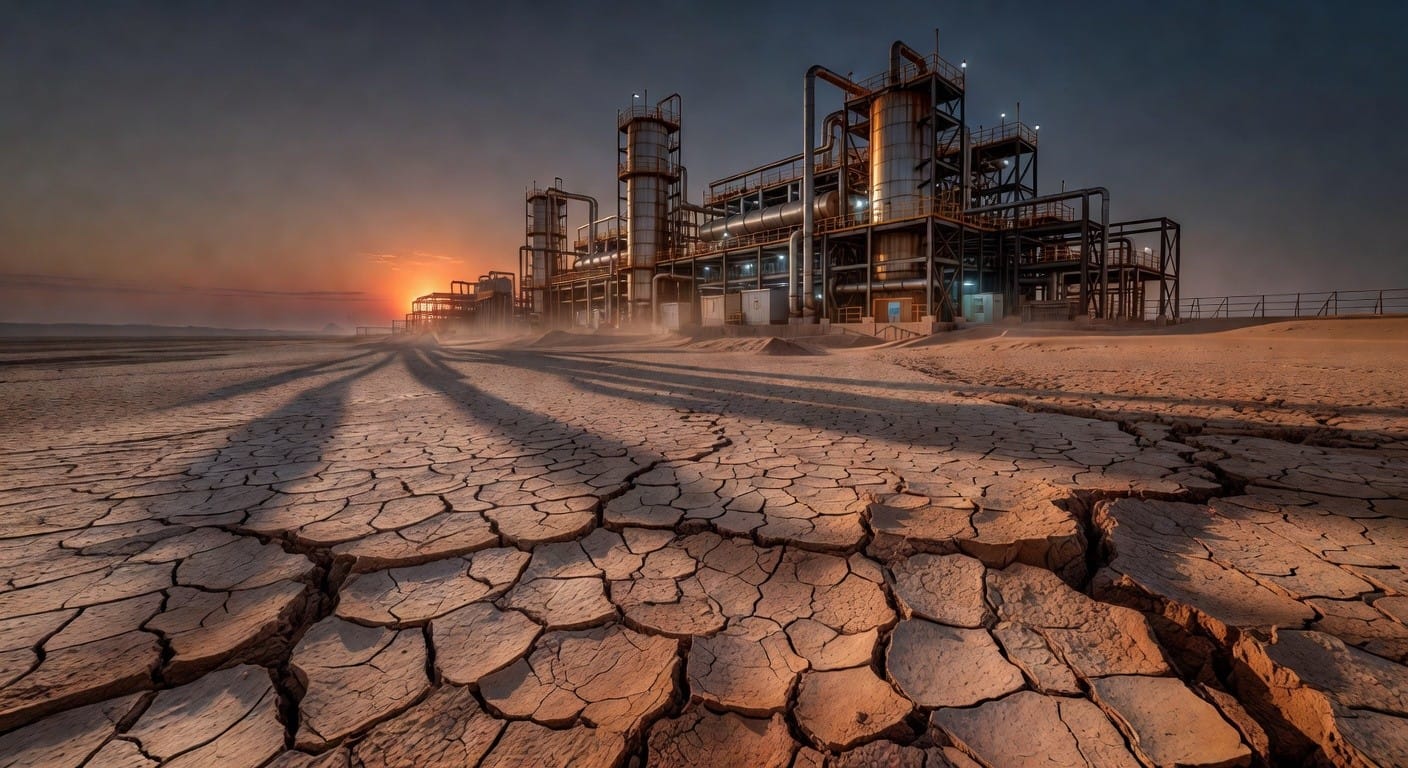
The UN's opening salvo was blunt: the world has entered an "era of global water bankruptcy." Released in January 2026, the report warned that irreversible damage to aquifers and river basins now affects three-quarters of the global population. Half of the world's 100 largest cities face high water stress. The 2026 Munich Security Conference — traditionally dominated by missile counts and alliance pledges — flagged water scarcity as a top-tier geopolitical risk alongside cyber warfare and nuclear proliferation.
That framing matters. When Munich talks water, money moves.
For decades, water has been treated as a utility problem — a pipe issue, a municipal budget line, an infrastructure afterthought. That mental model is obsolete. Water is becoming what oil was in the 20th century: the resource that determines who grows, who fights, and who wins.
The Conflict Layer
The geopolitical flash points are already live. The Nile Basin has become a case study in hydro-conflict: Egypt asserts colonial-era rights to the lion's share of Nile flow, while Ethiopia's Grand Renaissance Dam — now fully operational — structurally alters downstream volumes. Diplomatic negotiations have collapsed repeatedly. Military posturing has followed.
In the Middle East, Jordan's water deficit is worsened by Israeli-Palestinian tensions disrupting long-standing sharing agreements. In South Asia, transboundary disputes over the Indus and Brahmaputra rivers are compounding existing India-Pakistan and India-China frictions. The pattern is consistent: where water stress rises, existing geopolitical tensions don't just persist — they accelerate.
The UN's data puts the numbers to the risk. Water conflicts hit a record high in 2024, and the trajectory in 2026 is higher. The December UN World Water Conference in the UAE is expected to produce pledges; experts are skeptical they'll be honored. What is certain: the gap between supply and demand is widening faster than diplomacy can close it.
The $1 Trillion Infrastructure Gap
The World Economic Forum estimates a $6.5 trillion gap in water infrastructure investment. That's not a forecast — it's the present shortfall between what exists and what's needed to keep the global water system functional. Public budgets are inadequate. Multilateral development banks are overwhelmed. The gap is being filled, slowly and unevenly, by private capital.
Desalination is emerging as the clearest near-term solution. Costs have crossed a threshold: in water-stressed markets, desalination is now price-competitive with conventional sources. The global desalination market, valued at $17.76 billion in 2025, is projected to reach $38.8 billion by 2034 — a 9% compound annual growth rate. A California-focused buildout alone could add 730,000 acre-feet of new annual supply by 2027. Deep-sea desalination projects are being raced between Norwegian and US developers, backed by sovereign and institutional capital.
The investment case is structural, not cyclical. Water demand is a function of population growth, urbanization, and agricultural intensity — none of which reverse. Climate variability is making surface water supplies less reliable, increasing the premium on engineered water independence. That combination — rising demand, shrinking natural supply, cost-competitive technology — is a durable tailwind for water infrastructure investment.
This is where the analysis gets actionable. AlphaBriefing members get the full investment framework — scenarios, positioning, and the bottom line.
Subscribe to AlphaBriefing — Free, Member, and Paid tiers available.