Jet Fuel Is Falling. Airfares Aren't.
Delta just paid a record $4.4 billion for fuel in one quarter — and beat anyway. The Iran fuel shock killed America's cheapest airline and reset airfares; now fuel is falling and fares aren't. The spread is the second-half trade.

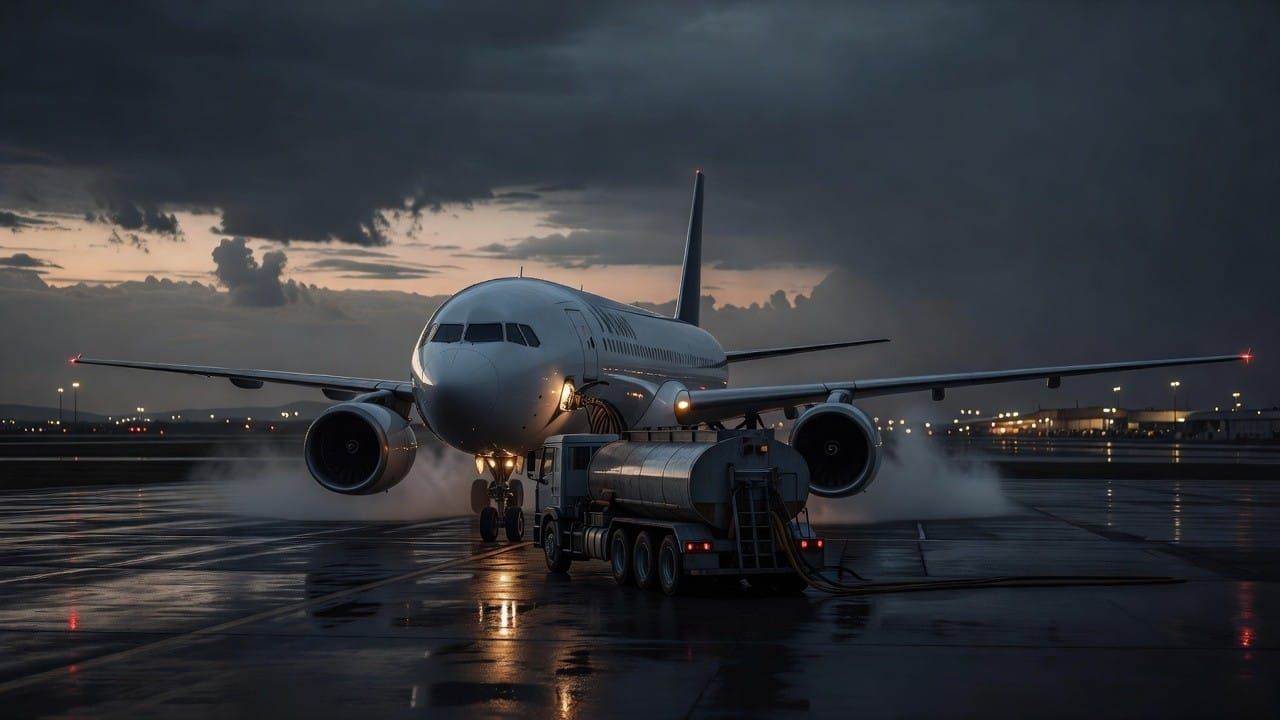
Delta Air Lines opened earnings season on Friday with a number that should have been a catastrophe: $4.4 billion spent on jet fuel in a single quarter — a company record, up 77% from a year earlier.
Then it beat Wall Street on both revenue and earnings, guided the current quarter above consensus, and reaffirmed the full-year profit target it set back in January — a target set before a war doubled the price of its single largest input.
Adjusted earnings came in at $1.56 per share against roughly $1.48 expected, on $17.7 billion in adjusted revenue. Operating revenue rose 19% year over year. GAAP net income fell 25% — the fuel bill is real — but the guide tells the story: $2.00 to $2.50 per share for the third quarter, and a reaffirmed $6.50 to $7.50 for the year, with $3–4 billion of free cash flow.
Airlines were supposed to be the victims of the 2026 fuel crisis. Delta just reported like a toll collector. Understanding why — and why it likely persists into the fall — is the most interesting transportation trade on the board right now.
The Bill From a 21-Mile Strait
The chain of events started in late February, when strikes on Iran triggered the effective closure of the Strait of Hormuz — a waterway that carries not just crude oil but roughly 400,000 barrels per day of refined jet fuel. Kerosene was hit harder than any other product. U.S. Gulf Coast jet fuel crack spreads — the refiner's margin between crude and jet — averaged $1.25 per gallon from March through May, roughly triple the prior norm, and spot jet fuel that had traded around $2.50 a gallon before the war touched nearly $4.90 in April.
IATA warned that airline fuel bills would rise roughly 40% in 2026, to around $350 billion globally, cutting industry profits in half. For a while, the market treated every airline as the same trade: short.
That was the mistake. A fuel shock this violent doesn't hit an industry evenly. It sorts it.
The Shock Killed the Cheap Seats First
On May 2, Spirit Airlines — the eighth-largest U.S. carrier and the company that taught America to fly for $49 — shut down entirely, mid-restructuring, in its second bankruptcy in under a year. Its reorganization plan had penciled in fuel at $2.24 a gallon. April spot prices ran at roughly double that. The financing evaporated, a rescue package fell through, and 17,000 employees lost their jobs overnight.
Spirit wasn't alone. Avelo spent the spring closing bases and cutting more than 50 routes. A group of surviving value carriers went to Washington asking for roughly $2.5 billion in fuel-cost relief. The ultra-low-cost model — thin margins, no hedges, no premium cabin, leisure customers who won't absorb a fare hike — turned out to be a structural short on cheap kerosene. When kerosene stopped being cheap, the model stopped existing.
The capacity those carriers flew did not come back. It's July, peak summer, and the seats are simply gone.
Fares Went Up. Then Fuel Came Down.
Here is where it gets interesting for investors. The June interim deal between Washington and Tehran reopened Hormuz, and crude collapsed — Brent was back near $72 by late June, at or below its pre-war level. Jet fuel followed more slowly, but it is falling.
Airfares are not. Ticket prices reset 15–30% higher in many markets during the crisis, and carriers have shown no interest in giving that back. Reuters reported in late June that airlines are, in effect, banking the fuel relief — holding fares at crisis levels while their cost curve rolls over. Demand has cooperated: May retail sales rose 0.9%, travel demand keeps setting records, and Delta's premium cabin revenue grew 17% year over year.
Fares priced for $4.50 fuel. Costs heading back toward $2.50. A fifth of domestic discount capacity erased. That gap — the spread between what the crisis did to prices and what the peace deal is doing to costs — is now the profit pool of the entire U.S. airline industry.
The questions that matter for your money: how wide does the spread get, who captures it, and what kills it?
The rest of this briefing is for paid members: the quarter-by-quarter spread math implied by Delta's own guidance, the three carriers positioned to capture it (including the leveraged one nobody wants to own), the capacity signal that would mark the top, and the two July earnings dates that confirm or kill the thesis.
AlphaBriefing Paid gets you every investment thesis, scenario framework, and catalyst brief we publish — the analysis private intel clients pay four figures for, at a fraction of that.