The 14-Day Clock: What the Iran Ceasefire Really Means — and What Investors Should Watch Next

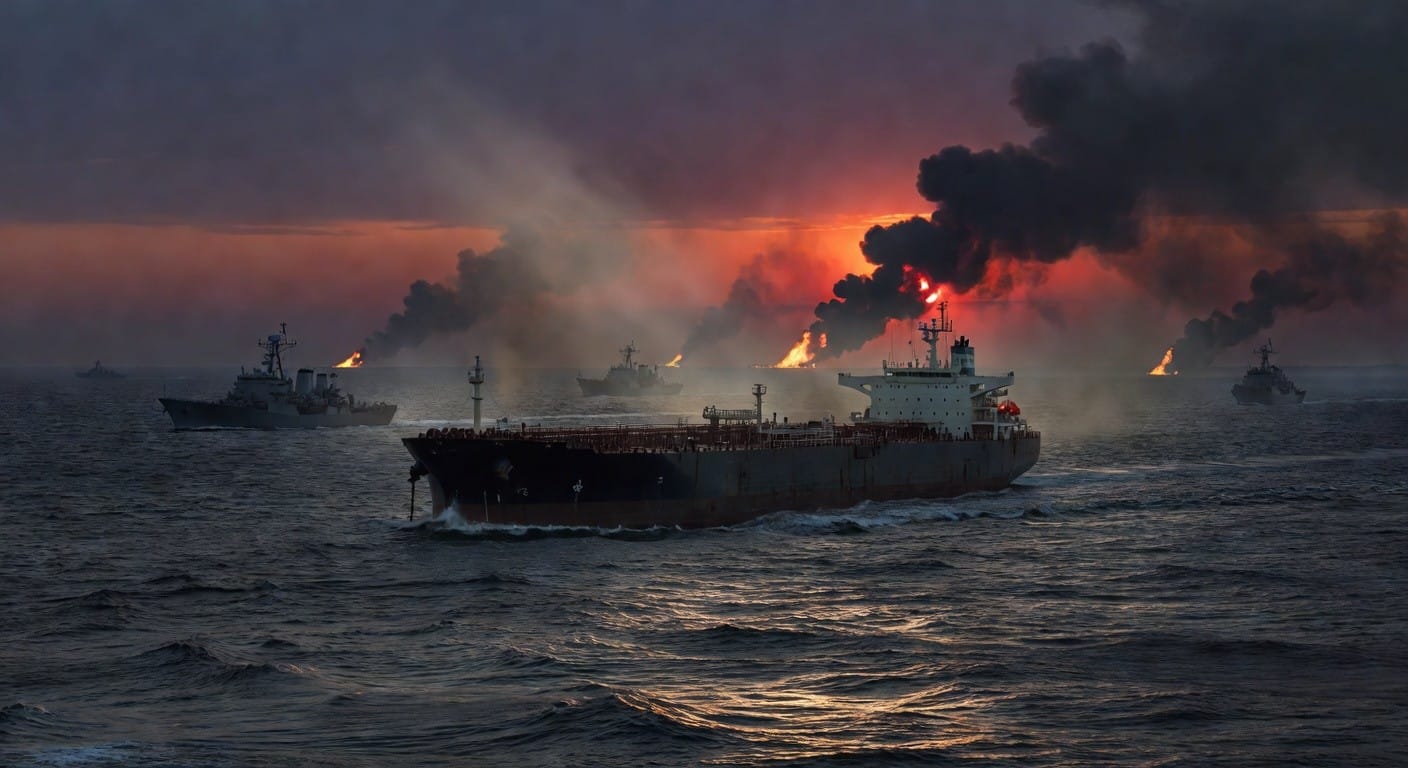
The guns have fallen silent — for now. After 39 days of US-Israeli airstrikes on Iran and six weeks of the most disruptive maritime crisis since the Second World War, President Donald Trump announced a two-week ceasefire with Tehran early Wednesday morning, just hours before his self-imposed deadline for escalated action.
Oil prices crashed. Markets surged. And somewhere in the Persian Gulf, tanker captains began charting courses they hadn't dared plot since February.
But before anyone pops champagne, read the fine print. This is a pause, not a peace. And what happens in the next 14 days may determine whether the world gets a durable settlement — or a far more dangerous second act.
How We Got Here
The 2026 Iran war began on February 28, when the United States and Israel launched coordinated strikes across Iran in an operation dubbed "Epic Fury." Nearly 900 strikes in the first 12 hours. Targets: military infrastructure, missile sites, air defense networks, nuclear facilities, and — controversially — Iranian leadership.
Tehran's response was swift and strategically calculated. The IRGC closed the Strait of Hormuz, the narrow chokepoint through which roughly 20% of the world's oil and a significant share of global LNG flows every day.
The effect was immediate and brutal. Shipping traffic through the strait dropped by 90%. Maersk, Evergreen, and major carriers suspended Gulf routes, rerouting tens of thousands of miles around the Cape of Good Hope. An estimated 170 containerships — carrying 450,000 TEUs of cargo — were effectively trapped or diverted. Energy prices surged. Supply chains for food, pharmaceuticals, and manufactured goods began to buckle.
For six weeks, the global economy ran a slow fever.
The Ceasefire: What's Actually in the Deal
The agreement, brokered by Pakistani Prime Minister Shehbaz Sharif, came together in the final hours before Trump's deadline. Here's what's been agreed — and where the gaps remain:
What both sides committed to:
- Mutual cessation of hostilities for 14 days
- Iran to allow "safe passage" for shipping through the Strait of Hormuz, coordinated with IRGC forces
- US halts all strikes and bombing operations on Iranian territory
- Iran-aligned proxy factions in Iraq suspend attacks on US and Israeli bases
What remains unresolved:
- The Strait is not "fully open" — Iran retains operational control and has flagged "technical limitations" on immediate full resumption
- Both Iran and Oman may charge transit tolls, framed as reconstruction fees
- The deal explicitly does NOT cover Israeli-Hezbollah fighting in Lebanon, which continued after the announcement
- Israel signed on with visible reluctance
The narrative gap: Both sides are claiming victory. Trump called it a "total victory" with military objectives achieved. Iranian state media declared a "crushing defeat" for the US and Israel, claiming Tehran retained Hormuz leverage throughout. When both sides are calling the same deal a win, it usually means neither got what they really wanted.
The Market Reaction: Relief, Not Resolution
Markets responded to the headline, not the detail — which is exactly what markets do.
Brent crude plunged from roughly $109 a barrel to approximately $94, a drop of nearly 14% in a single session. WTI fell to around $95 from $112–113. Analysts called it one of the sharpest single-day oil price drops in six years. Global equities rallied. Energy stocks gave back recent gains. Shipping and logistics names pulled back from war-premium highs.
That's the relief trade. But the smart money is watching what happens next.
The oil move tells you something important: markets had been pricing in a prolonged disruption, and the ceasefire announcement unwound that premium quickly. But Brent at $94 is still elevated relative to pre-war levels. The market isn't fully confident the Hormuz lanes will stay open — because they have reason not to be.
The 14-Day Clock
The real story starts Thursday. US and Iranian delegations are scheduled to meet in Islamabad on April 10 for the first official peace talks since the war began.
The gap between the two sides is enormous. Washington's 15-point framework reportedly demands nuclear curbs, limits on Iran's missile program, and constraints on proxy networks. Tehran's 10-point counterproposal includes sanctions relief, recognition of Iran's regional role, and — critically — no capitulation on Hormuz.
Bridging that gap in 14 days would be a diplomatic miracle. The more likely scenario: talks begin, both sides manage expectations down, and a further extension gets negotiated. The least likely scenario — but not impossible — is a breakdown that puts US strike packages back on the table.
What to watch:
- April 10: Islamabad talks begin. Tone of opening statements will signal how serious both sides are
- April 15: Midpoint of ceasefire. Any proxy incidents or shipping violations could fracture the deal
- April 22: Ceasefire expiry. Extension vs. renewed escalation
What This Means for Investors
This ceasefire is a derisking event, not a resolution event. The distinction matters.
Energy: Oil will likely settle in a wide range, $88–100 Brent, depending on Islamabad progress. If talks collapse, expect a snap back toward $110+. If talks extend positively, oil could test $85. The Saudi and UAE production baseline remains a backstop for both scenarios.
Shipping & Logistics: The re-routing premium built into tanker and container shipping rates won't unwind overnight. Ships need to turn around. Cargo needs rebooking. Cape of Good Hope routing won't fully unwind for weeks even if Hormuz reopens today. Expect freight rates to normalize slowly over 4–6 weeks post-resolution.
Defense: The war premium in defense stocks is now partially unwound. But six weeks of combat has demonstrated live battlefield conditions for new weapons systems and accelerated procurement conversations across NATO and GCC allies. The long-term defense investment thesis remains intact.
Geopolitical risk premium: Don't mistake a ceasefire for stability. The underlying drivers of this conflict — Iran's nuclear program, US-Israeli security concerns, regional proxy networks — haven't moved. This is a pause button, not an off switch.
The Bigger Picture
If you zoom out, what the past six weeks revealed is something strategically significant: a sustained Hormuz closure is economically catastrophic but militarily survivable for Iran — at least in the short term. Iran absorbed nearly 900 airstrikes in the opening hours and still maintained the Strait closure for 39 days.
That changes the calculus for every future confrontation in the Persian Gulf. Deterrence just got more complicated.
For investors, the lesson is familiar: geopolitical risk doesn't price itself correctly in advance. The market was surprised by both the war and the ceasefire. The window between those two surprises is where the real alpha was made — and lost.
The Islamabad talks are the next signal. Watch them closely.
Get this level of intelligence every day. Subscribe to AlphaBriefing — free, member, and paid tiers available.
Sources & Further Reading
- Reuters — Trump Agrees Two-Week Ceasefire with Iran, Says Safe Passage Through Hormuz Possible
- Al Jazeera — US-Iran Ceasefire Deal: What Are the Terms and What's Next?
- Channel News Asia — Oil Prices Drop After US-Iran Two-Week Ceasefire
- CNBC — Strait of Hormuz Crisis: Shipping Trade Oil Impact
- Wikipedia — 2026 Strait of Hormuz Crisis
- The Guardian — Iran War Timeline: Six Weeks of Conflict
- Sky News — Oil Prices Fall Sharply After Trump Announces Two-Week Iran War Ceasefire
Disclaimer
AlphaBriefing is an independent intelligence publication. The content in this article is produced for informational and educational purposes only. Nothing published by AlphaBriefing constitutes financial, investment, legal, tax, or regulatory advice, nor should it be construed as a solicitation or recommendation to buy, sell, or hold any security, asset, or financial instrument.
All views expressed are those of the author at the time of writing and are subject to change without notice. Markets are volatile and unpredictable; past performance is not indicative of future results. Any investment involves risk, including the possible loss of principal.
AlphaBriefing and its principals, employees, or contributors may hold positions in securities or assets mentioned in this article. This should be considered a potential conflict of interest. No material relationship with any company referenced exists unless explicitly disclosed. Readers should conduct their own due diligence and consult qualified financial, legal, and tax advisors before making any investment decisions.
Information in this article is drawn from public sources believed to be reliable at the time of publication. AlphaBriefing makes no warranty, express or implied, as to the accuracy, completeness, or timeliness of any information herein. AlphaBriefing accepts no liability for any loss or damage arising from reliance on this content.
© AlphaBriefing. All rights reserved. Unauthorized reproduction or distribution is prohibited.