Harvesting Crisis: Why Agricultural Commodities Are the Decade's Most Underpriced Risk
The FAO Food Price Index is rising. Wheat is up 4.3%. Fertilizer costs are spiking. Climate stress is systemic. And most investors still aren't paying attention — here's what the smart money sees.

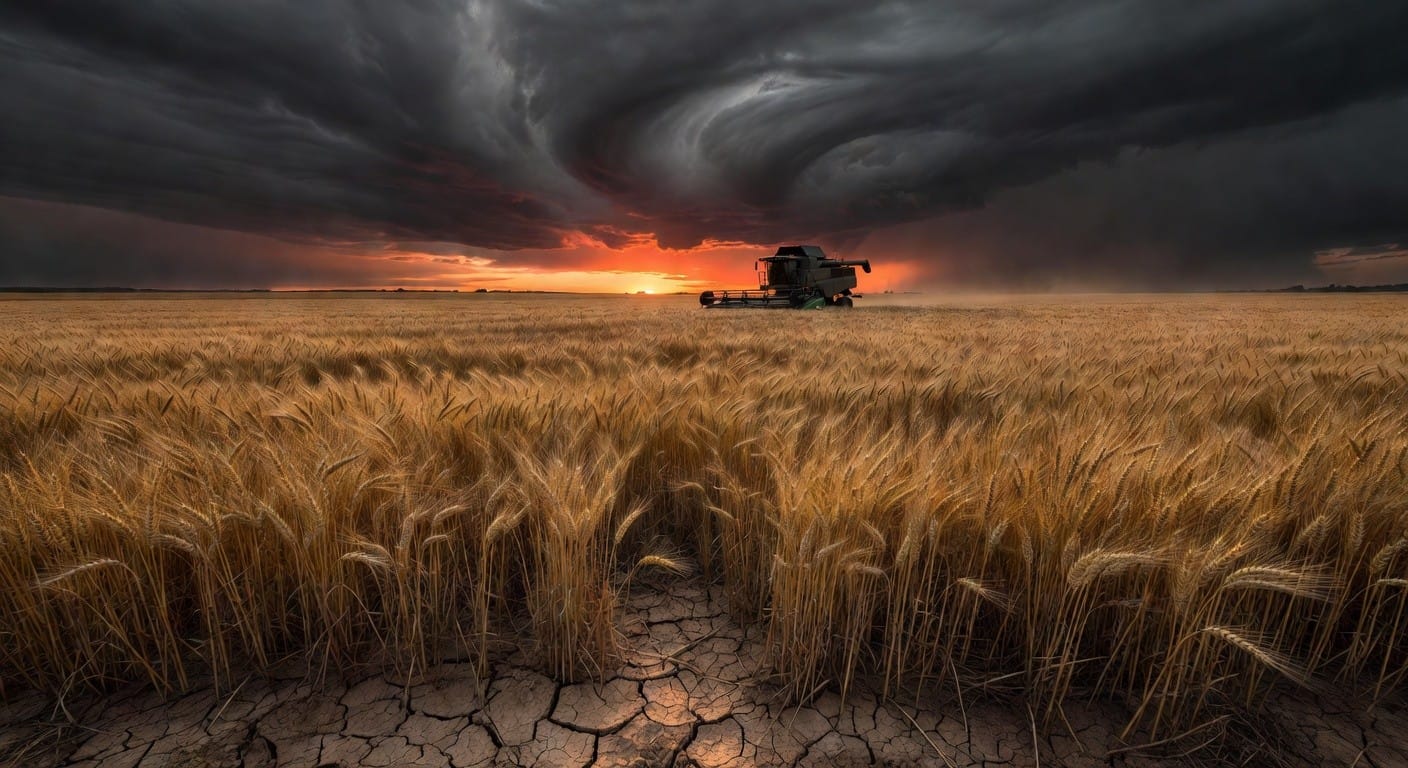
The FAO Food Price Index hit 128.5 points in March 2026 — up 2.4% month-on-month, the second consecutive monthly increase. Wheat prices surged 4.3%. Vegetable oils jumped 5.1%. The world's food system, already under pressure from the Hormuz crisis, US tariff wars, and fertilizer cost inflation, is flashing yellow.
For most investors, agricultural commodities remain a footnote — a volatility hedge mentioned in footnotes. That's a mistake. What's unfolding across global grain and food markets isn't a temporary supply shock. It's a structural repricing of one of the most critical asset classes on the planet.
The Convergence That Changes Everything
Three forces are colliding simultaneously — and the compounding effect is only beginning to register in markets.
1. Fertilizer Economics Are Broken
Natural gas is the primary feedstock for nitrogen fertilizers — urea, ammonia, ammonium nitrate. When energy prices spike, fertilizer costs follow. The Hormuz disruptions driving up oil prices in early 2026 are feeding directly into input cost anxiety ahead of the Northern Hemisphere planting season. Australian farmers are already signaling they expect to reduce planted area in response to anticipated fertilizer cost increases — the FAO flagged this explicitly in its March report.
This isn't a new dynamic. Russia's 2022 invasion of Ukraine — which removed both a major wheat and fertilizer exporter from global markets — exposed how thin the margins of global food security really are. Now, in 2026, the structural fix that was supposed to materialize hasn't. Global fertilizer supply chains remain fragile, concentrated, and geopolitically exposed.
2. The Tariff War Is Distorting Trade Flows
The US-China trade war — dramatically escalated in 2025 under the "Liberation Day" tariff regime — has scrambled agricultural trade flows in ways that are still working through the system. China, historically the world's largest soybean importer (predominantly US-sourced), has been accelerating diversification toward Brazil and Argentina. The US soybean complex has lost pricing power on its single largest export market, forcing structural adjustment that benefits Brazilian agribusiness — and the infrastructure investors backing it.
Meanwhile, reciprocal tariffs on agricultural machinery, chemicals, and inputs are quietly raising the cost of production across multiple major exporting nations. The cascading effects take time to show up in final prices — but they are showing up.
3. Climate Volatility Is Now Systemic
The US is entering the 2026 growing season with deteriorating crop condition ratings — the FAO specifically cited drought concerns in its March wheat assessment. This isn't isolated. The last three years have seen sequential crop stress events in key production zones: Black Sea, the US Corn Belt, the Cerrado in Brazil, the Indo-Gangetic Plain. Climate models increasingly suggest this is the baseline, not the exception.
The World Bank's October 2025 commodity outlook projected broad price declines in 2026. But that forecast was built before the Hormuz crisis intensified, before the latest US drought signals, and before the tariff regime embedded itself as a structural cost factor. The gap between forecast and reality is widening.
The Investment Angle: Where Smart Capital Is Moving
This is where the analysis gets actionable. AlphaBriefing members get the full investment framework — scenarios, positioning, and the bottom line.
Subscribe to AlphaBriefing — Free, Member, and Paid tiers available.