Europe Is Rearming at a Historic Pace. The Investment Opportunity Is Still Underappreciated.
For the first time, every NATO ally meets the 2% GDP defense target. Germany just approved a €108 billion defense budget — up 25% year-on-year. Global defense spending tops $2.6 trillion. The structural cycle is just getting started.

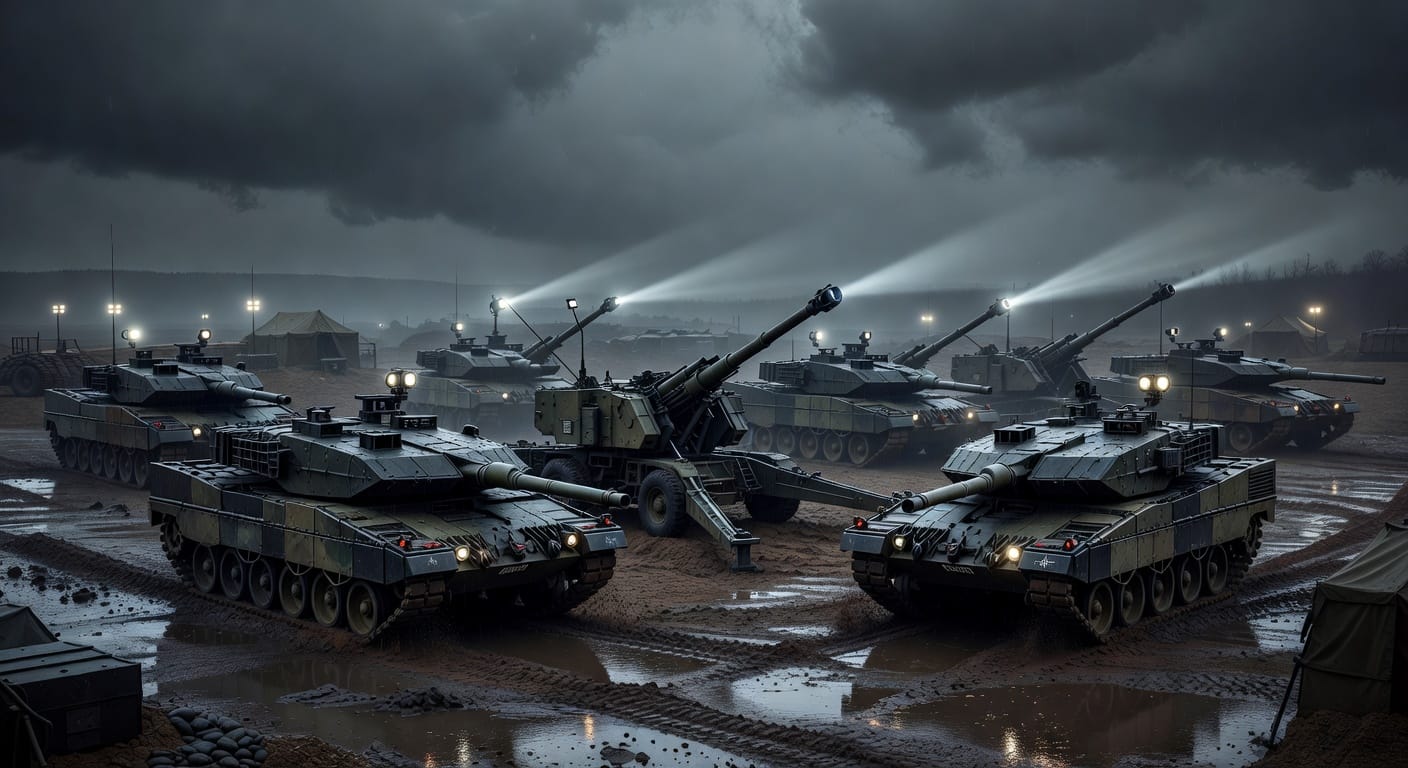
For the first time, every NATO ally meets the 2% GDP defense target. Germany just approved a €108 billion defense budget — up 25% year-on-year. Global defense spending tops $2.6 trillion. The structural cycle is just getting started.
The Largest Peacetime Rearmament in a Generation
Something remarkable happened at the end of 2025: for the first time in NATO's history, every single member state met or exceeded the alliance's longstanding 2% of GDP defense spending target. That's a leap from just three countries meeting it in 2014 — the year Russia first moved on Ukraine.
By 2025, European NATO members collectively spent €381 billion on defense, up from €343 billion the prior year, representing roughly 2.1% of GDP. The post-Hague Summit commitment goes further: allies have pledged to reach 5% of GDP on defense and security by approximately 2035, with at least 3.5% specifically on core military capability. Global spending has topped $2.6 trillion in 2026 and is projected to reach $2.9 trillion by 2030.
This is not a blip. This is structural.
What's Driving It
The acceleration reflects a convergence of long-building pressures that are now moving simultaneously:
Russia's ongoing war in Ukraine exposed critical gaps in European military readiness, stockpiles, and industrial capacity. The continent simply could not sustain a peer conflict at scale. That realization has driven emergency procurement programs, munitions production expansion, and defense industrial policy across virtually every major European economy.
The Trump factor. Washington's increasingly transactional approach to NATO — with Trump this week warning allies to help reopen the Strait of Hormuz or face consequences — has concentrated minds in European capitals. The message has been received: Europe cannot rely on American security guarantees as a free good. Strategic autonomy is now a policy imperative, not just a talking point.
The Iran conflict and Middle East escalation. The third week of the US-Israel military campaign against Iran has underscored, again, that great-power security competition is live and global. The Strait of Hormuz disruption is simultaneously a crisis and a case study in the kind of military-economic leverage that only hard power can counter.
The result: Germany approved a €108 billion defense budget for 2026, up 25% year-on-year. The EU's ReArm Europe / Readiness 2030 plan has unlocked fiscal flexibility that was previously politically impossible. SIPRI reports global arms flows jumped nearly 10% last year, with European demand accounting for a disproportionate share.
This is where the analysis gets actionable. AlphaBriefing members get the full investment framework — scenarios, positioning, and the bottom line.
Subscribe to AlphaBriefing — Free, Member, and Paid tiers available.