Eight Days to Decide: The Iran Deadline That Could Send Oil to $200

Eight days. That's all the time left on the clock before the most consequential deadline in the Middle East since the 2003 Iraq invasion.
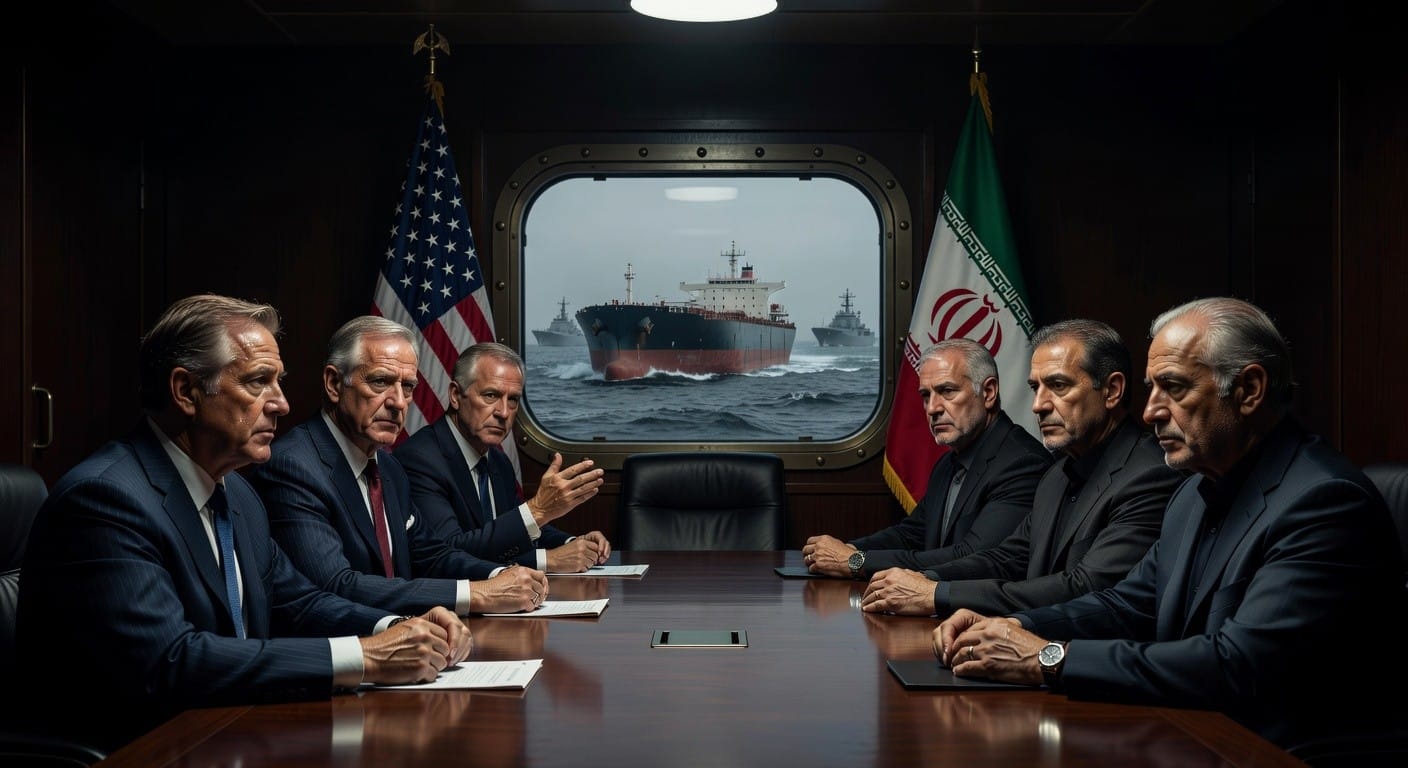
On April 6, the Trump administration's self-imposed pause on US strikes against Iranian energy infrastructure expires. Either Tehran reopens the Strait of Hormuz to unrestricted commercial shipping — or the US military resumes offensive operations with the potential to escalate into the most destructive conflict the Persian Gulf has seen in a generation.
This isn't just a geopolitical story. It's the single most important event on every investor's calendar right now.
How We Got Here
The timeline is worth understanding quickly. In late February, Israeli strikes against Iranian nuclear and military installations triggered a rapid Iranian escalation: ballistic missile barrages toward Israel, and — critically — an Iranian declaration that the Strait of Hormuz was closed to ships from "hostile" nations.
That closure, even partial, sent Brent crude soaring above $100 per barrel for the first time since 2022. It triggered a five-week losing streak on US equities. And it forced a foreign policy crisis onto an administration already juggling trade wars with China, Europe, and Canada.
The US military responded by deploying additional forces — 3,000 paratroopers from the 82nd Airborne, over 4,700 Marines — and conducting targeted strikes against Iranian air defenses and Kharg Island's perimeter installations. Iran retaliated with missile strikes and IRGC naval harassment, while Israel continued its own independent campaign against Iranian nuclear and missile sites.
By mid-March, the situation had reached a dangerous plateau: neither side fully winning, neither side backing down, and global oil markets pricing in permanent disruption.
The Negotiation Gambit
On March 23, Trump announced that US envoys were in indirect negotiations with senior Iranian officials — mediated through Pakistan. He claimed Iran had offered a "very significant prize" related to oil, gas, and the strait. Tehran immediately denied that substantive talks were happening.
The public contradiction is familiar diplomatic theater. What matters is the substance.
The US 15-point ceasefire plan — which Iran publicly described as "maximalist" — demands:
- Full dismantlement of Iran's nuclear enrichment program
- Cessation of support for regional proxy forces (Hezbollah, Houthis, Iraqi militias)
- Immediate reopening of the Strait of Hormuz to unrestricted commercial transit
- Normalization of Iranian oil exports through internationally monitored channels
Iran's counter-proposal, submitted but not publicly detailed, reportedly demands an end to all US-Israeli military operations, reparations for infrastructure damage, and explicit security guarantees against future strikes — essentially the inverse of what Washington is offering.
Both positions, as stated, are incompatible. That's expected at this stage.
What the April 6 Deadline Really Means
Trump extended the US strike pause to April 6 — ostensibly at Iran's request for 10 more days — framing it as diplomatic progress. US officials describe the pause as allowing "talks to mature." Military analysts describe it differently: as time for additional force positioning, including assets capable of striking Kharg Island's oil loading terminals.
Kharg Island is Iran's economic jugular. The 8-square-mile island in the northern Persian Gulf handles approximately 90% of Iran's crude oil exports. A sustained strike campaign — or seizure — would effectively cut off Iran's primary revenue source and force a decision: capitulate or escalate into a broader regional war.
The threat is credible. US carrier strike groups and B-52 long-range bombers are within striking distance. The question is whether Trump will follow through — or whether April 6 becomes the third extension.
The Scenario Map for Investors
This is the fork in the road that markets are trading around right now. Here's how each path plays out:
Scenario A: Deal, or Meaningful Progress (30% probability)
Iran agrees to a partial opening of the strait and suspends — but does not fully dismantle — its nuclear program in exchange for a ceasefire. US strikes pause indefinitely. Brent crude falls sharply: analysts project a $20–$30/bbl decline within two weeks of any credible de-escalation signal. US equity markets rally. Defense stocks pull back from recent highs. Shipping and airline stocks recover as rerouting costs normalize.
Scenario B: Deadline Passes, Strikes Resume (50% probability)
No deal by April 6. US resumes strikes against Iranian infrastructure, potentially including power generation and oil export terminals. Brent crude pushes toward $120–$130/bbl. Iran retaliates with increased Hormuz harassment, potentially mining key shipping lanes. Markets extend losses. Energy majors benefit short-term; global growth forecasts revised lower.
Scenario C: Escalation — Kharg Island Operation (20% probability)
The US moves to seize or neutralize Kharg Island's oil export infrastructure. This represents a full-scale escalation: Iran likely responds with maximum force, including long-range missile strikes against US bases in Qatar, Bahrain, and Saudi oil infrastructure. Oil prices approach the theoretical $200/bbl upper bound cited by Goldman Sachs. A global recession becomes the base case. Safe haven assets (gold, USD, short-duration Treasuries) surge.
The Upstream Implication
Regardless of scenario, this conflict has already reshuffled the global energy order in ways that will persist long after a ceasefire.
The rerouting premium is structural. Western tankers avoiding the Strait of Hormuz are adding 10–15 days of sailing time by rounding the Cape of Good Hope. Shipping rates on key routes are up 30–55%. This cost gets embedded in fuel prices, goods inflation, and ultimately in central bank calculus.
US energy producers are the quiet winners. With Brent above $100, shale production economics are exceptionally favorable. Permian Basin operators, LNG exporters, and Gulf Coast refiners are printing cash. Every week the conflict continues, the US shale industry's balance sheets strengthen and its political influence in Washington grows.
Gulf sovereign wealth funds are under pressure. Saudi Arabia, the UAE, and Qatar are caught between their desire for US protection and the economic damage from regional instability. Their sovereign wealth funds — which collectively manage over $3 trillion — are recalibrating portfolio exposures in real time, reducing Middle East infrastructure exposure and increasing positions in Western financial assets.
The Bottom Line
Eight days is a long time in geopolitics. The April 6 deadline could slip — Trump has already extended it once. But the direction of travel is clear: this conflict is not going to quietly resolve itself.
The question every investor should be asking isn't what happens on April 6. It's how is my portfolio positioned if Brent stays above $100 for another 90 days?
Energy exposure, shipping logistics, and defensive positioning are not optional anymore. They're the table stakes for navigating what comes next.
Get this level of intelligence every day. Subscribe to AlphaBriefing — free, member, and paid tiers available.
Sources & Further Reading
- Reuters — Iran says it is reviewing US ceasefire plan
- Axios — Trump suspends Iran strikes amid Hormuz negotiations
- NPR — Iran war: peace conditions and the April 6 deadline
- OilPrice.com — Will the US Seize Kharg Island?
- The Christian Science Monitor — Iran war: the Hormuz ceasefire plan
- World Container Shipping — Iran War Day 27: Trump delays, IRGC turns back ships
- DW — Iran war: stocks sink as Trump pushes back Hormuz deadline
Disclaimer
AlphaBriefing is an independent intelligence publication. The content in this article is produced for informational and educational purposes only. Nothing published by AlphaBriefing constitutes financial, investment, legal, tax, or regulatory advice, nor should it be construed as a solicitation or recommendation to buy, sell, or hold any security, asset, or financial instrument.
All views expressed are those of the author at the time of writing and are subject to change without notice. Markets are volatile and unpredictable; past performance is not indicative of future results. Any investment involves risk, including the possible loss of principal.
AlphaBriefing and its principals, employees, or contributors may hold positions in securities or assets mentioned in this article. This should be considered a potential conflict of interest. No material relationship with any company referenced exists unless explicitly disclosed. Readers should conduct their own due diligence and consult qualified financial, legal, and tax advisors before making any investment decisions.
Information in this article is drawn from public sources believed to be reliable at the time of publication. AlphaBriefing makes no warranty, express or implied, as to the accuracy, completeness, or timeliness of any information herein. AlphaBriefing accepts no liability for any loss or damage arising from reliance on this content.
© AlphaBriefing. All rights reserved. Unauthorized reproduction or distribution is prohibited.