The New Scramble: How the DRC Became the Most Contested Piece of Ground in the Global Economy
China controls 72% of Congo's copper and cobalt output. Washington is spending billions to change that. Here's what the battle for the DRC means for your portfolio.

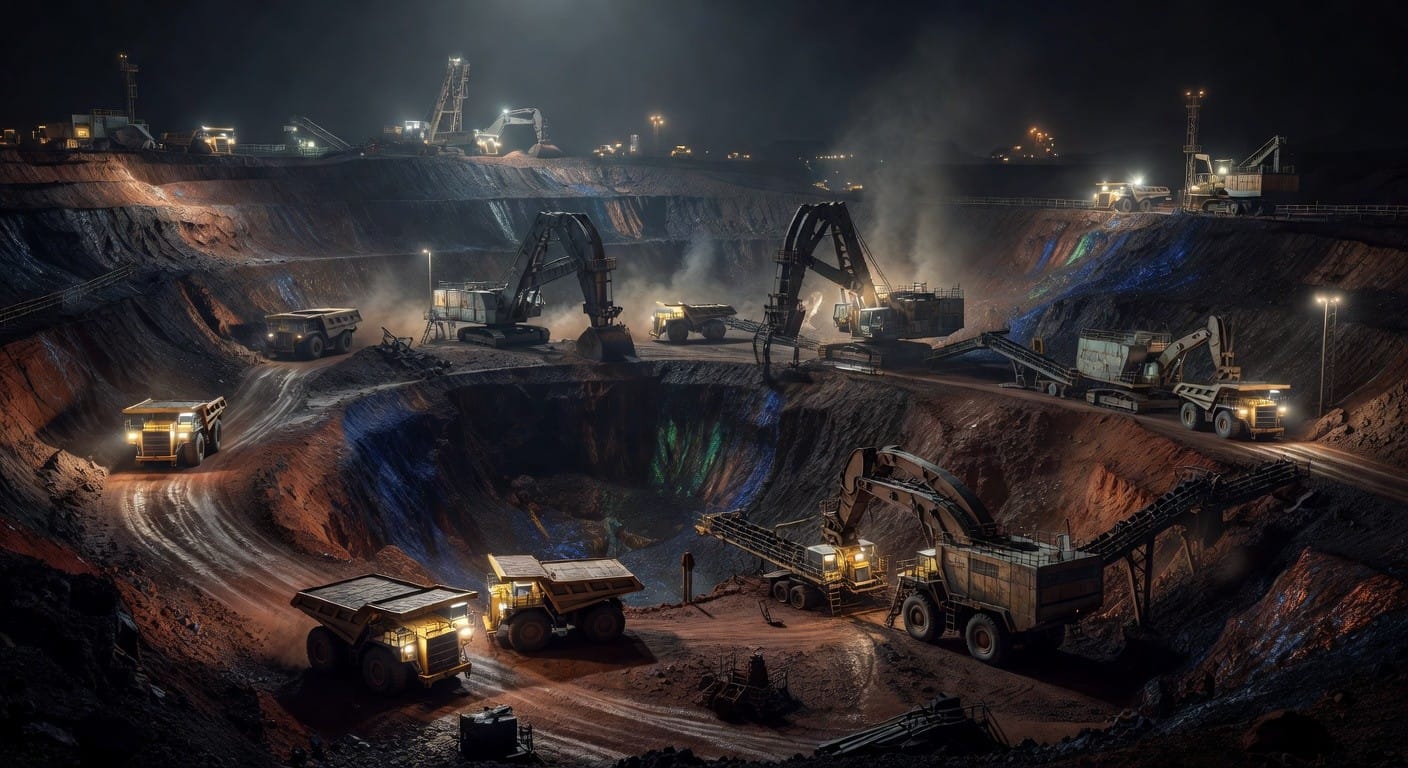
The New Scramble for Africa's Heart
The Democratic Republic of Congo doesn't make the financial pages often enough — but it probably should. Beneath its fractured surface lies a staggering concentration of the minerals that will define the next 30 years of the global economy: roughly 70% of the world's cobalt, the second-largest copper reserves on earth, significant lithium deposits, and coltan that powers every smartphone on the planet.
For decades, China recognized what Western capitals were too slow to see. Through state-backed financing, infrastructure deals, and patient capital deployment, Beijing built near-total control over the DRC's extractive economy. Chinese firms — CMOC, Zijin Mining, Huayou Cobalt — now control stakes in 15 of the country's largest copper and cobalt mines, accounting for roughly 72% of combined output.
Washington spent years watching from the sidelines. That era appears to be ending.
Washington Wakes Up — Five Years Too Late?
In December 2025, the US and DRC signed a Strategic Partnership Agreement, a document that reads less like diplomacy and more like a supply chain emergency plan. The deal promises US capital access, technical transfers, and security assistance in exchange for guaranteed offtake rights and a "right of first offer" for American buyers on critical mineral exports. Several flagship transactions have already moved: Glencore is in advanced talks to sell a 40% stake in its DRC copper-cobalt operations to a US-backed Orion Critical Minerals Consortium in a deal valued at approximately $9 billion. Ivanhoe Mines, operator of the Kamoa-Kakula complex — Africa's largest copper mine — is exploring US offtake arrangements under a framework dubbed "Project Vault."
The infrastructure play is equally significant. The US-backed Lobito Corridor rail rehabilitation project aims to create a direct mineral export route from the DRC's copper belt through Angola to Atlantic ports, countering the Chinese-built rail networks that currently dominate logistics in the region.
China's response has been swift and telling. Just last week — on March 26-27, 2026 — Beijing and Kinshasa signed a new mining cooperation agreement doubling down on existing ties: shared geological data, investment protections, preferential access to the Chinese market, and duty-free DRC exports into China starting May 1. China is not ceding ground quietly.
The DRC itself is playing both sides, and doing so with growing sophistication. President Tshisekedi's government has deployed cobalt export quotas as a strategic lever — not merely to boost prices, but to force both superpowers to compete for access on Kinshasa's terms. It is, in a word, leverage.
This is where the analysis gets actionable. AlphaBriefing members get the full investment framework — scenarios, positioning, and the bottom line.
Subscribe to AlphaBriefing — Free, Member, and Paid tiers available.