The Strait Equation: China's Naval Buildup and What It Means for Your Portfolio

China just made its most significant naval move in the Taiwan Strait in years — and most investors aren't paying attention.
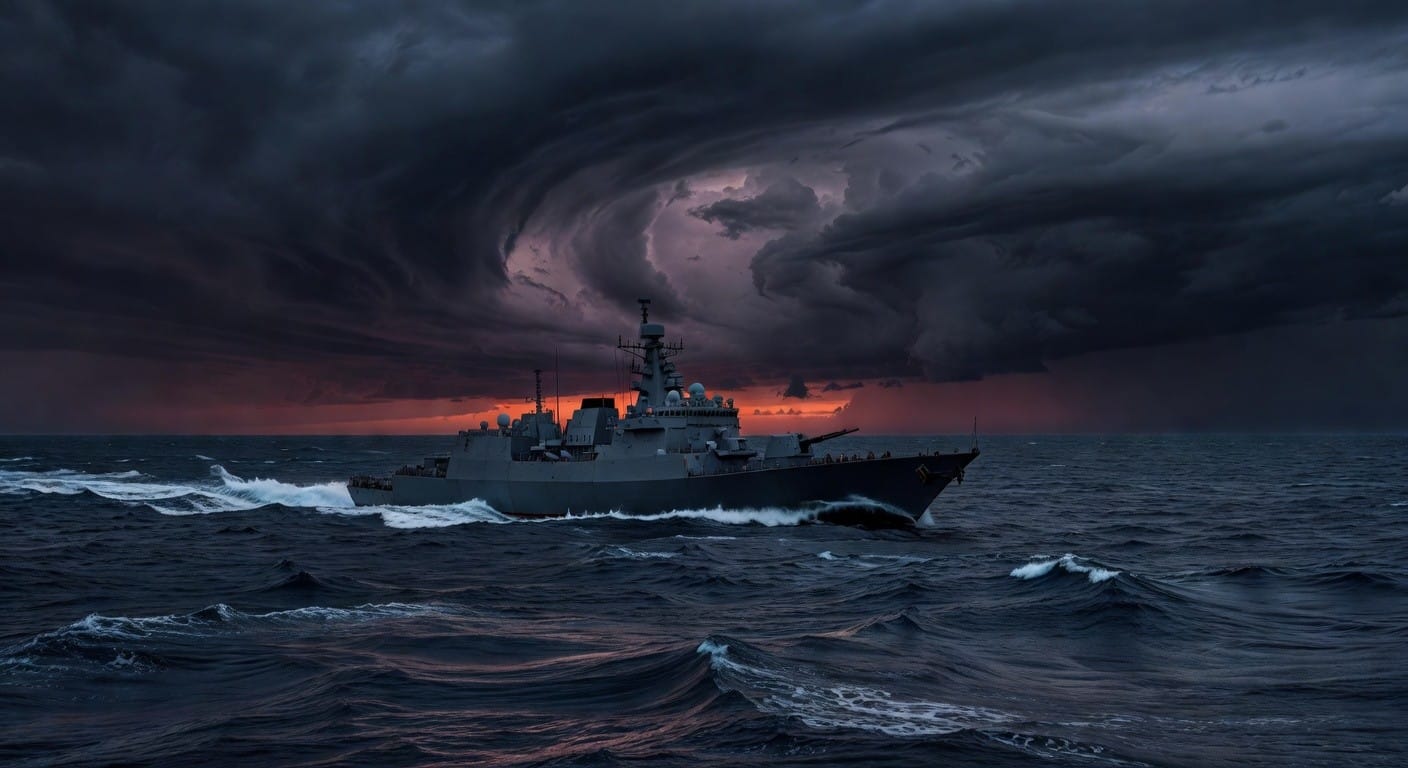
In early March 2026, the People's Liberation Army Navy commissioned two new Type 055 guided-missile destroyers — Dongguan and Anqing — and assigned them to the Eastern Theater Command. This was a first. Every previous Type 055 had been routed to the Northern or Southern Theater Commands. The Eastern Theater Command covers one operational priority above all others: Taiwan.
These are not ordinary warships. At 13,000 tons, the Type 055 is the most capable surface combatant in the Indo-Pacific, with 112-cell vertical launch systems capable of firing advanced anti-ship, land-attack, and air-defense missiles simultaneously. Shortly after commissioning, both ships conducted live-fire exercises near the Taiwan Strait. China's Global Times called them "the world's most powerful destroyers." The U.S. Naval Institute called their assignment to the Eastern Theater "a significant boost to PLA capabilities near Taiwan."
The deployment didn't happen in a vacuum.
Beijing's 2026 Military Posture: Incremental, Relentless
China's 2026 defense budget came in at 1.94 trillion yuan (~$281 billion USD) — a 7% nominal increase, the 11th consecutive year of single-digit growth. The headline figure looks modest. The underlying trajectory is not.
Western analysts — including the Pentagon — consistently estimate China's actual military spending at 32 to 63% higher than officially declared, once you factor in R&D, paramilitary forces, and mobilization infrastructure. That puts real PLA spending somewhere between $370 billion and $460 billion annually. For context, that's approaching the entire U.S. defense budget.
The 2026 NPC session also marked a notable rhetorical shift: where previous official language referred to opposing Taiwan independence, this year's documents used the phrase "crack down on Taiwan independence." Analysts at the Institute for the Study of War flagged this as a signal of coercive escalation tied directly to Xi Jinping's reunification timeline.
Meanwhile, U.S. intelligence assessed — as of mid-March 2026 — that China does not currently plan to execute an invasion of Taiwan in 2027. That's the good news. The less reassuring news: the assessment noted China prefers unification without force "if possible," and that the PLA is systematically building the capability to remove that option from the table.
The Taiwan Strait in 2026 is not on the verge of a hot war. But China is quietly resetting the naval balance — and the strategic window for miscalculation is narrowing.
This is where the analysis gets actionable. AlphaBriefing members get the full investment framework — scenarios, positioning, and the bottom line.
Subscribe to AlphaBriefing — Free, Member, and Paid tiers available.