China Just Borrowed Dollars at America's Price
Beijing sold $2 billion of three-year dollar bonds in Hong Kong at a zero spread to US Treasuries, on $72 billion of orders. The yield made the headlines. The buyer list is the real signal.

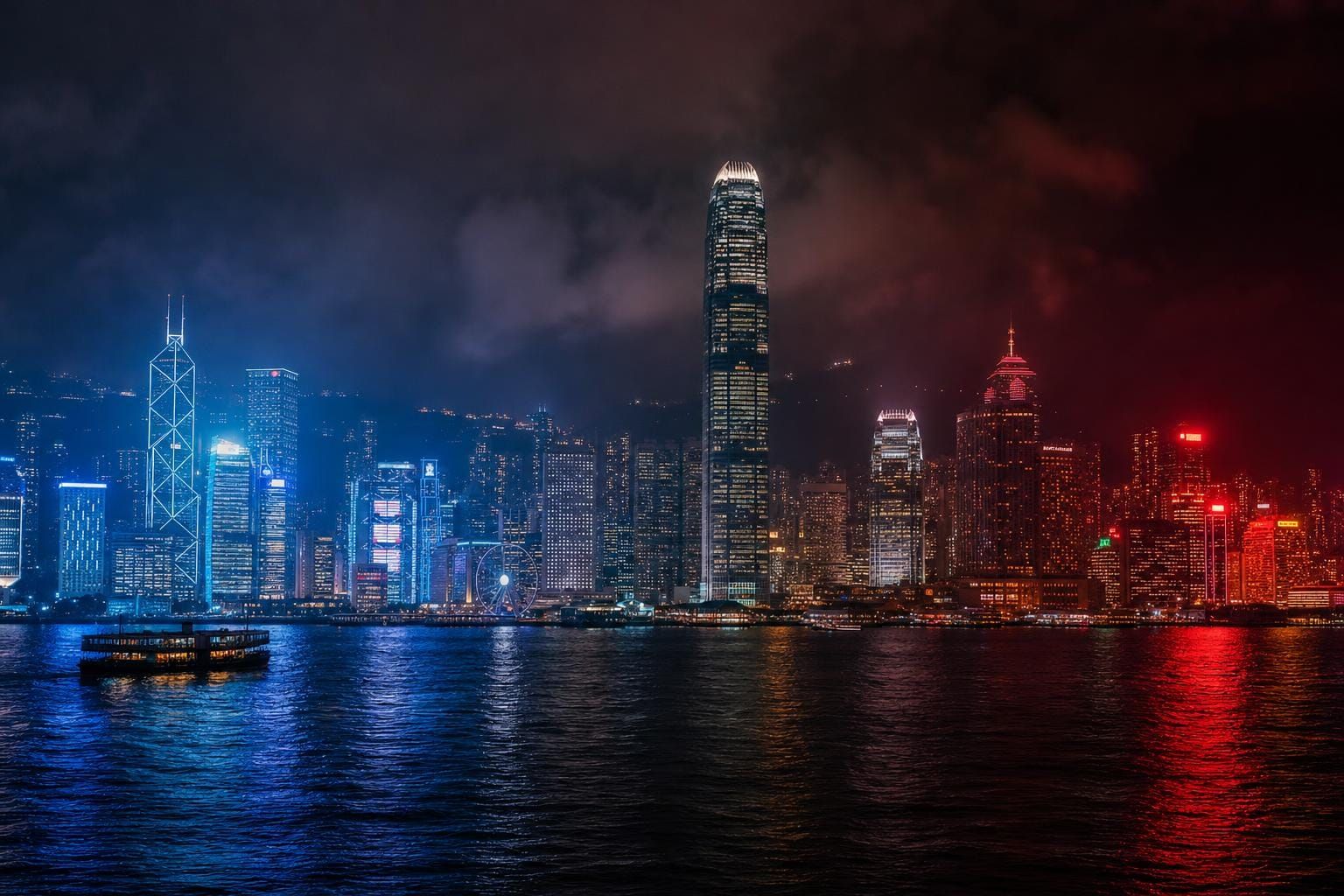
On Thursday afternoon in Hong Kong, while Xi Jinping was shaking hands with Donald Trump at the APEC summit in Shenzhen, China's Ministry of Finance quietly ran one of the most symbolically loaded trades of the year. It sold $2 billion of three-year dollar-denominated sovereign bonds at a yield of 4.821 percent — exactly in line with comparable US Treasuries.
Zero spread. The world's second-largest economy, rated three notches below the United States, borrowed dollars at America's price.
The demand behind that print was not subtle. The order book topped $72 billion — 36 times the paper on offer — with nearly 600 investors placing orders, according to a bookrunner's message seen by Reuters. Pricing guidance opened at roughly 25 basis points over Treasuries and collapsed to flat by the time the book closed. The Ministry of Finance confirmed the deal on Friday, and the bonds will list on the Stock Exchange of Hong Kong.
If this feels familiar, it should. In November 2025, Beijing sold $4 billion in a dual-tranche deal in Hong Kong — the three-year priced at par to Treasuries, the five-year just two basis points above — about a week after Xi and Trump met in Busan. Two years running, China has timed a dollar bond sale to land within days of a summit with the US president, and two years running it has walked away with a zero-spread headline. That is not a coincidence. It is choreography.
What a zero spread actually means — and what it doesn't
Start with what this print is not. It is not a market verdict that Chinese sovereign credit is as safe as the full faith and credit of the United States. S&P affirmed China at A+ with a stable outlook in August — three notches below the AA+ it assigns Washington — and, as State Street's Ng Kheng Siang noted of the deal, the pricing does not imply investors expect a ratings upgrade.
What it is, mostly, is scarcity. China is a rare visitor to the dollar market: a two-year hiatus after 2021, a symbolically loaded $2 billion sale in Riyadh in 2024, $4 billion in 2025, and now $2 billion in 2026 — its first dollar sovereign deal of the year, alongside euro and offshore-yuan issuance. The entire outstanding stock of Chinese dollar sovereign bonds is a rounding error next to a Treasury market measured in the tens of trillions. When a scarce, liquid, investment-grade dollar asset from a $3-trillion-reserves sovereign shows up once a year, the bid structurally overwhelms the supply. Natixis economist Gary Ng put it plainly: China is viewed as a relatively safe credit, supported by low external debt and abundant foreign reserves — and limited supply shapes the dynamics.
But "mostly scarcity" is not "only scarcity." The timing matters. This print landed in a month when the US 10-year Treasury spent more than a week trading above 5 percent — it closed Friday at 4.91 percent after a sharp late-week rally — and when the market's patience with Washington's fiscal trajectory is a live, repricing variable. Treasuries remain the world's risk-free benchmark. But every year that another sovereign borrows dollars at the same price, the word "unique" erodes a little further at the margin.
The yield, though, was never the real story. The story is in the allocation sheet — who actually got the bonds, and how dramatically that list changed from last year. That shift is what turns a scarcity trade into a strategic signal.
The rest of this briefing is free — it just requires a free AlphaBriefing account: the buyer-base shift Beijing engineered (one category nearly tripled its share), the secondary-market move that nobody headlines, and the 2027 watchlist for whether the zero spread survives real supply. A free membership gets you access to every free article at AlphaBriefing.com.
Create your free account → — 30 seconds, no card.