After Decades of Failure, a Cancer Vaccine Finally Works
Merck and Moderna's personalized mRNA vaccine beat Keytruda alone in a Phase 3 melanoma trial — the first win of its kind. How it works, what it did to Moderna's stock, and what has to happen next.

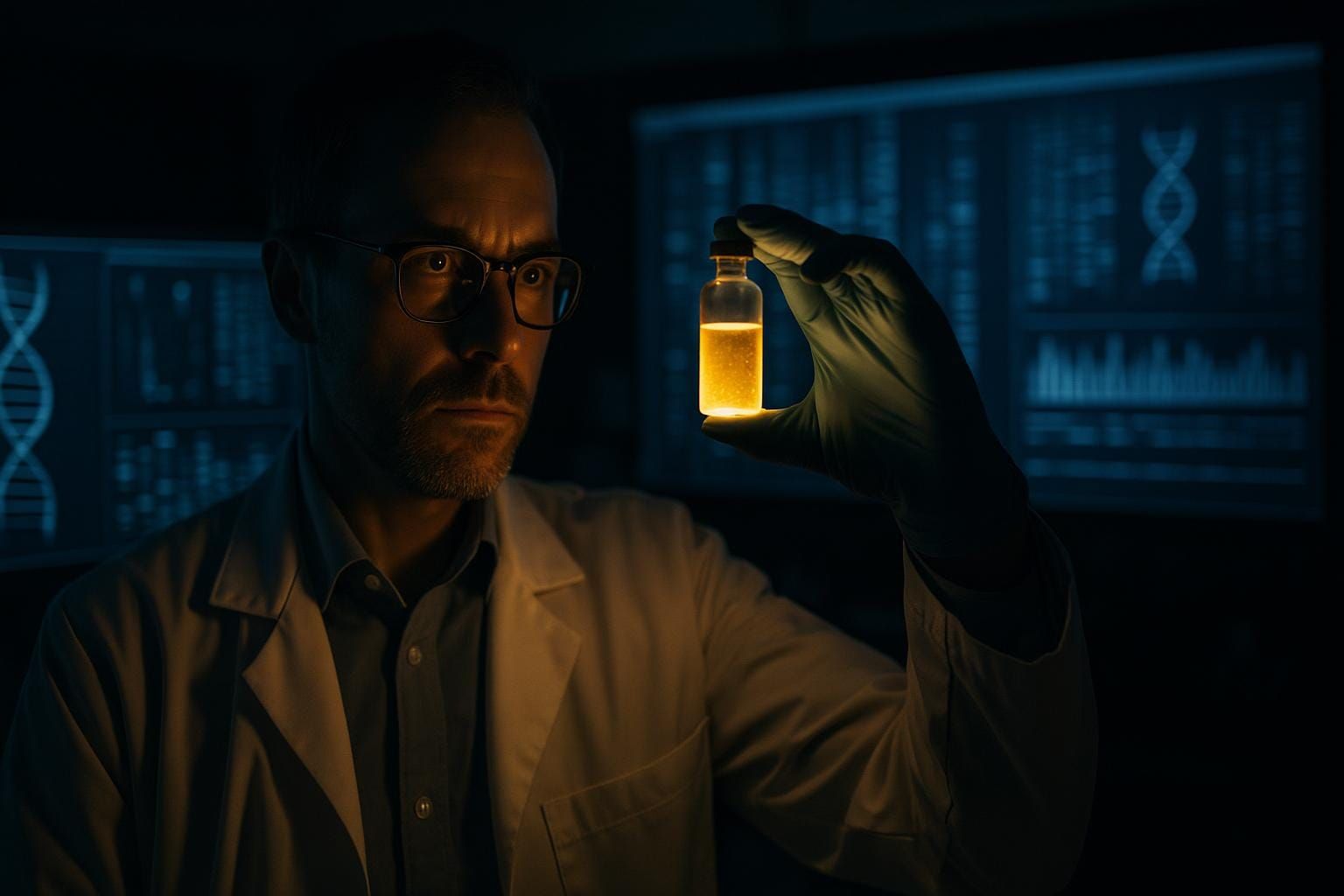
Cancer vaccines have been oncology's most reliable disappointment. For decades, the idea — train the immune system to hunt tumor cells the way it hunts viruses — kept producing elegant science and failed trials. The field became a graveyard of promising Phase 2 data that evaporated in Phase 3.
That streak just ended.
On August 19, Merck and Moderna announced that their personalized mRNA cancer vaccine, intismeran autogene, met both of its key endpoints in a Phase 3 trial of high-risk melanoma patients. Added to Merck's immunotherapy Keytruda after surgery, the vaccine significantly delayed both cancer recurrence and the development of metastatic disease compared with Keytruda alone — the current standard of care, and one of the most effective cancer drugs ever sold.
It is, by the companies' account, the first time an individualized neoantigen therapy — a vaccine custom-built for a single patient's tumor — has ever passed a randomized Phase 3 trial. And this week, at the STAT Summit in Boston, Moderna President Stephen Hoge and Merck R&D chief Dean Li confirmed the next step: the companies are preparing to file the vaccine for regulatory approval.
Markets did not wait for the FDA. Moderna stock closed at $174.38 on announcement day, up 177% from the prior close of $62.96 — and it has kept climbing since, finishing last week at $218.01. For investors, the question is no longer whether mRNA cancer vaccines are real. It's how big this gets, and how fast.
A vaccine printed to order
Intismeran autogene (previously known as mRNA-4157 or V940) inverts the logic of every vaccine that came before it. A flu shot is mass-produced; this is manufactured one patient at a time.
The process: surgeons remove the patient's tumor, and researchers sequence its DNA to identify the mutations unique to that cancer — its mutational "fingerprint." An algorithm selects up to 34 of the most promising mutant proteins, called neoantigens, and a synthetic mRNA molecule is built to encode them. Injected back into the patient, the mRNA teaches the immune system to recognize those exact mutations as targets — effectively posting a wanted sign for any cancer cell that survived surgery. Keytruda, given alongside, releases the immune system's brakes so the newly trained T cells can act.
The Phase 3 trial, INTerpath-001, enrolled 1,137 patients with completely resected stage IIB–IV melanoma, randomized 2-to-1 to the combination or Keytruda alone, according to the companies. Patients received the vaccine every three weeks for up to nine doses over roughly a year of treatment. At a planned interim analysis, the combination won on both recurrence-free survival (the primary endpoint) and distant metastasis-free survival (the key secondary endpoint), with what the companies called statistically significant and clinically meaningful improvements. No new safety signals emerged.
One important caveat: the detailed numbers have not been released yet. Merck and Moderna say the full dataset will be presented at an upcoming medical meeting. What investors are trading on today is the earlier Phase 2b trial, KEYNOTE-942, whose five-year follow-up — presented at this year's ASCO meeting — showed the combination cut the risk of recurrence or death by 49% and the risk of distant metastasis or death by 59% versus Keytruda alone. If the Phase 3 data land anywhere near those numbers, this is a new pillar of cancer treatment.
Briefings like this land in members' inboxes before the market prices them in. Join free →
Why Merck needs this as badly as Moderna
The strategic stakes here are unusually symmetrical: both companies arrived at this readout needing it.
Moderna's case is obvious. The company's COVID windfall collapsed, its stock fell from a 2021 peak near $497 to under $63 this August — a drawdown of more than 85% — and its public fights with the U.S. government over vaccine policy spooked what investors remained. The cancer vaccine program was the thesis that justified staying. One day of Phase 3 data nearly tripled the stock off its lows; even after the rally to $218, shares remain roughly 56% below their pandemic-era high. Analysts quoted in industry press suggest the melanoma indication alone could eventually generate billions in annual sales — and melanoma is explicitly the beachhead, not the destination.
Merck's case is quieter but arguably bigger. Keytruda was the world's top-selling drug in 2024, with $29.5 billion in revenue — a number larger than most pharmaceutical companies. Its key U.S. patent protection is widely expected to begin eroding in 2028, and Wall Street has spent two years asking what fills the hole. Merck's answer, in part, is to wrap new, co-owned products around the Keytruda franchise before biosimilars arrive. A personalized vaccine that only works in combination with pembrolizumab — and that Merck co-develops and co-commercializes with Moderna — extends the economics of its crown jewel into the next decade.
That's why Merck stock jumped 12.6% to $152.20 on the announcement, a remarkable single-day move for a company of its size.
The catch: melanoma was the easy mode
Before extrapolating this to all of oncology, it's worth hearing how the companies themselves frame it. Melanoma is what immunologists call a "hot" tumor — heavily mutated, visible to the immune system, and the setting where checkpoint inhibitors like Keytruda have always worked best. The companies deliberately ran their first Phase 3 where the odds were most favorable.
"We have a lot of exploring to do and need to prioritize where we explore," Hoge said at the STAT Summit on Thursday. Merck's Li was blunter about the strategy, noting the pair has focused on settings where Keytruda's strengths are proven — a pointed contrast, as STAT reported, with rival BioNTech's choice to attack harder "cold" and metastatic tumors, where the field has logged some notable failures alongside early promise.
The expansion map is already drawn: trials are running in adjuvant lung, kidney, and bladder cancer, with small exploratory studies underway in pancreatic and gastric cancer — historically two of immunotherapy's hardest targets. Each readout will answer a question melanoma cannot: does personalized mRNA vaccination work where the immune system needs more help?
There are practical hurdles, too. Every dose is a bespoke manufacturing run — sequencing, algorithmic design, synthesis, and delivery for a single human being. That is a supply chain unlike anything in the history of the pharmaceutical industry, and nobody knows yet what payers will be asked to cover. Overall survival data, the gold standard, will take years more to mature. And until the full INTerpath-001 dataset is public, the size of the benefit remains the companies' characterization, not an inspectable fact.
What to watch
Three catalysts matter from here. First, the full data presentation at a medical meeting — the hazard ratios will determine whether the Phase 3 result matches the Phase 2b's 49% effect size or shrinks on bigger numbers. Second, the regulatory filings themselves: an approval in adjuvant melanoma would be the first for any mRNA cancer therapy, with the roughly 112,000 new U.S. melanoma cases expected this year (per American Cancer Society estimates) defining the initial market. Third, the earlier-stage readouts in lung, kidney, and bladder cancer — the difference between a melanoma drug and a platform is worth an order of magnitude in market value.
For decades, "cancer vaccine" was a phrase that made sophisticated biotech investors reach for their wallets — to close them. One trial doesn't rewrite that history. But for the first time, the burden of proof has shifted to the skeptics.
If this analysis was useful, this is what AlphaBriefing does every day — markets, science, and geopolitics, connected to what it means for your money. Free members get the daily brief in their inbox; paid members get the investment frameworks, scenario pricing, and catalyst calendars behind the paywall.
Sign up free → — upgrade whenever it earns it.
Get the next briefing free in your inbox: Join AlphaBriefing
Sources & Further Reading
- STAT News — Merck and Moderna have 'lot of exploring to do' after initial cancer vaccine success
- Cure Today — The First-Ever Personalized Cancer Vaccine to Pass a Phase 3 Trial Just Beat Keytruda Alone
- pharmaphorum — MSD, Moderna skin cancer vaccine scores historic phase 3 win
- ClinicalTrials.gov — INTerpath-001 trial record (NCT05933577)
- STAT News — After a melanoma diagnosis, mRNA cancer vaccine delivered a patient hope — and a path forward
Disclaimer
AlphaBriefing is an independent intelligence publication. The content in this article is produced for informational and educational purposes only. Nothing published by AlphaBriefing constitutes financial, investment, legal, tax, or regulatory advice, nor should it be construed as a solicitation or recommendation to buy, sell, or hold any security, asset, or financial instrument.
All views expressed are those of the author at the time of writing and are subject to change without notice. Markets are volatile and unpredictable; past performance is not indicative of future results. Any investment involves risk, including the possible loss of principal.
AlphaBriefing and its principals, employees, or contributors may hold positions in securities or assets mentioned in this article. This should be considered a potential conflict of interest. No material relationship with any company referenced exists unless explicitly disclosed. Readers should conduct their own due diligence and consult qualified financial, legal, and tax advisors before making any investment decisions.
Information in this article is drawn from public sources believed to be reliable at the time of publication. AlphaBriefing makes no warranty, express or implied, as to the accuracy, completeness, or timeliness of any information herein. AlphaBriefing accepts no liability for any loss or damage arising from reliance on this content.
© AlphaBriefing. All rights reserved. Unauthorised reproduction or distribution is prohibited.