The Top of the World: Why the Arctic Is the Most Dangerous Geopolitical Bet of the Decade

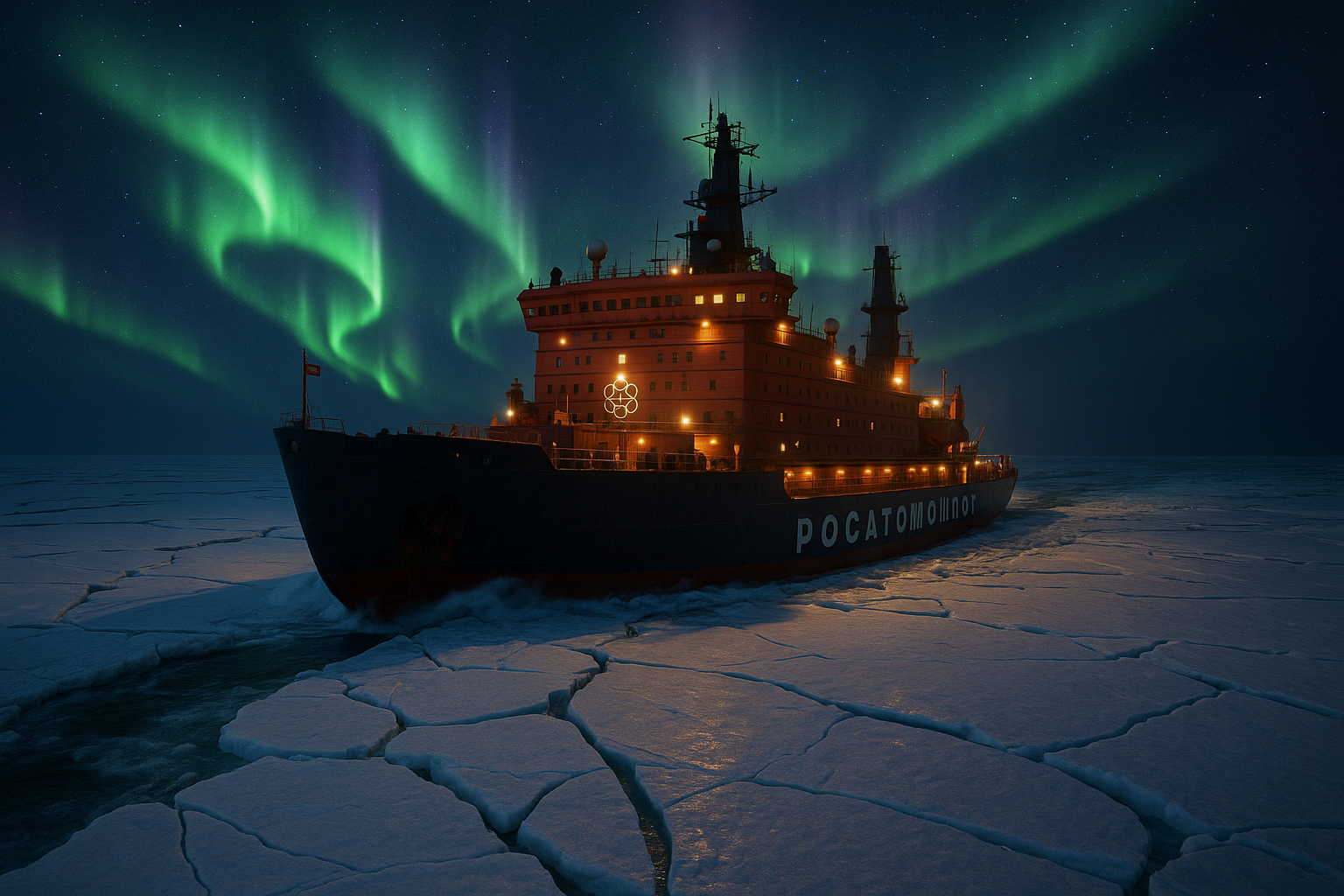
The Arctic has always been a hard place to fight over. The ice made it irrelevant — or so the thinking went. That calculation is now obsolete.
As climate change accelerates ice melt along Russia's northern coastline, a new maritime superhighway is opening across the top of the world. The Northern Sea Route (NSR) — a shipping lane stretching from Norway's North Cape to the Bering Strait — cuts the journey from Asia to Europe by roughly 40% compared to the Suez Canal. Rosatom, Russia's state nuclear energy giant, projects NSR cargo volumes exceeding 40 million tons in 2026, a figure that would have seemed fantastical a decade ago.
This isn't a story about climate policy. This is a story about who controls the arteries of global trade in the next century — and the military, diplomatic, and financial bets being placed right now.
The Race Is Already On
NATO woke up late to the Arctic. For decades, the alliance treated the region as a peripheral concern — cold, remote, strategically secondary. That complacency is now being reversed at speed.
In February 2026, NATO launched Arctic Sentry — a persistent surveillance mission in the High North designed to monitor Russian and Chinese activity in real time. The operation marks a formal acknowledgment that the Arctic is no longer a frozen backwater but a contested domain, one that intersects with NATO's most critical vulnerability: the GIUK Gap (Greenland-Iceland-UK), the underwater chokepoint through which Russian submarines must pass to reach the Atlantic.
Russia has been playing this game for years. Moscow has reopened Soviet-era Arctic bases, constructed new deep-water ports, established a dedicated Arctic military command, and built the world's largest fleet of nuclear-powered icebreakers — a capability no other nation currently matches. Its Arctic 2035 strategy, now at its midpoint, aims to transform the NSR into what the Kremlin calls a "competitive national transport corridor," effectively monetizing the melting ice that climate change is delivering.
China has inserted itself as a junior partner in the arrangement. Beijing — which styles itself a "near-Arctic state" despite being nowhere near the Arctic — has invested heavily in NSR port infrastructure and Russian icebreaker construction under its Polar Silk Road initiative. In March 2026, a CNBC investigation detailed the scale of joint Sino-Russian icebreaker shipbuilding operations that NATO allies described as deeply alarming.
The Svalbard Question
No flashpoint in the Arctic is more legally ambiguous — or more dangerous — than the Svalbard archipelago. Under a 1920 treaty, Norway holds sovereignty over Svalbard, but Russia retains the right to operate there economically, a right it has increasingly weaponized through hybrid pressure campaigns.
Russia's hybrid activities around Svalbard — influence operations, GPS jamming, surveillance of Norwegian infrastructure — have intensified since 2022. NATO defense planners have begun war-gaming scenarios in which Russian "protective" operations in Svalbard provide a pretext for a wider Arctic confrontation. Defense News reported in March 2026 that NATO has commissioned formal studies of what-if scenarios capable of triggering Arctic conflict.
For investors, the Svalbard risk is a canary in the coal mine: it signals that the Arctic is transitioning from a domain of economic competition to one with genuine military flashpoint potential.
This is where the analysis gets actionable. AlphaBriefing members get the full investment framework — scenarios, positioning, and the bottom line.
Subscribe to AlphaBriefing — Free, Member, and Paid tiers available.