America's Fast-Food Contraction Is Hiding in Bankruptcy Court
A KFC operator with 156 restaurants just became the sixth brand-name franchisee to hit Chapter 11 since September. The brands collect royalties off the top and trade near their highs; the operators underneath are breaking. Here's the mechanism, and the tickers on both sides of it.

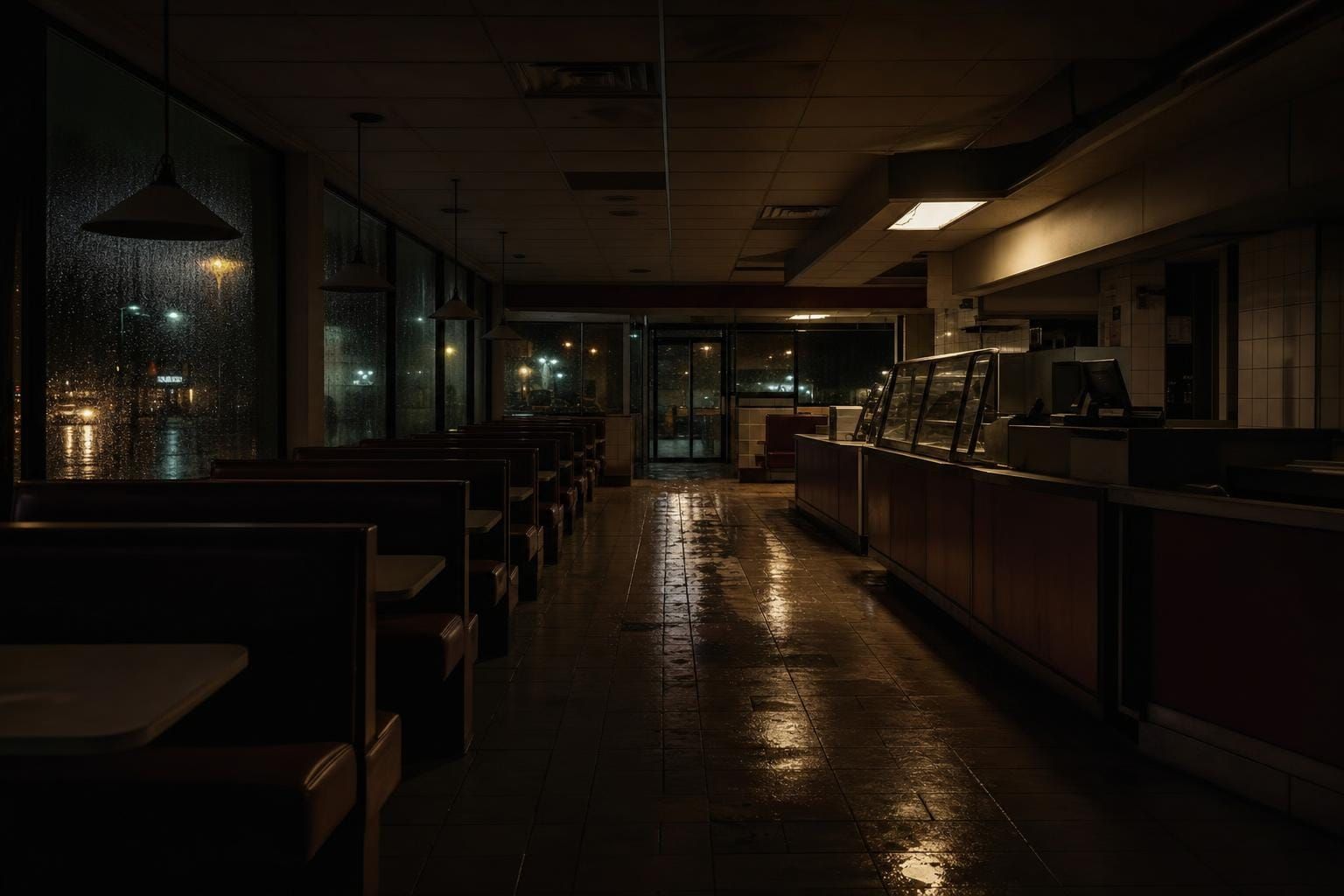
On the morning of Sunday, November 15, employees at the KFC restaurants in Glasgow and Cave City, Kentucky showed up for their shifts and found the doors locked. Nobody had told them. One day later, their employer — a Plano, Texas company called Tasty Chick'n, which at its peak ran more than 150 KFC locations across ten states — filed for Chapter 11 in the Southern District of Texas.
The court papers list 72 restaurants already closed or closing, from Memphis (13 of them) to Knoxville (6) to small towns in Arkansas, Kentucky, and Virginia. An interim financing order requires 10 more to shut by December 24. The remaining 84 — 75 KFCs and nine KFC/Taco Bell combos — go to auction in January.
KFC is not bankrupt. Yum Brands, its parent, is trading within a few dollars of its 52-week high. That gap — a failing operator underneath a healthy-looking brand — is the story, because Tasty Chick'n is not an isolated casualty. It is the sixth brand-name restaurant operator to file for Chapter 11 since mid-September.
The fall casualty list
Run through the last ten weeks of bankruptcy dockets and a pattern emerges:
- September 17: Meritage Hospitality Group — one of the largest Wendy's franchisees in the country, with 314 Wendy's restaurants across 15 states — files for Chapter 11 in Michigan. Roughly 60 of its restaurants had already closed before the filing; 33 more have closed since, locations the company describes as operating at a loss.
- September 21: Yardbird, the upscale Southern restaurant group, files in Delaware, citing expansion costs and "irrecoverable damage" from post-pandemic industry changes.
- October 4: True Food Kitchen files in Texas and closes 12 restaurants the same day.
- October 28: Global Midsouth, a Checkers and Rally's franchisee in Memphis, files one day before a scheduled foreclosure auction on one of its properties.
- November 2: Out West Restaurant Group, a 61-unit Outback Steakhouse franchisee covering five Western states, files in Delaware. Its CEO's court declaration is blunt: "by 2026, the pressures on the business had converged."
- November 16: Tasty Chick'n.
These are not independent neighborhood restaurants losing out to chains. These are the chains — or more precisely, the people who operate the chains under license. The distinction matters more than almost anything else in the sector right now.
Briefings like this are free to read with a free AlphaBriefing membership. Join free →
The industry underneath
The franchisee failures sit on top of a broader contraction. RestaurantData counted roughly 8,171 restaurant closures across the US and Canada in the first half of 2026 alone — slightly more than half of them chain-affiliated locations. Black Box Intelligence estimated that 9% of America's full-service restaurants and 4% of limited-service restaurants were at risk of closure this year.
And the brands themselves are pruning hard. In 2026, per company disclosures compiled by Restaurant Dive: Wendy's is closing 5–6% of its US system — roughly 300 to 350 restaurants. Papa Johns is closing about 200 this year, out of 300 targeted stores with average volumes under $600,000 and negative four-wall income. Pizza Hut is cutting around 250 US units under its "Hut Forward" turnaround, after Yum spent a year openly reviewing whether to sell the chain outright. Jack in the Box is closing 50 to 100. Even Noodles & Company, a fraction of the size, is shutting 30-odd.
Add it up and the big publicly traded QSR brands alone announced closures approaching 1,000 US locations this year — the sharpest chain contraction since the pandemic.
Here is the number that explains all of it. Tasty Chick'n told the bankruptcy court that its restaurant sales fell 15.6% between fiscal 2023 and fiscal 2026 — and over the same stretch, its store-level profit margin collapsed from 11.8% to 4%. A mid-teens revenue decline cut store profitability by two-thirds. That is the operating leverage of a fast-food restaurant in reverse: rent, labor, and food costs don't fall with traffic, and the franchisor's royalty is taken off the top of revenue, not profit.
Which raises the question the stock market has mostly declined to ask: if the operators are going broke, how long can the brands that collect from them stay immune?
A free membership gets you access to every free article at AlphaBriefing.com: Join AlphaBriefing
The rest of this briefing is free — it just requires a free AlphaBriefing account: the franchise model's hidden credit mechanics, the ticker-by-ticker exposure map from Yum to Bloomin' Brands (with live prices), and the three signals that tell you when franchisor immunity breaks.
Create your free account → — 30 seconds, no card.