America's Coal Plants Keep Missing Their Own Funerals
Three straight PJM capacity auctions cleared at the legal price cap, coal retirements just hit an 18-year low, and Washington is ordering dying plants to stay open. The trade isn't coal prices — it's who owns the fleet that refuses to die.

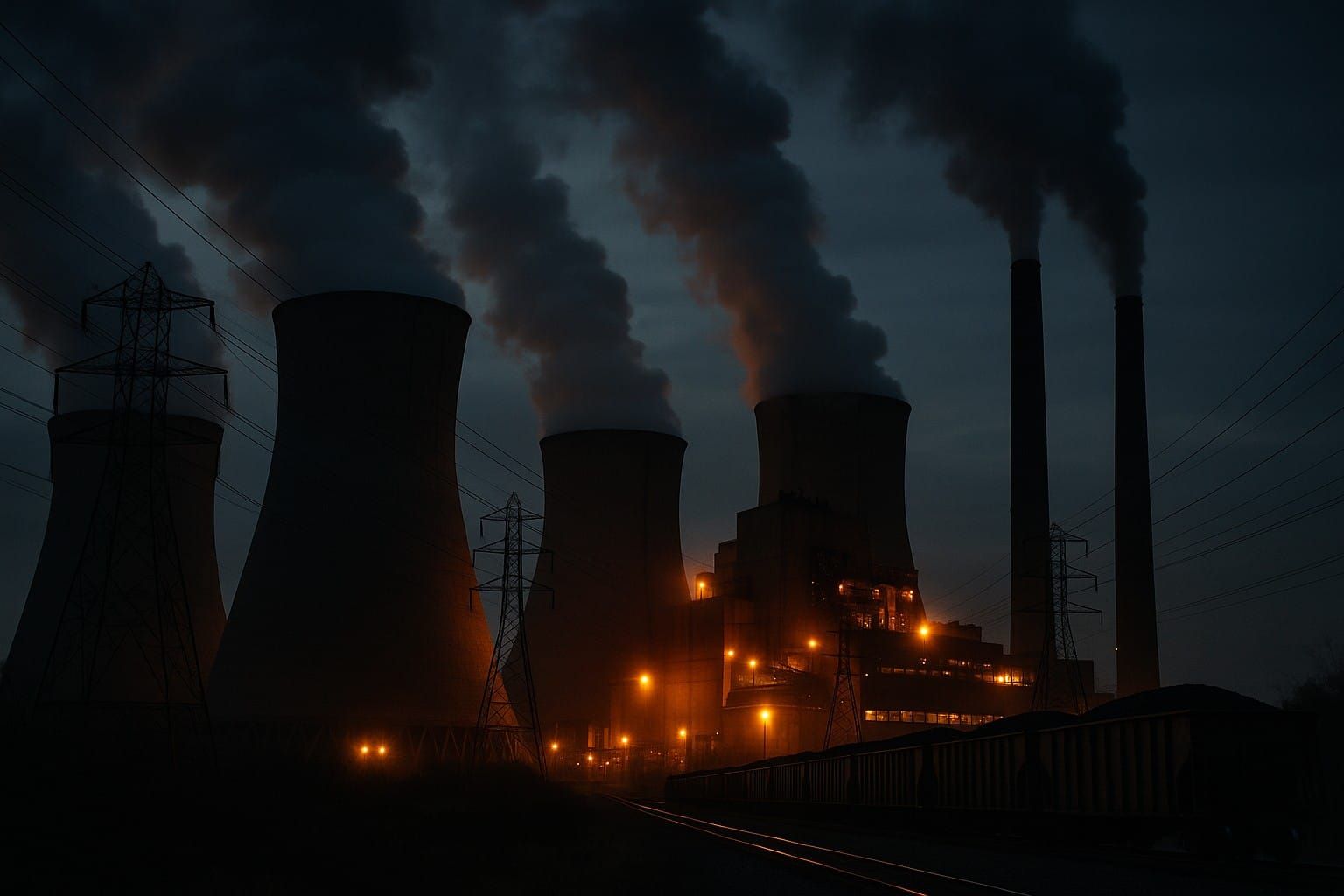
On July 14, PJM — the grid operator that keeps the lights on for 65 million Americans across 13 states — announced the results of its annual capacity auction. For the third consecutive year, the price cleared at the legal maximum: $325 per megawatt-day, the cap FERC allowed, in every corner of the system. The auction before that cleared at its cap of $333.44. The one before that set the all-time record of $329.17 — and would have printed near $389 without an emergency price ceiling negotiated with Pennsylvania's governor.
A capacity auction is the grid's way of asking a simple question: who will promise to be available when demand peaks? When the answer comes back at the maximum permissible price three years running, the market is telling you something the official forecasts won't: there is not enough dependable generation to go around, and there won't be for years.
Which brings us to the most quietly mispriced asset class in American energy: the coal fleet everyone agreed was dead.
The Retirement Schedule Is Fiction
On paper, US coal is still dying. The Energy Information Administration's August outlook has coal at 16% of US generation this year, slipping to 15% in 2027, crowded out by cheap natural gas. That's the official story, and in dispatch terms it's even true.
But watch what's happening to the retirement schedule, not the generation share. In 2025, plant owners planned to retire 12.3 gigawatts of coal capacity. They actually retired 4.6 GW — the least since 2008. At least 15 coal plants have had their retirement dates pushed back since January 2025. Wisconsin's Columbia Energy Center was supposed to close this year; it now runs to 2029. The Four Corners plant in New Mexico moved its exit from 2031 to 2038 — a seven-year stay of execution granted in a single announcement.
And where owners still wanted out, Washington simply ordered them to stay. The Department of Energy has now issued a string of emergency orders under Section 202(c) of the Federal Power Act — 19 grid-security orders by its own count — compelling coal plants from Michigan's J.H. Campbell to units across the Midwest and West to keep operating past their shutdown dates. In December, four more coal plants in MISO and the West were ordered to remain online in one batch. DOE has separately put $850 million toward modernizing the existing fleet and, remarkably, building the first new coal plants in a generation.
Briefings like this land in members' inboxes before the market prices them in. Join free →
Why the Fleet Can't Be Allowed to Die
The reason is arithmetic, not ideology. Data centers are projected to add on the order of 125 GW of new US electric load between 2026 and 2030 — demand growth of roughly 4% a year in a system that spent two decades planning for zero. NERC, the grid's reliability watchdog, has MISO at high risk of energy shortfalls for the next five years because "projected resource additions do not keep pace with escalating demand forecasts and announced generator retirements." New gas turbines are sold out toward the end of the decade. Nuclear takes ten years. Batteries shift hours, not seasons.
The system's only fast-acting reserve of dependable capacity is the generation it already has — and that means the 170-odd GW of coal still standing. Coal supplied 22% of the capacity that cleared PJM's record auction, third behind gas and nuclear. Every megawatt of it that retires makes the next auction clear harder against the cap.
So the American coal fleet has entered a strange afterlife: too dirty to love, too necessary to bury. Retirement dates have become opening bids in a negotiation with reliability regulators, and the regulators keep winning.
Here is where most investors get the story wrong. They hear "coal is back" and reach for coal producers. But the money in this trade does not flow to tons of coal — the same week the fleet's stay of execution was being extended, America's largest coal miner reported a quarterly loss. The money flows somewhere much more specific, and the second quarter's earnings just showed exactly where.
The rest of this briefing is for paid members: the two-revenue-stream framework that explains why one major coal producer lost $90.6 million in the same quarter another earned $126.5 million, the three tiers of exposure to the plant-life-extension trade (and the one tier to avoid), the specific catalyst calendar through the December capacity auction, and the bottom-line positioning framework.
AlphaBriefing Paid gets you every investment thesis, scenario framework, and catalyst brief we publish — the analysis private intel clients pay four figures for, at a fraction of that.