America Doesn't Build the Submarines the World Is Buying
Canada just handed Germany's TKMS its largest-ever defense contract for up to 12 submarines. No US shipyard was in the running — and that absence is one of the most overlooked trades in global defense.

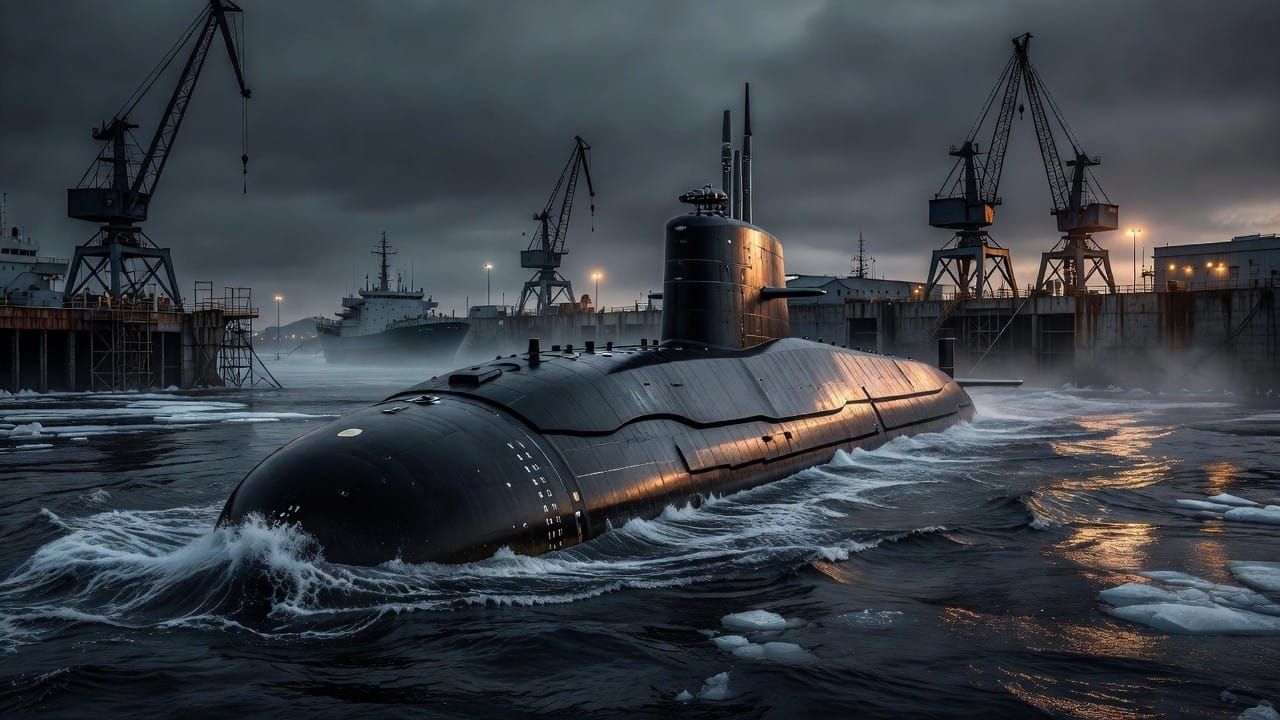
On Monday, on a wharf at Canadian Forces Base Halifax, Prime Minister Mark Carney announced the largest defense procurement in Canadian history. His government named Germany's Thyssenkrupp Marine Systems — TKMS — as the preferred bidder to build up to 12 new conventionally powered submarines for the Royal Canadian Navy, replacing a Victoria-class fleet that has spent more time in dry dock than at sea.
The losing finalist was South Korea's Hanwha Ocean, which had offered its KSS-III boat and a delivery schedule aggressive enough to put the first submarine in the water by 2032. Seoul threw everything at this bid. It lost.
But the detail worth sitting with is not who won or who lost. It's who was never in the room. For a 12-boat program on the northern border of the United States — a NATO ally's single biggest military purchase ever — there was no American shipyard on the shortlist. There was never going to be one. And that absence explains one of the most overlooked structural trades in global defense right now.
America builds the wrong kind of submarine
The United States operates the most capable undersea fleet on earth. It also builds exactly one category of submarine: nuclear-powered. Virginia-class attack boats and Columbia-class ballistic-missile submarines roll out of General Dynamics Electric Boat and HII's Newport News yards, and nothing else does. Washington does not build, sell, or export diesel-electric or air-independent-propulsion (AIP) submarines — the quieter, cheaper, conventionally powered boats that most of the world's navies actually buy.
There are two reasons, and both are hardening. First, nuclear propulsion is a controlled technology the US shares with almost no one (AUKUS is the rare, painful exception). Second, the two American yards that could theoretically build anything are already maxed out. In March, the Navy handed Electric Boat a $15.4 billion contract modification just to keep the Columbia and Virginia programs on schedule, and the service's own shipbuilding plan concedes it won't hit its target production rate until the 2030s. There is no spare capacity, no conventional product line, and no political appetite to build one.
So when Canada — or Poland, or the Philippines, or Saudi Arabia — goes shopping for submarines, the catalog is European and Asian. The Americans aren't competing. They're spectators.
Briefings like this land in members' inboxes before the market prices them in. Join free →
The order book of a generation
What makes this more than a trivia point is timing. The world is ordering conventional submarines at the fastest pace since the Cold War. Europe is rearming against Russia. Indo-Pacific navies are racing to counter China's undersea buildup. Under-ice and long-endurance patrol requirements are pushing mid-sized powers toward modern AIP boats they can afford to operate in numbers.
TKMS has positioned itself at the center of that wave — and it did so at almost the perfect moment. In October 2025, Thyssenkrupp spun the warship unit off onto the Frankfurt exchange. The shares listed at €60, closed their debut day above €81, and vaulted the company into the MDAX. Its order backlog hit a record near €20 billion in early 2026 — and that was before Canada.
The Type 212CD at the heart of the Canadian deal is already the emerging NATO standard. Germany and Norway have jointly ordered 12 of them. Add Canada's potential 12, and you get a trilateral fleet of up to 24 identical boats — the largest single class of conventional submarines in the world, all built by one company in Kiel. Hanwha, meanwhile, just watched its most ambitious export bid slip away.
That sets up the real question for an investor: is this a one-company story, or a structural bull market in allied naval hardware that has several ways to win — and several ways to disappoint?