The Power Bottleneck: How AI's Electricity Crisis Is Reshaping the Grid — and Creating the Decade's Best Infrastructure Play

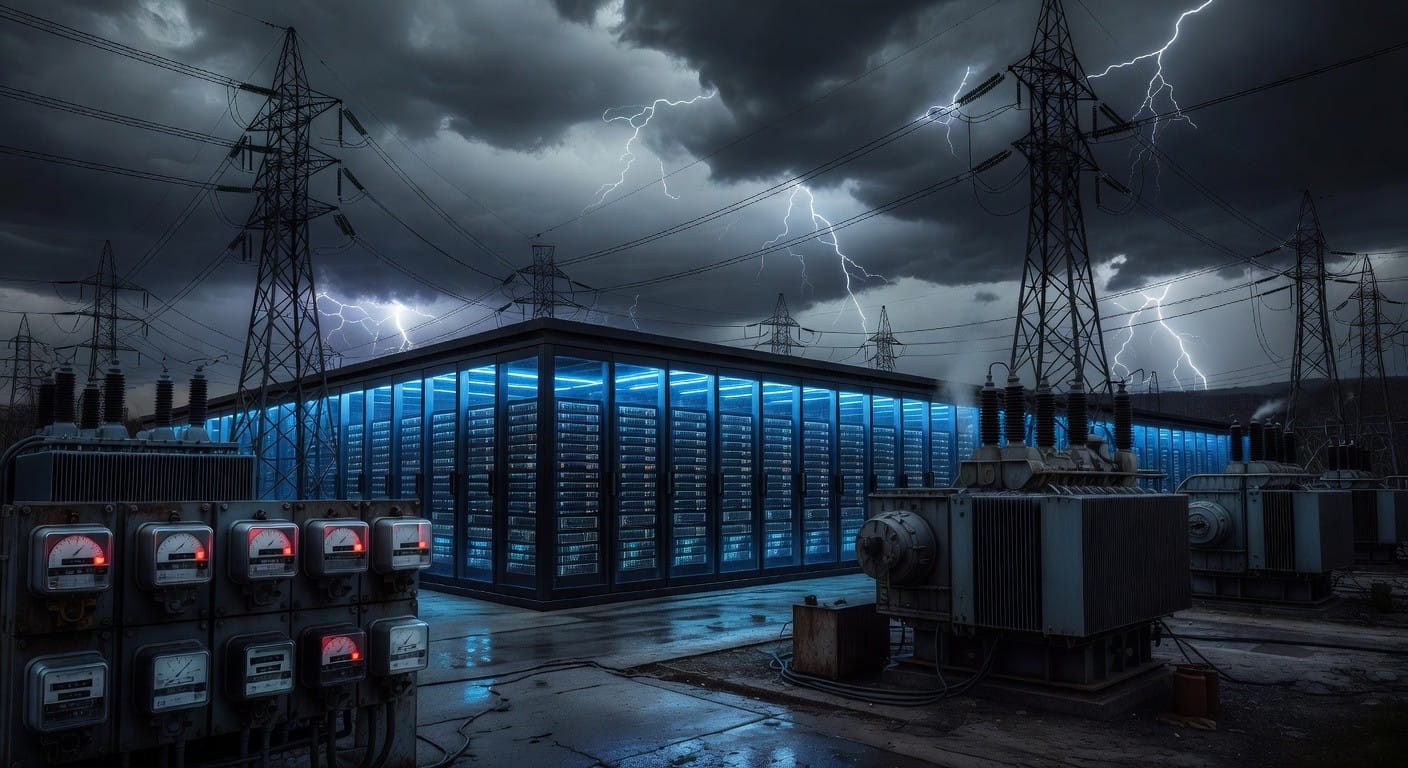
The AI revolution has a power problem — and the race to solve it is quietly becoming one of the biggest investment stories of the decade.
By 2030, global data centers are projected to consume more than 1,000 terawatt-hours of electricity annually — roughly equivalent to Japan's entire national power demand today. The International Energy Agency estimates AI workloads alone could account for half of that surge. The hyperscalers know it. Microsoft, Google, Meta, and Amazon have collectively pledged over $300 billion in data center capital expenditure for 2025 and 2026 combined, with a significant portion dedicated to securing reliable electricity supply.
This isn't a distant infrastructure story. It's happening right now — and it's reshaping the economics of utilities, the urgency of grid modernization, and the competitive landscape for AI itself.
The Bottleneck Nobody Talks About
For all the attention lavished on chips, models, and cloud APIs, the single biggest constraint on AI scaling may be the most unglamorous: getting enough electricity to the right places fast enough.
Data centers are extraordinarily power-hungry. A modern hyperscale facility running AI inference workloads can consume 100–200 megawatts of electricity — enough to power a mid-sized American city. A large cluster of GPU training farms can demand a gigawatt or more. And the buildout is accelerating.
The grid, however, was not designed for this. In the United States, utilities are reporting interconnection queues stretching 5–7 years for new large-load customers. Transformers — the critical hardware that steps down voltage for distribution — have lead times of 2–3 years. In major data center markets like Northern Virginia, Dallas, and Phoenix, available power capacity has already become a binding constraint on new development. Some operators have quietly shifted to secondary markets — Ohio, Indiana, Georgia — precisely because the tier-one markets are power-constrained.
The consequence: access to power is becoming a strategic moat. Companies that secured long-term power purchase agreements (PPAs) or colocation agreements years ago are sitting on a structural advantage. Those entering the market now face a multi-year queue and significant cost inflation.
The Capital Flood Is Accelerating the Crunch
The irony of the AI power crisis is that the more capital pours in, the worse the near-term constraint becomes — before solutions scale.
Microsoft alone committed to spending $80 billion on data center infrastructure in fiscal year 2025. Google has signaled similar ambitions; Meta announced $65 billion in capital expenditure for 2025, with data centers as the primary destination. Amazon Web Services is quietly building out capacity across 25 countries. This is not incremental growth — this is a synchronized global surge in demand for electricity, cooling, fiber, and land.
Utility companies weren't built for this pace. Regulated utilities operate on decade-long planning cycles. The gap between hyperscaler ambition and grid readiness is real, structural, and widening.
The policy response is beginning. The Biden and Trump administrations have both — unusually — agreed that grid modernization is a national priority. The DOE's Grid Deployment Office has accelerated permitting for high-voltage transmission lines. FERC Order 1920 mandates new long-range transmission planning. But regulatory timelines and infrastructure buildout still lag the demand curve by years.
This is where the analysis gets actionable. AlphaBriefing members get the full investment framework — scenarios, positioning, and the bottom line.
Subscribe to AlphaBriefing — Free, Member, and Paid tiers available.