The Mineral Wars: Inside the $50 Billion Scramble for Africa's Cobalt — and Why It's the Most Important Resource Contest of the Decade
China controls 87% of cobalt processing. America just bet $700 million on a Congolese mine. The race for the minerals powering the energy transition is heating up — and the investment implications are enormous.

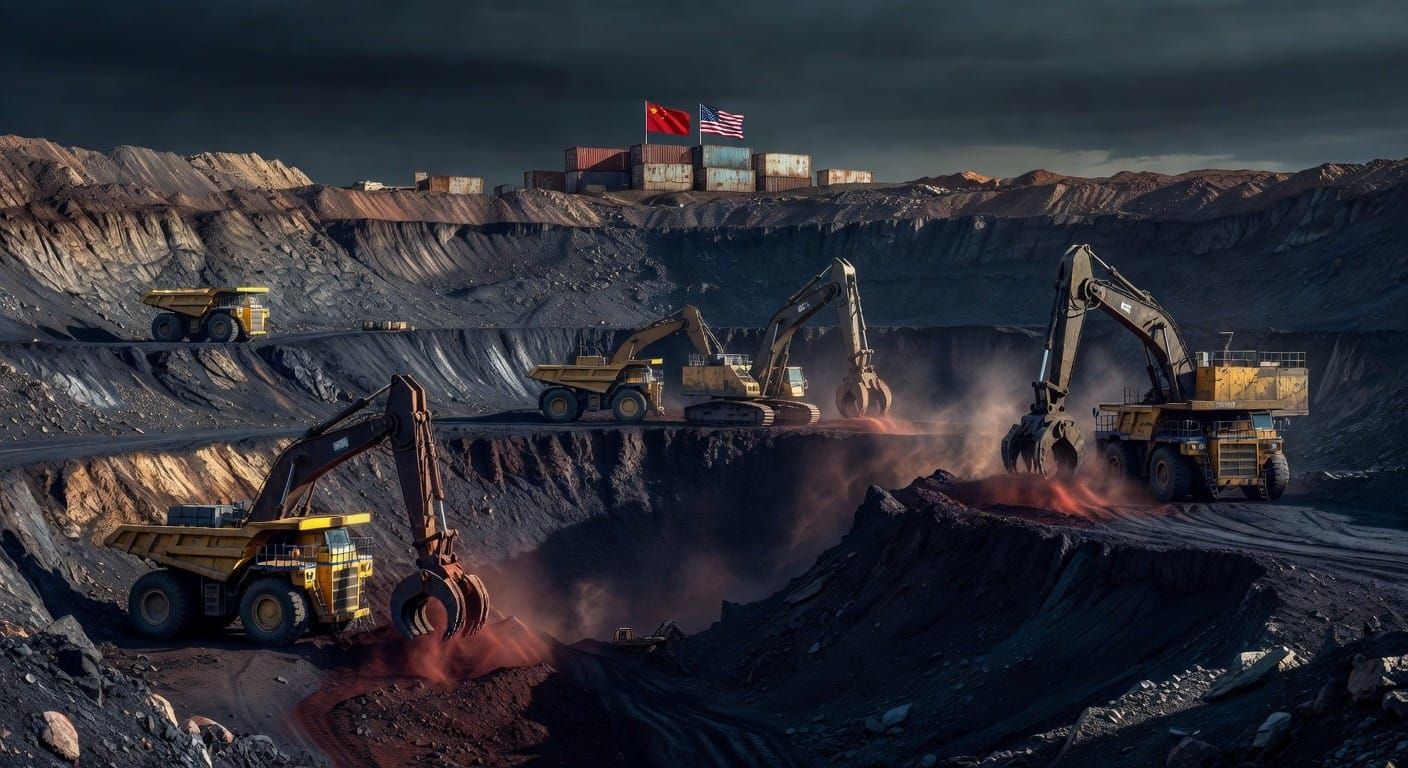
The Democratic Republic of Congo holds 70% of the world's cobalt. China controls the mines. America just showed up with a checkbook — and a railway.
For decades, the scramble for Africa's critical minerals was barely a contest. While Western governments debated ESG frameworks and development aid, Chinese state-backed firms were writing checks, pouring concrete, and locking up the supply chains that power the global energy transition. By 2025, Chinese companies controlled 70–80% of global cobalt refining and 60% of lithium processing, with the Democratic Republic of Congo — the beating heart of global cobalt production — firmly in Beijing's orbit.
Now, in April 2026, the game is shifting — fast.
A $700 million American bet on Congolese copper-cobalt assets. A DRC-China deal deepening Beijing's entrenched position. A billion-dollar rail corridor under construction to pipe minerals westward to the Atlantic. And floods that just shut it all down.
This isn't an abstract policy debate about "supply chain resilience." This is a live, high-stakes geopolitical contest where billions of dollars, critical defense supply chains, and the future of the energy transition are all on the table — right now.
The Mineral Map: Why Africa Is the Prize
The numbers tell the story before the politics do.
The DRC alone produced 3.3 million tons of copper in 2024, with cobalt as an essential byproduct — representing roughly 70% of global supply. Emerging lithium deposits in Namibia, Zimbabwe, Mali, and the DRC itself are positioning the continent as the next frontier for battery-grade minerals. These aren't optional commodities. Cobalt goes into every lithium-ion battery. Lithium is the backbone of electric vehicles and grid storage. Without secure supply, there is no energy transition — period.
China understood this a generation ago. Beijing's approach was simple and effective: invest early, invest heavily, and build the infrastructure to move raw materials from mine to Chinese refinery. Through Belt and Road financing — $24.9 billion in loans in the first half of 2025 alone — China constructed railways, roads, and port facilities across sub-Saharan Africa, all designed to funnel resources eastward.
The result: Chinese firms like CMOC, Zijin Mining, and Huayou Cobalt now control the DRC's most productive assets, including the world-class Tenke Fungurume and Kamoa-Kakula operations. Most of this output never touches a Western refinery. It goes straight to China.
America's $700 Million Wake-Up Call
Enter Virtus Minerals — and the most significant American move in Congolese mining in years.
In late March 2026, the U.S.-backed company finalized its acquisition of Chemaf SA (Chemical of Africa), a major Congolese copper and cobalt producer. The equity purchase was modest — roughly $30 million — but Virtus assumed $900 million in debt and committed over $700 million in capital expenditure to restart and expand the Etoile and Mutoshi mines. At full capacity, these assets could represent approximately 5% of global cobalt supply.
Approved by DRC authorities on March 13, the deal was the first major on-the-ground transaction under the U.S.-DRC critical minerals partnership signed in December 2025. The State Department backed it publicly. The Wall Street Journal called it "a win for Trump." Virtus partnered with India's Lloyds Metals & Energy and signed an MOU with U.S. Strategic Metals for downstream supply chains.
There is, however, a catch. Reuters reported in April 2026 that Virtus overstated its mining experience on its website — raising questions about whether the company can execute a $700 million restart in one of the world's most challenging operating environments. The DRC's Copperbelt is not a forgiving place. Corruption, infrastructure gaps, security risks from ongoing conflict in the east, and entrenched Chinese competition make this a high-risk, high-reward bet.
Beijing's Counter: The March 2026 Deepening
China didn't wait for America to gain traction.
In March 2026, the DRC and China signed a new agreement deepening mining cooperation, granting Chinese firms priority access to major new projects. This builds on years of the so-called "minerals for infrastructure" model — the Sicomines deal, under which China finances roads, hospitals, and railways in exchange for mining concessions.
Zijin Mining's $1.4 billion Manono lithium project — set for commissioning in June 2026 with a target of 130,000 tons per year — represents the next wave. Chinese firms also hold dominant positions in lithium projects across Mali (Goulamina) and processing capacity in Nigeria, with supply contracts locked through 2032 via deals with BYD.
The message from Beijing is clear: America can write checks, but China has decades of embedded relationships, operational infrastructure, and refining capacity that won't be displaced by a single deal.
The Lobito Corridor: Infrastructure as Strategy
The most ambitious piece of America's counter-strategy isn't a mine — it's a railway.
The Lobito Corridor is a 1,739-kilometer rail link connecting the DRC's cobalt heartland in Kolwezi to Angola's Atlantic Port of Lobito, offering Western-aligned producers a route to export minerals without routing them through Chinese-controlled logistics. The Lobito Atlantic Railway, backed by $753 million in financing from the U.S. Development Finance Corporation and the Development Bank of Southern Africa, had been ramping operations to 12 trains per week with a target of 20 by 2027.
Then nature intervened.
On April 12, 2026, severe floods damaged bridges over the Halo and Cavaco Rivers in Angola, suspending corridor operations indefinitely. The timing could not have been worse — just as Phase 2 construction into the DRC (Dilolo-Kolwezi upgrades, tender launched April 2026) and a new 515-kilometer greenfield railway in Zambia were building momentum.
This is where the analysis gets actionable. AlphaBriefing members get the full investment framework — scenarios, positioning, and the bottom line.
Subscribe to AlphaBriefing — Free, Member, and Paid tiers available.